Modern Accessory Dwelling Units: Understanding Modular Costs and Property Value in 2026
Key Takeaways
- Modular construction can reduce total project timelines by up to forty percent compared to traditional builds
- California state laws for 2026 have simplified the approval process for units under eight hundred square feet
- Using an online cost calculator helps homeowners avoid common budget overruns during the planning phase
- Sustainable materials and energy efficient designs are the primary focus for the Spring 2026 building season
The housing landscape in Spring 2026 has shifted significantly toward density and efficiency. Homeowners across the country are looking for ways to maximize their land, and investing in a prefab adu has become the premier choice for adding functional living space quickly. Whether you are hosting family or generating rental income, modular solutions offer a level of precision and speed that was once impossible.
According to the California Department of Housing and Community Development, streamlined regulations have led to a record number of secondary unit applications. This surge is driven by a need for flexible housing and the desire for sustainable, factory-built quality that minimizes onsite disruption.
The Rise of Modular Living in 2026
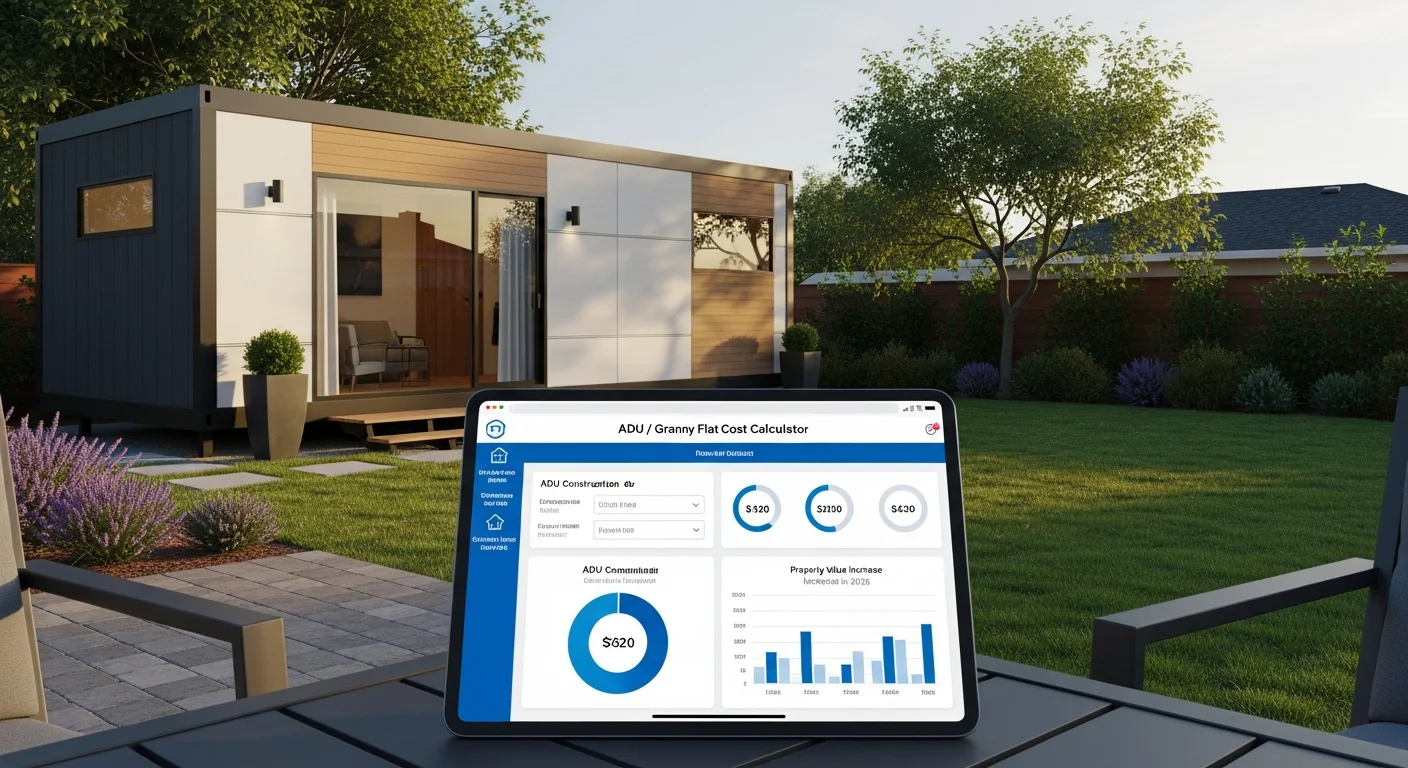
ADU / Granny Flat Cost Calculator
Buy NowEfficiency and Speed
In the current construction environment, time is money. Modular units are constructed in climate-controlled environments, meaning weather delays are a thing of the past. This controlled process allows for tighter tolerances and higher quality control than traditional outdoor construction.
Sustainability and Waste Reduction
Factory building allows for precise material management. Recent data from the U.S. Department of Energy suggests that modular building can reduce construction waste by over fifty percent. This aligns perfectly with the eco-conscious goals of the Spring 2026 season.
Comparing Construction Methods: Prefab ADU vs. Traditional Build
Deciding between a prefab adu and a traditional stick-built structure often comes down to your budget and timeline. Traditional builds offer total customization but often come with unpredictable labor costs and extended timelines that can frustrate neighbors and homeowners alike.
Conversely, choosing a high-quality prefab adu ensures that you have a fixed price early in the process. This predictability is essential for homeowners who are financing their projects through home equity lines of credit or specialized construction loans.
| Feature | Modular / Prefab | Stick-Built |
|---|---|---|
| Construction Time | 8-12 Weeks | 6-9 Months |
| Cost Predictability | Very High | Moderate to Low |
| On-site Disruption | Minimal (Days) | Significant (Months) |
Want to see how much your modular project will cost?
Use Our Cost Calculator →Navigating the 2026 Permit Landscape
State-Level Streamlining
Many states have adopted mandatory approval timelines for secondary units. In 2026, local jurisdictions are often required to approve or deny a permit within 60 days of a complete application submission, significantly reducing the bureaucratic wait.
Utility Connection Requirements
One of the most complex parts of any project remains utility hookups. According to HUD guidelines, secondary units must adhere to strict safety codes regarding electrical, plumbing, and sewage connections to ensure long-term viability.
Financial Planning and Cost Estimation
Hidden Costs to Consider
While the structure itself has a clear price tag, homeowners should budget for site preparation, foundation work, and landscaping. These "soft costs" can account for twenty to thirty percent of your total project budget if not managed carefully.
Financing Options in 2026
Many homeowners find that a prefab adu offers a faster path to equity. As noted by Fannie Mae, modern lending products now specifically cater to accessory dwelling units, recognizing them as stable, value-adding property improvements.
Estimate your total investment with our Spring 2026 pricing data.
Run the ADU Calculator →Design Trends for Spring 2026
Biophilic Elements
The design focus for 2026 is on bringing the outdoors in. Large floor-to-ceiling windows, natural wood finishes, and integrated planter boxes are becoming standard in modern units, making small spaces feel expansive and connected to the garden.
Smart Home Integration
From solar readiness to integrated smart climate controls, the 2026 unit is a tech-forward space. High-efficiency heat pumps and greywater recycling systems are increasingly popular as homeowners look to future-proof their investments.
Maximizing Long-Term Property Value
Market Resilience
Properties with a secondary dwelling are consistently outperforming those without in the current real estate market. According to the National Association of Realtors, homes with an ADU see a significant bump in appraisal value, often covering the construction cost immediately upon completion.
Rental Income Potential
For many, the goal is passive income. In high-demand areas like Orange County, a well-designed modular unit can generate substantial monthly revenue, often paying off its own financing within a few years of operation.
Ready to maximize your property's potential this Spring?
Start Your Free Estimate →Frequently Asked Questions
How much does a prefab unit typically cost in 2026?
While prices vary by size and finish, most high-quality modular units in 2026 range from $150,000 to $350,000. This often includes the structure, delivery, and basic installation, but site prep is usually additional.
Can I put a secondary unit on any residential lot?
Most residential lots in California and many other states now allow for at least one accessory unit by right. However, specific setbacks and utility access must be verified through your local planning department before purchasing.
How long does the installation of a modular unit take?
Once the unit arrives on-site, it is typically set on the foundation and made weather-tight within 24 to 48 hours. Final utility connections and interior finishing touches usually take an additional two to four weeks.
Is financing available for these types of projects?
Yes, homeowners have access to several options including HELOCs, cash-out refinances, and specialized construction-to-permanent loans. Many lenders now view modular additions as high-value property enhancements.
Will adding an ADU increase my property taxes?
Typically, your property will undergo a partial reassessment. While your taxes will likely increase based on the value of the new structure, they do not usually trigger a full reassessment of the existing home.
As we conclude this look into the Spring 2026 housing market, it is clear that modular construction is the most efficient path forward. If you are ready to start your prefab adu journey, the first step is always understanding your numbers and local requirements.
By utilizing modern tools and expert advice, you can transform your backyard into a source of value and utility. We invite you to explore the possibilities of your property today and take advantage of the streamlined processes available in this new era of home construction.
About the Author

Written by William Corcoran, Orange County Home Savings Expert
William Corcoran has helped Orange County families save money on their homes for over 15 years. Specializing in property tax reduction and smart refinancing, he offers expert guidance you can trust. www.energybot.com www.energystar.gov
Related Articles

Ready to Find Your Savings?
Get a free personalized report showing all rebates and incentives your home qualifies for.
Get My Free Report