Solar Savings Calculator: Is Solar Worth It for California Homeowners?
Key Takeaways
- Use a solar savings calculator to accurately estimate long-term financial benefits.
- Federal tax credits currently provide a 30 percent reduction in total installation costs.
- California homeowners often see full system payback within five to eight years.
- Rising utility rates in Orange County make solar a primary hedge against inflation.
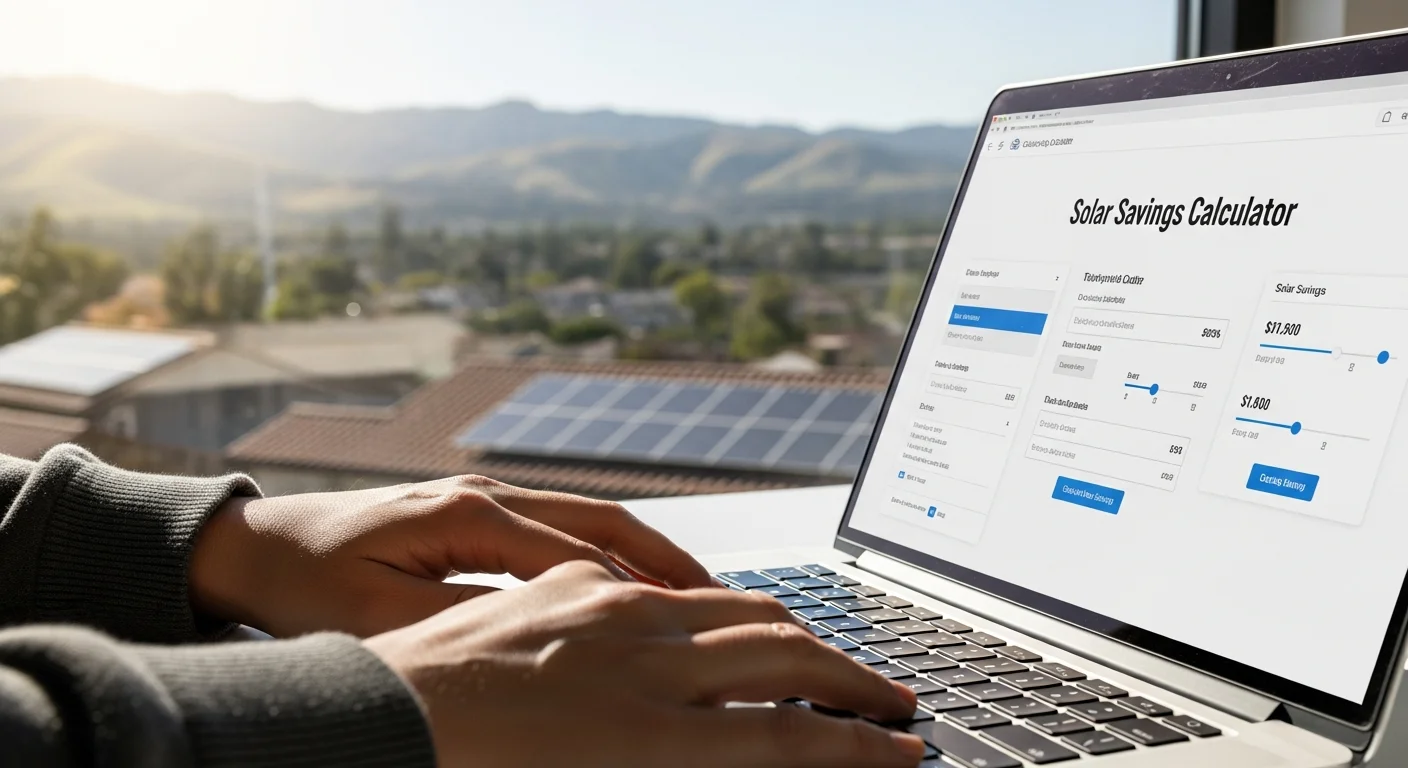
For many homeowners in Orange County, the question isn't whether solar energy works, but rather how much can I save with solar panels in today's shifting economy? With utility rates from providers like Southern California Edison continuing to climb, residents are looking for reliable ways to take control of their energy costs. Using a solar savings calculator for home is the first step in understanding the true ROI of a clean energy transition.
According to the Solar Energy Industries Association (SEIA) research, California remains a national leader in solar adoption due to high sunshine hours and progressive state policies. However, understanding your specific financial outlook requires looking at local variables like roof orientation, shading, and current consumption patterns.
Curious about your potential savings? Try our free tool today.
Access Solar Savings Calculator →How to Use a Solar Savings Calculator to Estimate Monthly Gains
Solar Savings Calculator
Buy NowInputting Your Current Energy Usage
To get an accurate result, you need to provide your average monthly kilowatt-hour usage. You can find this data on your most recent utility bill. The calculator uses this to determine the system size required to offset your costs.
Accounting for Local Sun Exposure
Orange County benefits from high irradiance levels. The tool factors in regional weather patterns to predict how many kilowatt-hours your specific roof will produce annually. This ensures the average solar savings per month estimates remain realistic.
Is Solar Worth It in California with Rising Utility Rates?
Combating High Electricity Bills in Orange County
Electricity rates in California are significantly higher than the national average. By generating your own power, you effectively lock in a lower energy rate for the next 25 years. This provides a massive buffer against future price hikes from utility giants.
The Transition to NEM 3.0
According to information from the California Public Utilities Commission (CPUC), the Net Billing Tariff (NEM 3.0) has changed how credits are calculated. While different from previous years, adding battery storage now significantly increases the overall value of a home solar system.
See how NEM 3.0 affects your ROI with our updated tool.
Calculate My ROI Now →California Solar Panel Incentives 2024: Federal and State Benefits
Federal Solar Tax Credit Advantages
The Investment Tax Credit (ITC) allows homeowners to deduct 30% of the cost of installing a solar energy system from their federal taxes. As noted by the Department of Energy guide, there is no cap on the value of this credit, making it the most significant incentive available today.
Self-Generation Incentive Program (SGIP)
For those adding battery backups, the SGIP provides rebates that can further lower the cost of solar panels vs savings ratio. This is particularly beneficial for residents in high-fire-threat districts who need resiliency during power outages.
Solar Purchase vs Lease Savings: Which Option Fits Your Budget?
Maximizing Long-Term Equity
Purchasing a system outright or through a solar loan generally offers the highest lifetime savings. You own the equipment, can claim the tax credits, and increase your home's resale value significantly.
Lowering Initial Barriers with Leasing
Leasing or Power Purchase Agreements (PPAs) allow you to go solar with $0 down. While you don't receive the federal tax credit, you still benefit from an immediate reduction in your monthly utility costs without the upfront investment.
| Financing Method | Primary Benefit |
|---|---|
| Cash Purchase | Highest total ROI and 30% Tax Credit |
| Solar Loan | Ownership benefits with $0 out-of-pocket |
| Solar Lease | Lowest monthly payment and maintenance included |
How Long Until Solar Panels Pay for Themselves in Orange County?
Calculating the Breakeven Point
Most California homeowners reach their breakeven point within 5 to 8 years. After this period, the electricity generated by the panels is essentially free, leading to tens of thousands of dollars in profit over the system's 25-year lifespan.
Factors Affecting Payback Speed
The speed of your ROI depends on your utility's rate structure and how much energy you consume during peak hours. As mentioned in the Wikipedia overview of Solar Power in California, the state's high tier-rates make the payback period much faster compared to other states.
Want an exact payback date for your home?
Run Your Savings Report →Frequently Asked Questions
How accurate is a solar savings calculator?
A calculator is highly accurate for estimation purposes when provided with real-world utility bill data. It uses historical sunlight data for your specific ZIP code to provide a reliable forecast of production and savings.
Does solar increase property taxes in California?
No. California has a property tax exclusion for solar energy systems. This means your home value can increase, but your property tax assessment will not rise because of the solar installation.
Do I need a battery with my solar system?
Under the new NEM 3.0 rules, batteries are highly recommended. They allow you to store excess daytime energy for use during expensive evening peak hours, maximizing your financial savings.
What happens to solar savings if I move?
Solar panels are a significant selling point. Studies show homes with owned solar systems sell faster and for higher prices, often recouping the initial investment at the time of sale.
Is there a deadline for the 30% tax credit?
The 30% credit is currently locked in through 2032 under the Inflation Reduction Act. However, utility rates are rising now, so waiting could cost you more in monthly bills than you gain by delaying.
Take Control of Your Energy Future
The financial benefits of switching to renewable energy are clearer than ever for Orange County residents. By utilizing a solar savings calculator, you can move past guesswork and see the tangible impact on your household budget. Whether it is through the 30% federal tax credit or the long-term reduction in utility reliance, the advantages are undeniable.
Don't let another month of record-high energy bills pass you by. Take the first step toward energy independence and see why thousands of your neighbors have already made the switch. Your path to savings starts with a single calculation.
About the Author

Written by William Corcoran, Orange County Home Savings Expert
William Corcoran has helped Orange County families save money on their homes for over 15 years. Specializing in property tax reduction and smart refinancing, he offers expert guidance you can trust. www.energybot.com www.energystar.gov
Related Articles

Ready to Find Your Savings?
Get a free personalized report showing all rebates and incentives your home qualifies for.
Get My Free Report