Residential Solar Energy Benefits: Installation Costs and Efficiency Gains for 2026
Key Takeaways
- Residential solar technology in 2026 offers significantly higher conversion rates than previous generations
- Federal and state incentives remain the primary drivers for reducing initial installation costs
- Utilizing a professional energy score calculator is essential for identifying potential savings before installation
- Modern solar battery storage systems now provide total grid independence for most suburban households
As we enter the Spring 2026 season, homeowners across Orange County are increasingly looking for ways to insulate themselves from rising utility rates. Deciding to install solar panels for home is no longer just an environmental choice; it is a strategic financial decision that can redefine your property's value. With the latest advancements in photovoltaic cell technology, the threshold for energy independence has never been more accessible.
Understanding how your specific property interacts with the sun is the first step toward true sustainability. By evaluating your roof's orientation and local climate data, you can predict exactly how much grid power you can replace with clean energy. In this guide, we will explore the 2026 landscape of residential energy and how to optimize your investment.
The Rise of Residential Solar in 2026
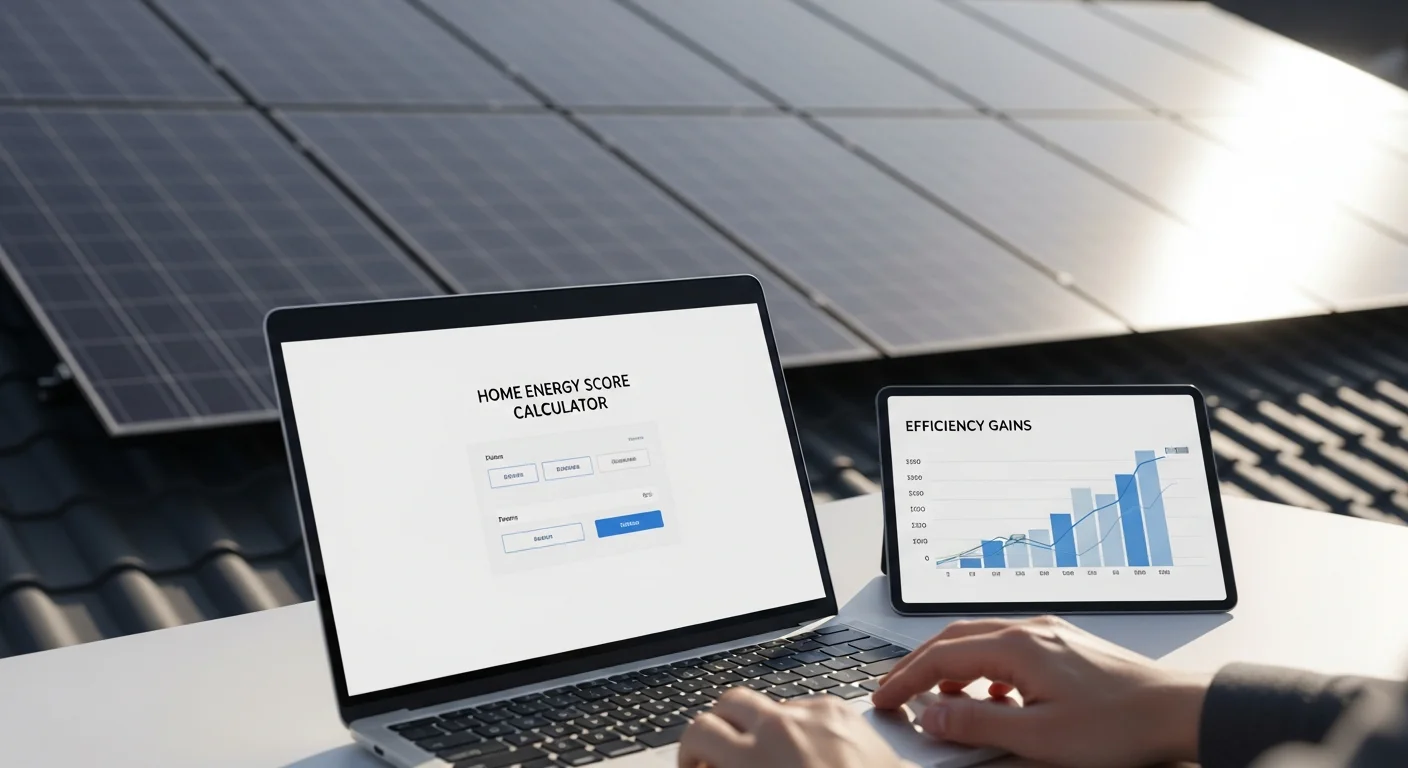
Home Energy Score Calculator
Buy NowEnergy Independence Trends
Homeowners are prioritizing energy security in 2026 more than ever before. According to the Solar Energy Industries Association, residential installations have seen a 15% increase year-over-year. This trend is driven by the desire to avoid peak-hour pricing models implemented by major utility providers.
Advancements in Aesthetic Integration
The standard for design has shifted in 2026, with "all-black" panels and integrated solar shingles becoming the preferred choice for high-end residential projects. These systems blend seamlessly with modern roofing materials, ensuring that sustainability does not compromise your home's curb appeal.
Want to see your home's current efficiency level?
Calculate Your Home Energy Score →Solar panels for home: A Cost-Benefit Analysis
ROI and Payback Periods
For most modern installations, the return on investment (ROI) has shortened to approximately 5 to 7 years. This is largely due to the increased efficiency of N-type silicon cells, which generate more power in low-light conditions. According to the National Renewable Energy Laboratory, these high-efficiency modules are now the industry standard for 2026.
Impact on Property Valuation
Data from the Lawrence Berkeley National Laboratory suggests that solar-equipped homes sell for a premium compared to non-solar counterparts. Integrating solar panels for home use is considered a capital improvement that adds permanent value to the real estate title.
| System Component | 2026 Benefit |
|---|---|
| High-Efficiency Panels | 23%+ conversion rate for max power density |
| Smart Inverters | Real-time monitoring and grid stabilization |
| Battery Storage | Full backup power during local outages |
Maximizing Efficiency with Home Energy Scoring
The Role of the Home Energy Score
Before purchasing solar panels for home, it is vital to know how efficient your building envelope currently is. A Home Energy Score, developed by the U.S. Department of Energy, provides a standard rating that helps you identify where air leaks or insulation gaps are wasting your generated power.
Using Our 2026 Calculation Tool
Our proprietary calculator allows you to input your current utility usage and physical home characteristics to receive a customized efficiency roadmap. By fixing insulation issues alongside your solar project, you can often downsize the required solar system, saving thousands in upfront costs.
Stop guessing your energy potential.
Run Your Free Energy Calculation →Top Features of 2026 Solar Technology
AI-Driven Energy Management
Modern systems now come equipped with AI software that predicts weather patterns and optimizes battery discharge. This ensures your home uses stored energy during the most expensive peak-utility hours, maximizing your monthly savings automatically.
Bifacial Panel Technology
Bifacial solar panels, which capture sunlight on both sides, have become standard for residential ground-mounts and flat roofs in 2026. This technology increases total energy yield by up to 10% compared to traditional monofacial panels.
Financing and Incentives for Your Installation
Federal Investment Tax Credit (ITC)
The federal tax credit continues to be a major incentive for choosing solar panels for home owners. This credit allows you to deduct a significant percentage of your system cost from your federal taxes, effectively lowering the net price of the installation.
Local California Rebates
Specific municipalities in Orange County offer additional performance-based incentives. These local programs often combine with statewide initiatives to provide upfront rebates for homeowners who also install battery backup systems.
Ready to optimize your residential energy usage?
Get Your Expert Rating Now →Frequently Asked Questions
Are solar panels worth it in 2026?
Yes, with the high efficiency of 2026 technology and the continued availability of tax credits, solar remains one of the best financial investments for homeowners. Payback periods are shorter than ever, often under 7 years.
How does the federal solar tax credit work?
The Investment Tax Credit (ITC) allows you to claim a percentage of your solar system's cost as a dollar-for-dollar reduction in your federal income taxes. This applies to both the panels and necessary equipment like battery storage.
How long do modern solar panels last?
Most Tier-1 solar panels produced in 2026 come with a 25 to 30-year performance warranty. Even after 30 years, these systems typically still produce over 85% of their original power capacity.
Does solar increase my property taxes?
In many states, including California, there are property tax exclusions for active solar energy systems. This means you can increase your home's value without seeing a corresponding rise in your property tax bill.
What is a home energy score?
A home energy score is a professional rating from 1 to 10 that reflects your home's current efficiency. It serves as a baseline for understanding how much energy your home uses and where improvements are most needed.
In conclusion, investing in solar panels for home use is the most effective way to secure long-term energy savings in 2026. By leveraging modern technology and professional energy scoring, you can ensure your project delivers the maximum possible return. Start your journey today by assessing your home's potential with our specialized calculator tool.
About the Author

Written by William Corcoran, Orange County Home Savings Expert
William Corcoran has helped Orange County families save money on their homes for over 15 years. Specializing in property tax reduction and smart refinancing, he offers expert guidance you can trust. www.energybot.com www.energystar.gov
Related Articles

Ready to Find Your Savings?
Get a free personalized report showing all rebates and incentives your home qualifies for.
Get My Free Report