Residential Renewable Power Solutions: Is High-Efficiency Solar Worth It in 2026?
Key Takeaways
- Residential solar installations remain a top investment for energy independence in 2026
- A Home Energy Score is essential to determine if your property is efficient enough for solar
- New federal and state tax credits in 2026 significantly offset initial installation costs
- Battery storage integration is now standard for maximizing utility bill savings during peak hours
As we move through the Spring 2026 season, homeowners across Orange County are facing rising utility rates and a growing desire for environmental responsibility. Investing in solar energy for home systems has transitioned from a luxury trend to a strategic financial decision. With advancements in photovoltaic technology, the efficiency of residential panels has reached new heights this year.
However, adding solar panels to an inefficient home is like pouring water into a leaky bucket. Before you sign a contract for a new array, it is critical to understand your property's current baseline. This is where modern diagnostic tools become invaluable for local residents looking to maximize their long-term returns.
Top Benefits of Solar in 2026
Home Energy Score Calculator
Buy NowLower Monthly Utility Expenses
The primary driver for residential solar remains the drastic reduction in monthly electric bills. According to the U.S. Department of Energy homeowners guide, solar owners can expect to offset up to 90% of their grid usage with a properly sized system. In 2026, the payback period for these systems has shortened due to increased local utility rates.
Increased Property Valuation
Modern buyers are specifically looking for homes with sustainable features. Data from the National Renewable Energy Laboratory indicates that homes with solar installations sell faster and for higher premiums than non-solar counterparts. This makes the installation an asset for your real estate portfolio.
Ready to see how your home ranks before going solar?
Calculate Your Home Energy Score →The Role of Home Energy Scores
Identifying Energy Leaks
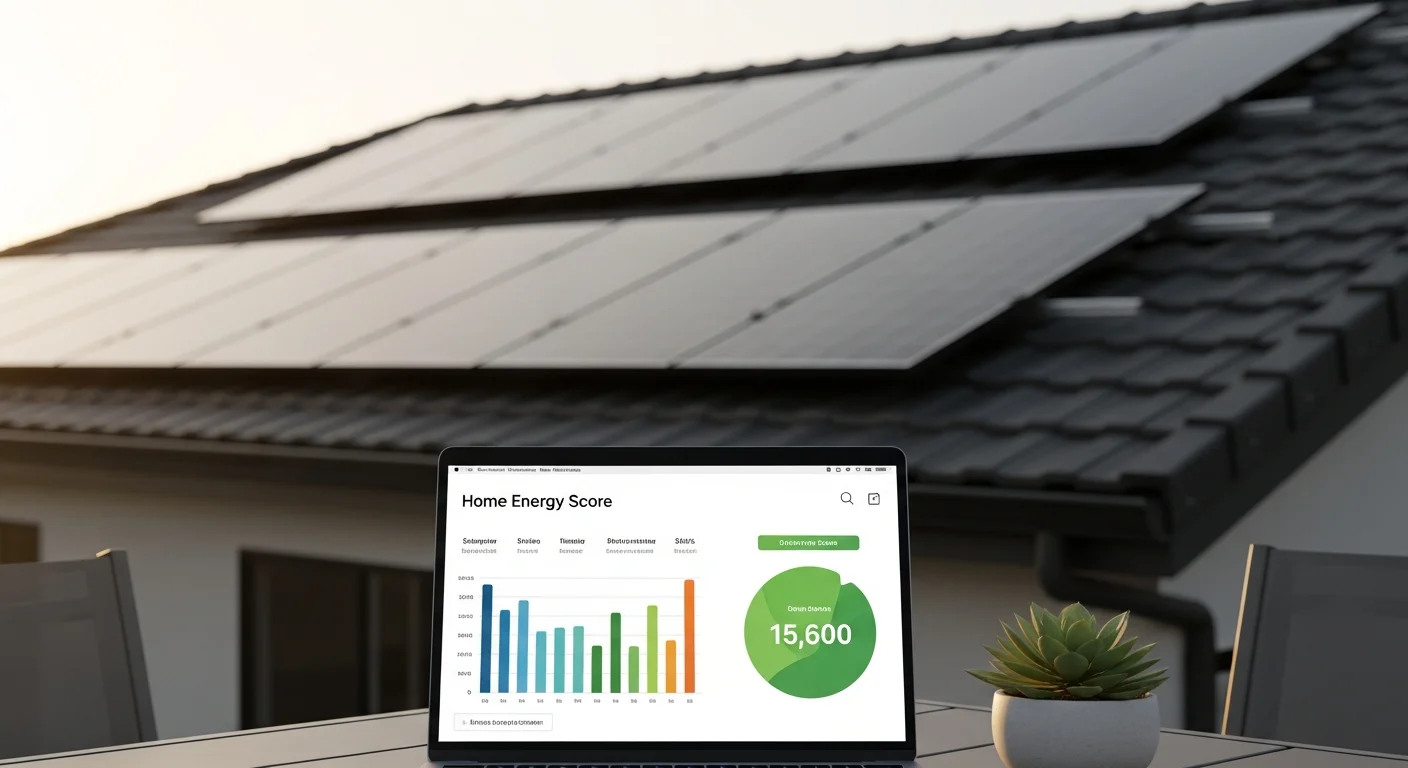
A Home Energy Score provides a standardized rating of your home's efficiency. Using an online home energy calculator allows you to identify if heat loss through windows or poor insulation is wasting the power your solar panels generate. Fixing these issues first ensures you don't overspend on a system that is larger than necessary.
Standardized Benchmarking
The Environmental Protection Agency Energy Star program recommends benchmarking as a first step for any upgrade. A high energy score can serve as proof of quality for future buyers, complementing the physical presence of your solar array.
Financial Incentives: Saving with Solar Energy for Home in 2026
2026 Federal Tax Credits
The current 2026 tax landscape offers robust support for homeowners. The federal Investment Tax Credit (ITC) allows you to deduct a significant portion of your installation costs from your federal taxes. As detailed by the Solar Energy Industries Association (SEIA), these incentives are at a peak this year to encourage rapid adoption of clean energy.
State-Level Rebates
Many states have introduced specific performance-based incentives in 2026. These programs pay you for the electricity your system produces, adding a secondary stream of income or credit. Check the Database of State Incentives for Renewables & Efficiency (DSIRE) for updated local listings in your zip code.
Stop guessing your potential savings and start measuring!
Start Your Free Energy Calculation →Cost and Efficiency Analysis
Deciding on solar energy for home usage requires comparing current costs against long-term utility projections. While the upfront price of panels has stabilized, labor and permitting costs can vary by region. Below is a comparison of traditional grid power versus solar adoption in the 2026 market.
| Factor | Traditional Grid | Residential Solar (2026) |
|---|---|---|
| Monthly Cost | Variable (Rising) | Fixed/Minimal |
| Tax Benefits | None | Significant (ITC) |
| Home Value | Baseline | Increased |
| Energy Security | Low (Blackouts) | High (With Battery) |
Integrating Solar Battery Systems
Solving Intermittency Issues
The solar technology landscape of 2026 emphasizes storage just as much as generation. Batteries allow you to store excess energy produced during the day for use at night. This eliminates the dependency on the grid when the sun isn't shining and provides backup power during emergencies.
Time-of-Use Management
Many utility companies now use time-of-use (TOU) pricing. By using stored battery power during expensive peak hours, you can optimize your savings. Modern smart home systems can automate this process, ensuring your home always draws from the cheapest power source available.
Frequently Asked Questions
How much does solar panel installation cost in 2026?
On average, a standard residential system in 2026 ranges between $15,000 and $25,000 before incentives. However, net costs often drop below $12,000 after applying the federal tax credit and local rebates. The specific price depends on your roof's complexity and your total energy needs.
Why should I get a home energy score before solar?
A home energy score identifies inefficiencies like air leaks or poor insulation. By fixing these first, you can often install a smaller, less expensive solar array. It ensures your investment is focused on generating power rather than making up for wasted energy.
Do solar panels still work during a power outage?
Standard solar systems without batteries typically shut down during an outage for safety reasons. To have power during a blackout, you must include a battery storage system. This allows your home to operate as an "island" independent of the main grid.
What is the lifespan of solar panels in 2026?
Most high-quality panels manufactured in 2026 come with a 25 to 30-year performance warranty. While efficiency may degrade slightly over time (about 0.5% per year), the systems are designed to provide clean energy for several decades. Batteries usually last between 10 and 15 years.
Are there still federal tax credits for solar?
Yes, the federal solar tax credit is active in 2026, allowing homeowners to claim a credit against their federal income taxes. This credit applies to both the equipment and the installation labor costs. It remains one of the most effective ways to lower the barrier to entry for clean energy.
Conclusion
Transitioning to solar energy for home power is a multi-step journey that begins with assessment. By understanding your home's current efficiency levels through a detailed energy score, you set the foundation for a system that truly delivers on its promise of savings. The technological advancements of 2026 have made this process more transparent and accessible than ever before.
Whether you are looking to lower your carbon footprint or simply want to escape the cycle of rising utility costs, the data is clear: renewable energy is the future of Orange County living. Take the first step today by evaluating your home's performance and exploring the financial incentives waiting for you this Spring.
Join thousands of Orange County homeowners saving money today!
Get Your Home Energy Score Now →About the Author

Written by William Corcoran, Orange County Home Savings Expert
William Corcoran has helped Orange County families save money on their homes for over 15 years. Specializing in property tax reduction and smart refinancing, he offers expert guidance you can trust. www.energybot.com www.energystar.gov
Related Articles

Ready to Find Your Savings?
Get a free personalized report showing all rebates and incentives your home qualifies for.
Get My Free Report