Turf Replacement Rebate 2026: Water-Saving Landscaping Ideas for Your Home Transformation
Key Takeaways
- California homeowners can access significant financial incentives through 2026 turf removal programs
- Modern synthetic and drought-tolerant options offer a return on investment within three to five years
- Specific design requirements like permeable borders are mandatory for rebate eligibility
- Utilizing an online calculator is the fastest way to estimate your potential savings before starting
As we enter the Spring 2026 season, homeowners across Southern California are facing a new reality of stricter watering mandates and rising utility costs. Many residents are discovering that replacing lawn with turf is no longer just an aesthetic choice, but a strategic financial move to safeguard their property value while contributing to regional water conservation efforts.
The shift toward sustainable landscaping has accelerated, driven by sophisticated irrigation technologies and more realistic synthetic grass textures. For those looking to upgrade their curb appeal this year, the intersection of environmental responsibility and financial incentives has never been more favorable for a complete yard overhaul.
Want to see how much you can save on your landscaping project?
Calculate Your Rebate Now →The 2026 California Turf Removal Landscape
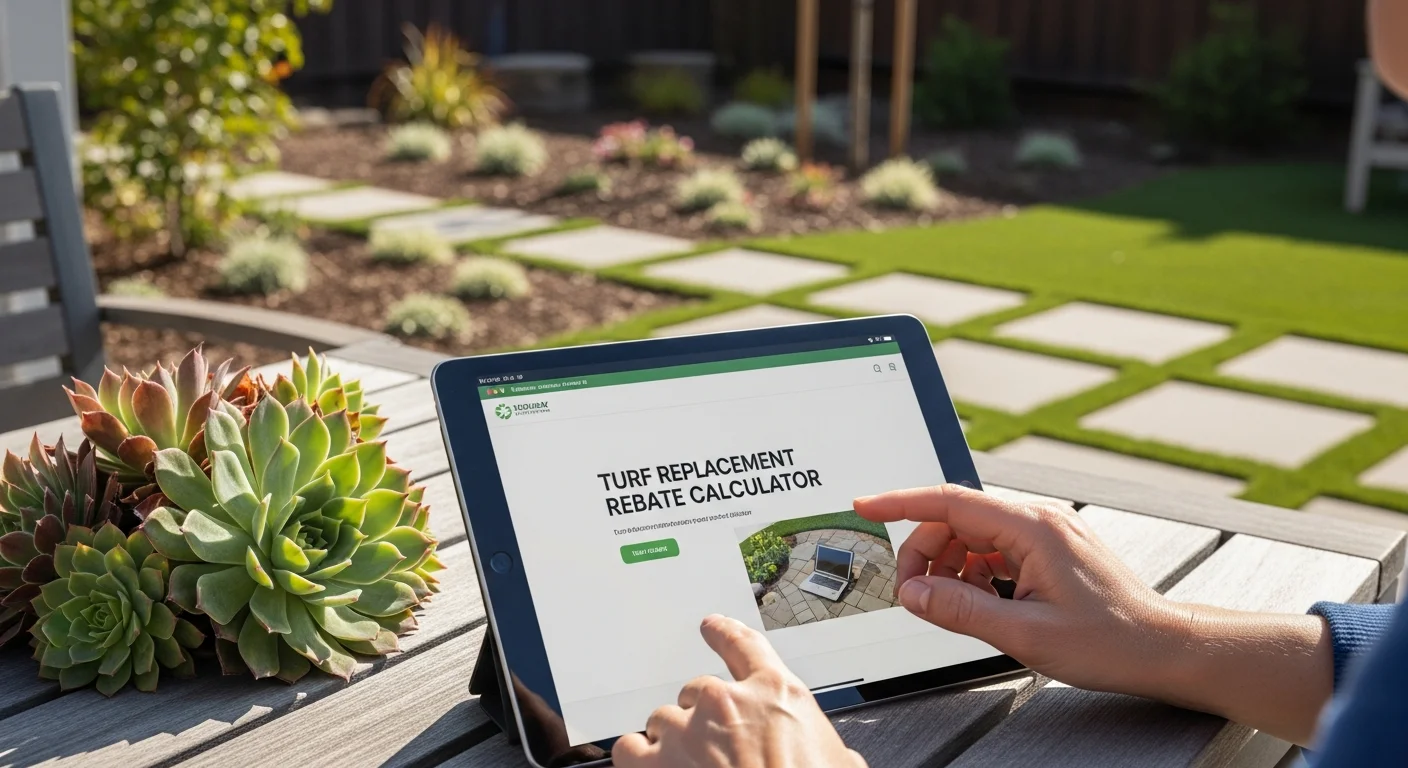
Turf Replacement Rebate Calculator
Buy NowCurrent State Rebate Policies
According to the California Department of Water Resources, state-funded programs have been expanded for 2026 to prioritize high-impact residential projects. These updates include higher per-square-foot payouts for homeowners who incorporate native plants alongside their synthetic installations.
Local Water Agency Incentives
Local agencies, such as the Municipal Water District of Orange County (MWDOC), often stack their incentives on top of state funds. This means the total rebate amount can significantly offset the initial installation costs of high-quality synthetic grass or California-friendly gardens.
Financial Benefits: Artificial Grass vs Real Grass Cost
Initial Investment vs. Long-Term Maintenance
While the upfront cost of synthetic turf is higher than traditional sod, the elimination of monthly mowing, fertilizing, and heavy irrigation leads to rapid cost recovery. In 2026, the average household saves approximately $1,200 annually on water and maintenance after making the switch.
| Expense Category | Traditional Lawn (Annual) | Synthetic Turf (Annual) |
|---|---|---|
| Water Usage | $800 - $1,500 | $50 - $100 |
| Maintenance Labor | $1,200 - $2,400 | $0 - $150 |
| Fertilizer/Seed | $200 - $400 | $0 |
Property Value Enhancement
Data from the National Association of Realtors suggests that low-maintenance, water-wise landscaping is one of the highest-ranking features for homebuyers in arid climates during the 2026 market. A pristine, evergreen yard adds instant visual appeal without the burden of ongoing labor.
Essential Steps for Replacing Lawn with Turf
Initial Site Assessment and Design
Before starting the process of replacing lawn with turf, it is vital to measure your area accurately. Most rebate programs require a minimum square footage and a pre-inspection photoset to document the existing live grass.
Soil Preparation and Drainage
Proper excavation is key. You must remove the top layer of soil and replace it with a decomposed granite or crushed rock base. This ensures that when heavy rains hit in late 2026, your yard remains stable and drains effectively into the groundwater table.
Unsure about the measurements for your turf conversion?
Access the 2026 Rebate Calculator →Innovative Water-Saving Landscaping Ideas
Integrating Native Flora with Synthetic Grass
Combining artificial turf with "California Friendly" plants like White Sage or Deer Grass creates a biodiverse environment that supports local pollinators while keeping water use at a minimum. This hybrid approach is often a requirement for the highest rebate tiers.
Smart Irrigation for Planter Beds
Even with synthetic turf, your perimeter plants need moisture. Modern 2026 drip irrigation systems use weather-linked controllers that adjust watering schedules based on real-time humidity and temperature data from the National Oceanic and Atmospheric Administration.
How to Qualify for Turf Rebate Programs in Orange County
The Application Process in 2026
Registration is the first critical step. Do not remove any grass until your application has been officially reserved. Most programs in the Orange County region now utilize digital portals where you upload your project plans and receive approval within 7-10 business days.
Common Compliance Pitfalls
Many homeowners fail to qualify because they don't include a "sustainable feature" like a rain garden or permeable pavers. Ensuring your project meets the EPA WaterSense standards for landscape design is essential for securing your rebate check.
Ready to start your transformation with expert guidance?
Check Your Local Rebate Eligibility →Frequently Asked Questions
How much is the turf rebate per square foot in 2026?
In Spring 2026, most Southern California agencies offer between $2.00 and $4.00 per square foot. Some specific zones in Orange County may offer higher incentives depending on local drought conditions and budget availability.
Can I install the turf myself and still get the rebate?
Yes, most programs allow for homeowner installation (DIY). However, you must strictly follow the technical requirements regarding base materials, plant count, and stormwater retention to pass the final inspection.
Does artificial turf get too hot for pets in the summer?
Modern synthetic products for 2026 feature advanced cooling technologies and specialized infills that can lower surface temperatures by up to 20%. Many homeowners also incorporate shaded areas or use "Cool-Blue" turf variations specifically designed for pet safety.
What happens if my rebate application is denied?
Denials are typically due to removing grass before approval or failing to meet the plant-to-turf ratio. Most agencies allow you to correct the issues and resubmit your plan within a 30-day window to maintain your place in the funding queue.
Is a permit required for replacing lawn with turf in OC?
While a specific "turf permit" is rare, many HOAs and local cities have landscaping codes regarding drainage and setback requirements. It is always recommended to check with your local planning department before finalizing your layout.
Conclusion
Taking the step toward replacing lawn with turf is a proven method to reduce environmental impact while enhancing the financial standing of your home. With the generous rebates available in 2026, the transition from a traditional lawn to a modern, water-wise garden has never been more accessible or affordable for the average homeowner.
By utilizing the right tools, such as our integrated rebate calculator, and staying informed on the latest state and local guidelines, you can ensure your project is a success. Embrace the future of sustainable living and start planning your Spring 2026 landscape transformation today to enjoy a beautiful, maintenance-free yard for years to come.
About the Author

Written by William Corcoran, Orange County Home Savings Expert
William Corcoran has helped Orange County families save money on their homes for over 15 years. Specializing in property tax reduction and smart refinancing, he offers expert guidance you can trust. www.energybot.com www.energystar.gov
Related Articles


Ready to Find Your Savings?
Get a free personalized report showing all rebates and incentives your home qualifies for.
Get My Free Report