Orange County Turf Rebates 2026: Calculate Savings with New Landscape Transformation Incentives
Key Takeaways
- Southern California homeowners can access rebates starting at 3 dollars per square foot in 2026
- Artificial turf significantly reduces monthly water bills by up to 60 percent during peak seasons
- Eligible projects must include a mix of synthetic surfaces and living drought tolerant plants
- Pre-approval is mandatory before removing any existing grass to qualify for financial incentives
As we move through Winter 2026, many Southern California homeowners are looking at their parched lawns and wondering if there is a better way to maintain curb appeal without the high water costs. The decision to replace grass with turf is no longer just a trend; it has become a financial necessity for residents facing rising utility rates and stricter water regulations.
Transitioning to water-saving landscaping is more accessible than ever thanks to the latest 2026 rebate programs. According to the Metropolitan Water District of Southern California, landscape transformation programs offer significant financial relief for those willing to ditch their thirsty lawns in favor of sustainable alternatives.
Calculate Your Instant Rebate Estimate
Access the Calculator →Understanding 2026 Orange County Turf Rebates
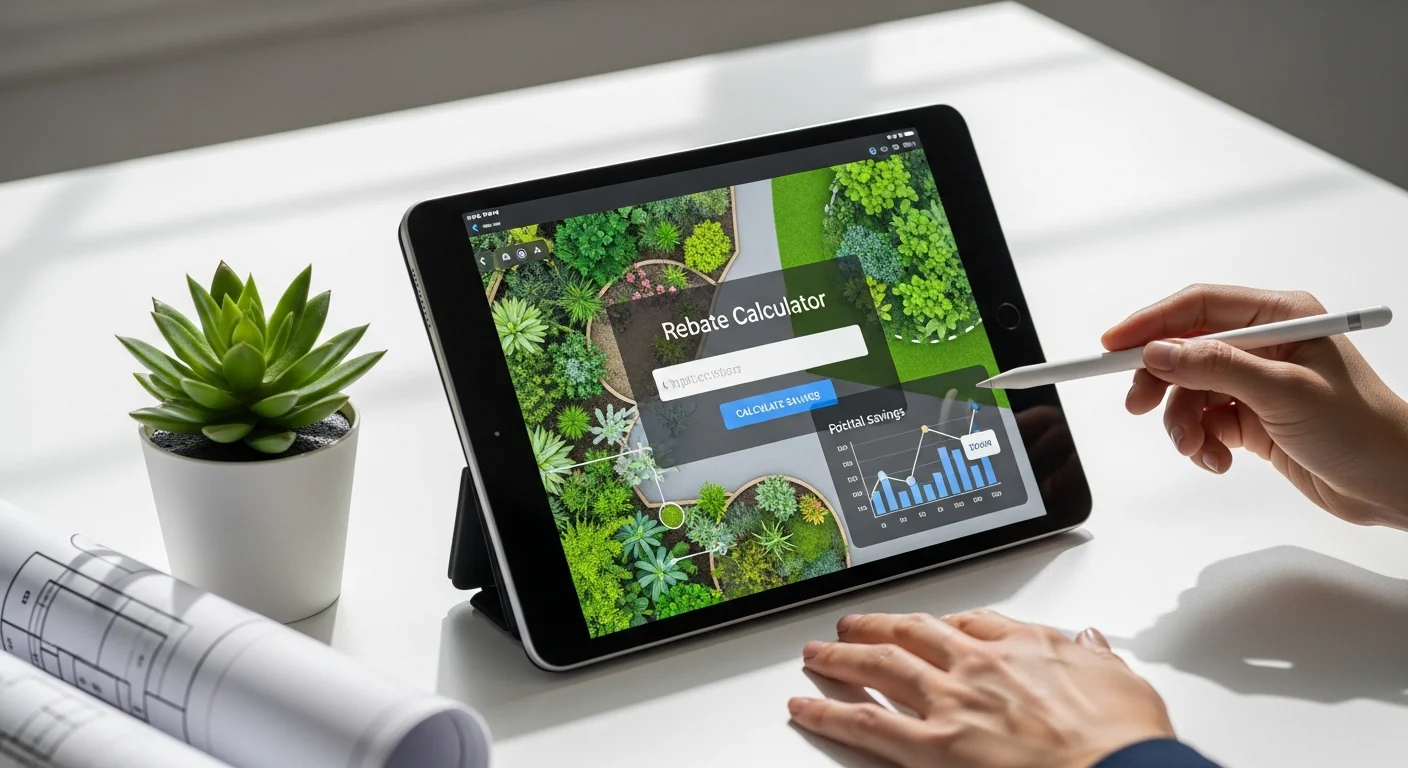
Turf Replacement Rebate Calculator
Buy NowNew Funding for Winter 2026
Funding for California water saving landscaping rebates has been renewed for the 2026 fiscal year. Many local water agencies in Orange County have increased their per-square-foot contribution to encourage faster adoption of climate-appropriate yards. Most programs currently offer between $2 and $5 per square foot, depending on specific city supplements.
Eligibility Requirements for Homeowners
To qualify for these incentives, the project must involve the removal of existing living grass. New construction projects or previously cleared dirt lots typically do not qualify. Additionally, the Municipal Water District of Orange County requires that finished projects include at least three plants for every 100 square feet of area transformed.
Strategic Planning: How to Replace Grass with Turf
The Pre-Approval Process
The most critical step in your journey to replace grass with turf is securing pre-approval. If you remove even a single square foot of grass before your application is approved and a pre-inspection is conducted, you risk forfeiting the entire rebate. Always document the current state of your lawn with high-resolution photos from multiple angles.
Selecting 2026 Trend-Forward Materials
In 2026, the focus is on "hyper-realistic" synthetic fibers that mimic local fescues. Modern materials feature cooling technology that reflects infrared light, keeping the surface significantly cooler than older synthetic versions. Ensure your chosen turf has high permeability to allow for proper drainage during California's occasional heavy winter rains.
Artificial Turf vs Real Grass Maintenance: A Cost Comparison
When analyzing whether to switch, it is vital to look at the long-term ROI. While the initial investment for synthetic grass is higher, the elimination of mowing, fertilizing, and heavy irrigation leads to a "break-even" point typically within 4 to 6 years.
| Expense Category | Traditional Grass (Annual) | Artificial Turf (Annual) |
|---|---|---|
| Watering Costs | $800 - $1,500 | $50 (Rinsing only) |
| Mowing/Labor | $1,200 | $0 |
| Chemicals/Fertilizer | $300 | $0 |
Stop Overpaying for Your Lawn
See Your Savings →How to Calculate Your Turf Rebate Amount
Measuring Your Eligible Square Footage
Calculating your potential savings requires an accurate measurement of the existing lawn. Use a standard measuring tape to find the length and width of the green areas. Do not include driveways, walkways, or established planter beds that do not currently have grass, as these will be excluded from the rebate total.
Using the Turf Replacement Rebate Calculator
The turf replacement rebate calculator on our site simplifies this math. By inputting your zip code and square footage, the tool cross-references current 2026 municipal rates to provide a precise estimate of the cash you can expect back from your local water authority.
Environmental Benefits of Sustainable Yard Design
Water Conservation in Drought-Prone Regions
According to the EPA WaterSense program, outdoor water use accounts for nearly 30 percent of total household water use. By choosing to replace grass with turf, a typical Orange County home can save tens of thousands of gallons of water annually, contributing to the health of the local aquifer.
Reducing Chemical Runoff
Traditional lawns require heavy doses of nitrogen-based fertilizers and pesticides. During the rainy season of 2026, these chemicals wash into storm drains and eventually into the Pacific Ocean. Synthetic alternatives eliminate the need for these pollutants, protecting local marine ecosystems and urban watersheds.
Ready to Join the Movement?
Calculate Your Rebate →Frequently Asked Questions
Is artificial turf allowed in all Orange County cities?
Most OC cities and HOAs now allow synthetic grass due to state legislation that protects homeowners' rights to install water-efficient landscaping. However, you should always check your specific HOA guidelines for approved styles and color palettes to ensure compliance with local aesthetics.
How long does it take to receive the rebate check?
Once your post-installation inspection is approved, it typically takes 8 to 12 weeks to receive your rebate check. Ensure all your documentation, including itemized receipts and final project photos, is uploaded correctly to the rebate portal to avoid processing delays.
Does artificial grass get too hot for pets in the summer?
Newer 2026 turf varieties feature heat-reduction technology. For additional cooling, many homeowners use specialized infills like cooling sand or Zeolite, which retain moisture and release it slowly through evaporation, significantly lowering the surface temperature for paws.
Can I install the turf myself and still get the rebate?
Yes, most programs allow for DIY installation. The rebate is usually calculated based on the square footage of grass removed, regardless of whether you hired a professional or did the work yourself. However, you must still adhere to all design and plant-count requirements.
What happens if my new plants die after the inspection?
The rebate program requires that you maintain the sustainable landscape for a minimum period, often 5 to 10 years. If your drought-tolerant plants die, you are expected to replace them with similar low-water species to remain in compliance with the program terms.
Conclusion
Deciding to replace grass with turf is a smart strategic move for any Orange County property owner in 2026. By leveraging the available financial incentives and utilizing a specialized rebate calculator, you can transform your yard into a beautiful, low-maintenance asset that adds value to your home while preserving California's most precious resource.
As we look toward the warmer months following the Winter 2026 season, there has never been a better time to start your application. Secure your funding, plan your design, and take the first step toward a more sustainable and cost-effective landscape today.
About the Author

Written by William Corcoran, Orange County Home Savings Expert
William Corcoran has helped Orange County families save money on their homes for over 15 years. Specializing in property tax reduction and smart refinancing, he offers expert guidance you can trust. www.energybot.com www.energystar.gov
Related Articles

Ready to Find Your Savings?
Get a free personalized report showing all rebates and incentives your home qualifies for.
Get My Free Report