Heat Pump Water Heater Cost 2026: Calculate Your California Rebates and Energy Savings
Key Takeaways
- California homeowners can access thousands in rebates for heat pump water heaters in 2026
- Heat pump technology is up to four times more efficient than traditional gas or electric units
- Federal tax credits and local utility incentives significantly offset the initial installation cost
- Using a cost calculator helps determine the exact ROI based on specific household water usage
As we move through the Winter 2026 season, California's push toward home electrification has made upgrading your water heating system more affordable than ever. When considering a residential pump heater for your 2026 home upgrade, the combination of federal incentives and state-level rebates creates a unique window for maximum ROI. Many homeowners in Orange County are finding that the net cost of these high-efficiency units is now comparable to traditional gas alternatives.
Understanding the financial breakdown of a heat pump water heater cost requires looking beyond the sticker price. In 2026, the focus is on total lifecycle value, which includes significant reductions in monthly utility bills. According to the U.S. Department of Energy, these systems can save a typical household hundreds of dollars annually on electricity.
Calculate Your 2026 Savings Now
Access the Rebate Calculator →The 2026 Rebate Landscape
Water Heater Cost Calculator
Buy NowFederal Tax Credits Under the Inflation Reduction Act
The federal government continues to provide a robust tax credit for heat pump technology through 2026. This credit allows homeowners to deduct up to 30% of the total project cost, capped at $2,000 annually. This incentive applies directly to the purchase and installation of ENERGY STAR certified units.
California State and Local Incentives
In addition to federal support, programs like TECH Clean California provide instant rebates that are often applied directly at the point of sale. For Orange County residents, local utility providers like Southern California Edison (SCE) frequently offer additional layering of incentives. These programs are specifically designed to reduce the upfront hardware cost for homeowners switching from gas to electric.
Analyzing the Investment of a Modern Pump Heater
Initial Purchase Prices in 2026
A high-quality 2026 pump heater typically ranges from $1,500 to $3,200 for the unit itself. While this is higher than a standard resistance electric heater, the technology is significantly more advanced. The unit functions by pulling heat from the surrounding air and transferring it to the water tank, rather than generating heat directly.
Comparing Long-term Operating Costs
The operational savings are where the investment truly pays off. Based on ENERGY STAR data, a heat pump unit uses approximately 70% less electricity than a standard model. For a family of four, this can translate into savings of over $5,000 over the lifetime of the appliance.
Factors Affecting Installation Costs
Electrical Panel Requirements
One of the primary variables in installation cost is your home's electrical capacity. Many 2026 models are designed for 120V circuits, but larger hybrid units may require a 240V dedicated circuit. If your panel is currently full, a sub-panel or service upgrade may be necessary, adding to the initial labor expense.
Plumbing and Space Considerations
Since these units extract heat from the air, they require adequate clearance—usually around 1,000 cubic feet of space. If installed in a small closet, venting or louvered doors may be required. Professional installers in Orange County will evaluate these spatial needs to ensure the pump heater operates at peak efficiency.
See If Your Installation Qualifies for a Full Rebate
Check Your Eligibility →Using an Energy Savings Calculator
Personalizing Your ROI Data
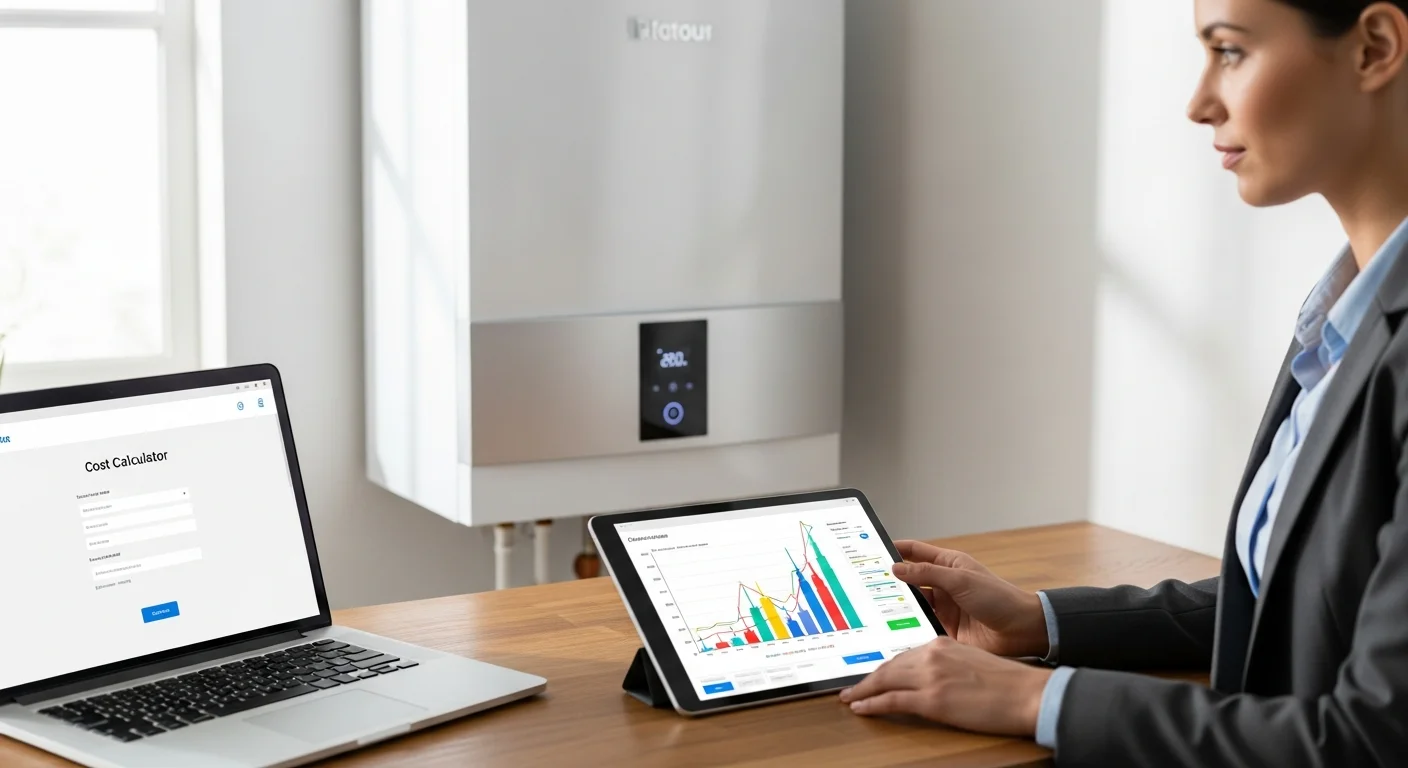
A water heater cost calculator is the most effective tool for determining your personal break-even point. By inputting your current fuel source—be it natural gas or propane—and your average monthly utility bill, the calculator provides a year-by-year savings forecast. In the 2026 market, these tools have become highly accurate by incorporating real-time local utility rates.
Factoring in Maintenance and Longevity
While maintenance for a pump heater is typically minimal, the calculator also accounts for periodic air filter cleaning and anode rod inspections. Modern 2026 units are built to last 13 to 15 years, significantly longer than many budget gas heaters, which adds to the long-term value proposition.
Heat Pump vs. Traditional Water Heaters
| Feature | Heat Pump (2026 Model) | Standard Gas/Electric |
|---|---|---|
| Energy Efficiency | 300% - 400% | 65% - 95% |
| Annual Savings | $300 - $550 | Baseline |
| Environmental Impact | Zero Direct Emissions | High Carbon Footprint |
2026 Maintenance Best Practices
Air Filter and Intake Cleaning
To keep your system running efficiently, check the air filter every six months. Because the heat pump relies on airflow, a clogged filter will force the unit to work harder and increase energy consumption. It is a simple two-minute task that protects your investment.
Managing Condensate Lines
Heat pumps naturally dehumidify the air as they heat water, producing condensate. Ensure that the drainage line is clear of debris. According to research from Rewiring America, proper drainage management is essential for preventing localized moisture issues in garages or utility rooms.
Expert Assistance in Orange County
Contact William Corcoran Today →Frequently Asked Questions
What is the average installation cost in 2026?
The total cost for professional installation in 2026 generally ranges from $2,500 to $4,500 before rebates. This includes the unit, labor, and necessary permits. After applying the federal tax credit and local California rebates, many homeowners see their out-of-pocket costs drop below $1,500.
Do heat pump water heaters work in the winter?
Yes, modern 2026 heat pump units are designed to operate efficiently in temperatures as low as 40°F. In the mild Winter 2026 climate of Southern California, these units perform exceptionally well year-round. If temperatures drop lower, most models have a hybrid backup mode to ensure consistent hot water.
How much noise do these units make?
Most 2026 models produce about 45 to 55 decibels, which is similar to the hum of a modern dishwasher. When installed in a garage or utility room, the sound is rarely noticeable inside the living areas of the home.
Are there rebates for switching from gas to electric?
Yes, California currently offers some of the highest incentives for "fuel switching." Because reducing natural gas consumption is a state priority, homeowners replacing a gas heater often qualify for higher rebate tiers compared to those just upgrading an old electric unit.
What size unit do I need for a family of four?
A 50-gallon or 65-gallon unit is standard for a household of four. Heat pump water heaters typically have a slower recovery time than gas, so experts often recommend sizing up slightly or choosing a unit with a high "first-hour rating" to ensure you never run out during peak morning hours.
Conclusion
Transitioning to a high-efficiency water heating system is no longer just an environmental choice—it is a smart financial strategy for 2026. By leveraging the available state and federal incentives, the initial barrier to entry has been largely removed. As utility rates continue to fluctuate, locking in low energy consumption today provides security for your household budget for over a decade.
Whether you are planning a complete home renovation or simply replacing an aging appliance, switching to a pump heater is one of the most impactful upgrades you can make. Take the time to use a professional calculator to see exactly how the numbers work for your specific home and usage patterns.
At Orange County Home Savings, we specialize in helping residents navigate the complex world of rebates and energy upgrades. If you are ready to maximize your home's efficiency in 2026, our team is here to provide the expert guidance and calculation tools you need to make an informed decision.
About the Author

Written by William Corcoran, Orange County Home Savings Expert
William Corcoran has helped Orange County families save money on their homes for over 15 years. Specializing in property tax reduction and smart refinancing, he offers expert guidance you can trust. www.energybot.com www.energystar.gov
Related Articles


Ready to Find Your Savings?
Get a free personalized report showing all rebates and incentives your home qualifies for.
Get My Free Report