Pool Pump Energy Savings Calculator: How Much Can I Save with a Variable Speed Pool Pump?
Key Takeaways
- Variable speed pool pumps can reduce energy consumption by up to eighty percent compared to traditional pumps
- Heating a pool accounts for the largest portion of annual operating costs for most California pool owners
- Switching to a heat pump from a traditional gas heater can lead to massive long term utility savings
- Energy efficient equipment often pays for itself within two to three years of installation through lower monthly bills
Owning a pool is a hallmark of the California lifestyle, but it often comes with a significant financial burden in the form of monthly utility bills. According to Energy.gov, the swimming pool pump is often the second largest consumer of electricity in a home, trailing only the HVAC system. For residents in Orange County, managing these costs is essential for sustainable home ownership.
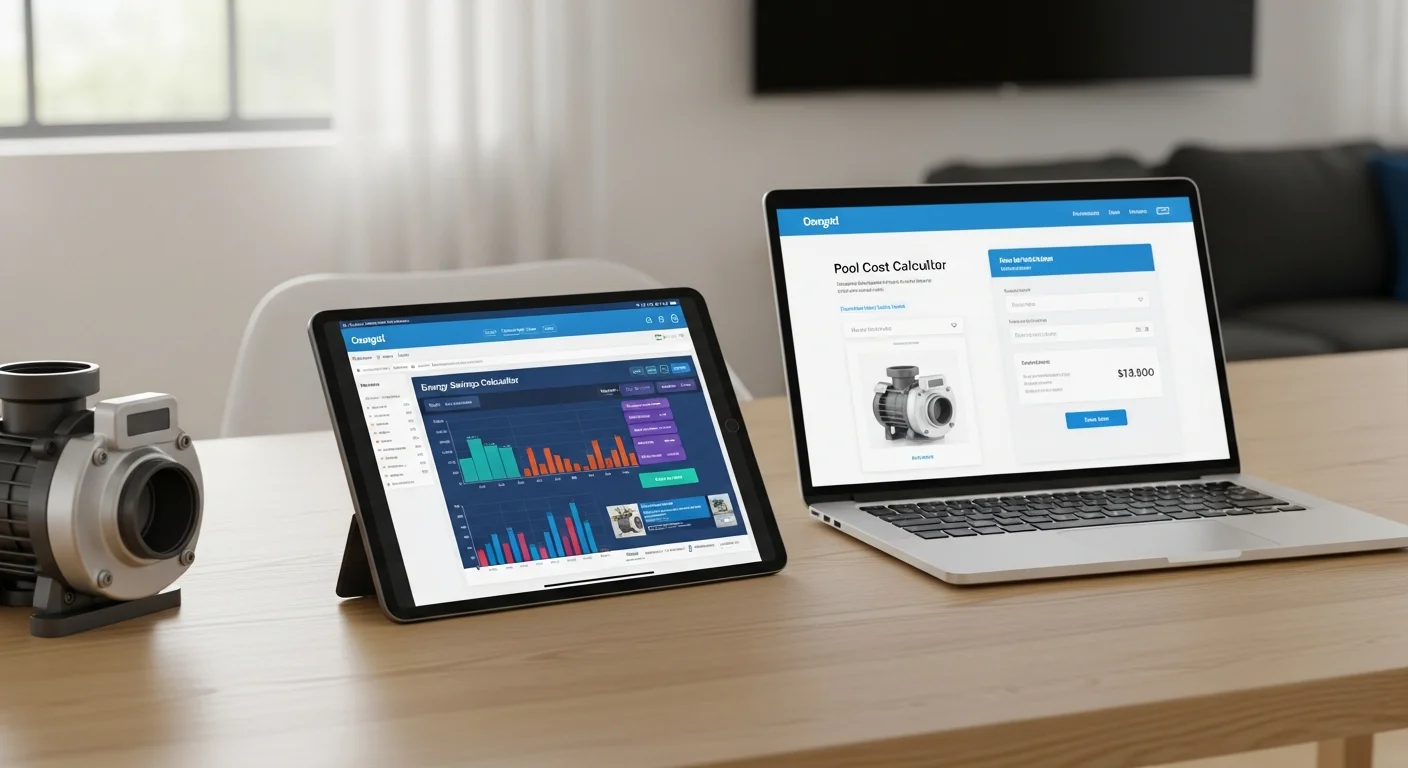
Using a pool pump energy savings calculator allows homeowners to visualize the immediate impact of upgrading outdated hardware. By inputting current usage rates and equipment specifications, you can see exactly how much money is slipping through your fingers each month. Understanding these numbers is the first step toward a more efficient and cost-effective backyard oasis.
How to Reduce Pool Energy Costs with Modern Equipment
Pool Cost Calculator
Buy NowOptimizing Filtration Cycles
One of the most effective pool energy efficiency tips is to reduce the duration of your filtration cycles. Many pool owners run their pumps far longer than necessary, wasting electricity without significantly improving water clarity. Modern systems allow for precise scheduling to match the specific needs of your pool's volume.
The Role of Automation
Smart automation controllers can further enhance efficiency by adjusting pump speeds and heater activity based on real-time conditions. This ensures that you only use the minimum amount of energy required to maintain safety and comfort. Automation eliminates the human error often associated with manual timers.
Want to see your specific savings potential?
Access the Pool Cost Calculator →Variable Speed vs Single Speed Pool Pump: The Financial Impact
Understanding Pump Physics
Traditional single-speed pumps operate at a constant, high RPM regardless of the task. However, according to the Affinity Laws of fluid dynamics, reducing pump speed by half reduces power consumption to one-eighth of the original. This is why variable speed pumps are so much more efficient.
Long-Term ROI
While the initial investment for a variable speed pump is higher, the variable speed pool pump ROI is unmatched in home maintenance. Most owners find that the pump pays for itself in less than three years. After that period, the savings contribute directly to your home's monthly budget.
Calculating Your Variable Speed Pool Pump Energy Savings
How Much Can I Save With a Variable Speed Pool Pump?
Typical savings range from $400 to $1,200 annually depending on local electricity rates. In high-cost areas like Southern California, these figures often lean toward the higher end. Using a digital pool pump energy savings calculator provides an personalized estimate based on your specific pool size and current pump run-time.
| Pump Type | Est. Monthly Cost | Annual Efficiency |
|---|---|---|
| Single Speed (1.5 HP) | $120 - $180 | Baseline |
| Variable Speed (Optimized) | $20 - $45 | 75% - 90% Savings |
Stop overpaying for your pool's electricity.
Calculate Your Savings Now →Energy Efficient Pool Heater Savings: Gas vs Heat Pump
The Gas Heater Challenge
Gas heaters are effective for rapid heating but are notoriously expensive to operate. As natural gas prices fluctuate, the how much does it cost to heat a pool question becomes more complex. For those who keep their pools heated year-round, gas is rarely the most economical choice.
Heat Pump Advantages
Heat pumps work by extracting heat from the air, making them significantly more efficient than combustion-based heaters. According to The National Renewable Energy Laboratory, heat pumps can maintain water temperature for a fraction of the cost of gas, especially in warmer climates like Orange County.
The True Cost of Running a Pool in California
Electricity Rates and Tiers
California has some of the highest residential electricity rates in the country. Many utilities, such as Southern California Edison (SCE), use tiered pricing or time-of-use (TOU) plans. An inefficient pool pump can easily push a household into the most expensive billing tier.
Mitigating High Utility Bills
By focusing on reducing swimming pool utility bills through equipment upgrades, you protect yourself against future rate hikes. Efficiency is not just about saving money today; it is a hedge against the rising cost of energy in the Golden State.
Benefits of Energy Efficient Pool Equipment for Homeowners
Quieter Operation
Beyond the financial benefits of energy efficient pool equipment, variable speed pumps are significantly quieter than their single-speed counterparts. This improves the ambiance of your backyard and keeps neighbors happy during late-night filtration cycles.
Extended Equipment Life
Running equipment at lower, optimized speeds reduces wear and tear on your entire plumbing and filtration system. This means fewer repairs and a longer lifespan for your filters and chlorinators. Efficient systems are simply built to last longer under modern operational standards.
Ready to upgrade your home's efficiency?
Explore Savings Options →Frequently Asked Questions
How much can I save with a variable speed pool pump?
Most homeowners save between 70% and 90% on their pump-related electricity costs. For a typical Orange County home, this translates to $80 to $150 in monthly savings. The exact amount depends on your pool size and utility rate.
Is a heat pump pool heater worth it?
Yes, especially for those who want to extend their swimming season. Heat pumps use electricity to move heat rather than generate it, resulting in 4-5 times higher efficiency than gas. They are most effective in temperatures above 50 degrees Fahrenheit.
What is the most energy efficient pool pump setting?
The most efficient setting is running the pump at a lower RPM for a longer duration. This provides superior filtration and chemical mixing while consuming significantly less wattage than a short, high-speed burst.
How do I use a pool pump energy savings calculator?
Simply visit the OC Home Savings website and input your current equipment details. You will need to know your pump's horsepower and how many hours it runs daily. The tool will then compare your costs against modern efficient alternatives.
Do energy efficient pool pumps require more maintenance?
Actually, they often require less. Because they operate at lower speeds, there is less friction and heat buildup within the motor. Variable speed pumps are also typically totally enclosed fan-cooled (TEFC), which protects them better from the elements.
In conclusion, managing the cost of running a pool in California requires a proactive approach to equipment selection. By utilizing tools like our pool pump energy savings calculator, you can make data-driven decisions that benefit your wallet and the environment.
Don't let inefficient hardware drain your bank account. Take the first step toward a smarter home today by evaluating your current setup and exploring the modern alternatives available through Orange County Home Savings.
About the Author

Written by William Corcoran, Orange County Home Savings Expert
William Corcoran has helped Orange County families save money on their homes for over 15 years. Specializing in property tax reduction and smart refinancing, he offers expert guidance you can trust. www.energybot.com www.energystar.gov
Related Articles
Ready to Find Your Savings?
Get a free personalized report showing all rebates and incentives your home qualifies for.
Get My Free Report