Water-Saving Landscaping Rebates: Calculate Your Savings for a Sustainable Garden Transformation in 2026
Key Takeaways
- California homeowners can access significant financial incentives for removing thirsty grass in 2026
- Sustainable landscaping reduces monthly water bills by up to sixty percent on average
- Proper documentation and pre-approval are essential steps before removing any existing turf
- Native plants support local biodiversity while requiring minimal maintenance and irrigation
As we move through the Winter 2026 season, California homeowners are facing increasing pressure to manage water resources responsibly while maintaining curb appeal. One of the most effective ways to balance these goals is by embarking on a lawn replacement project that swaps traditional turf for climate-appropriate flora. Not only does this transition help the environment, but it also offers substantial financial rewards through local and state-funded programs.
Navigating the complexities of rebate eligibility and landscape design can be daunting. Many residents are unaware of just how much they can save by utilizing modern water-saving landscaping rebates. Whether you are looking to install a rock garden, artificial turf, or a lush native plant sanctuary, understanding the financial landscape is your first step toward success.
Calculate Your Savings: Understanding Water-Saving Landscaping Rebates
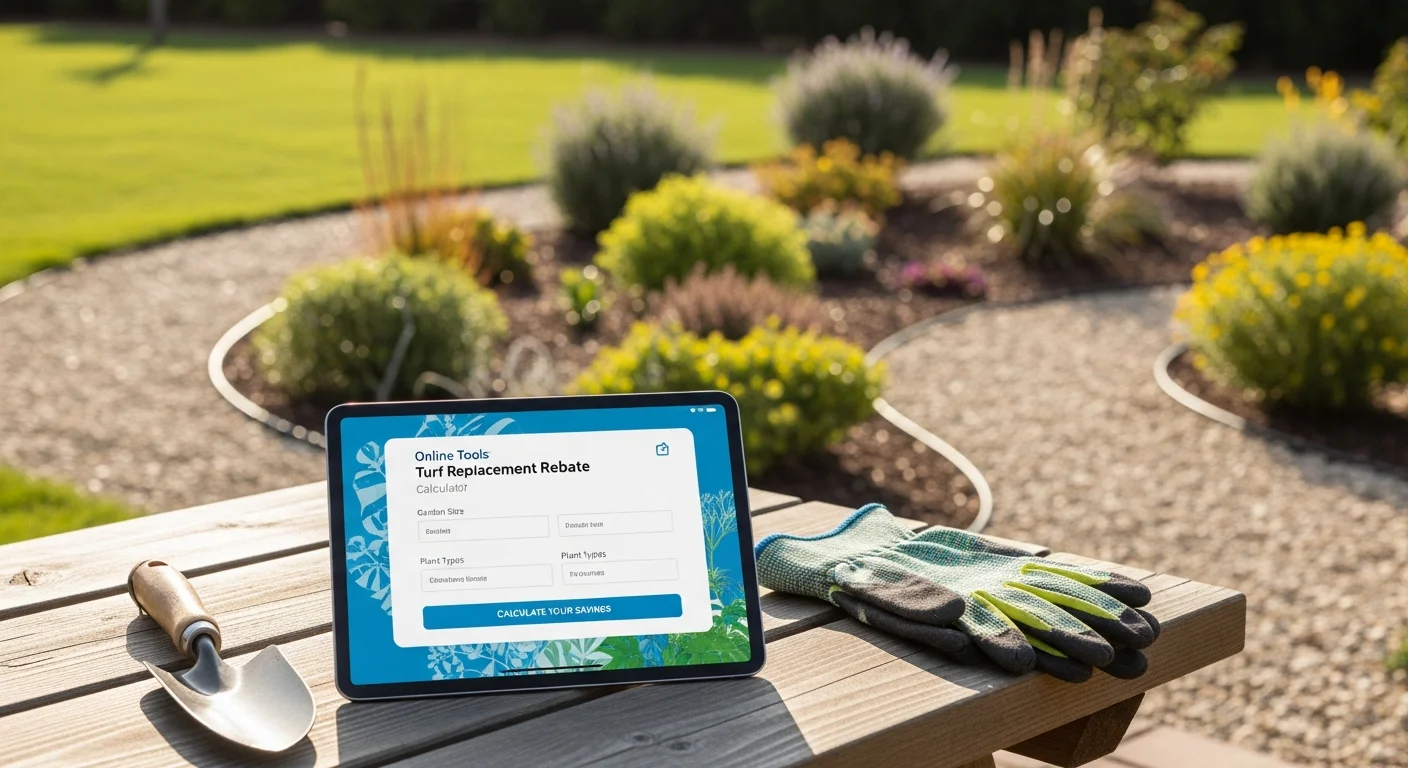
Turf Replacement Rebate Calculator
Buy NowMaximizing Your Rebate Potential
In 2026, rebate amounts are often calculated based on the square footage of grass removed. Programs managed by agencies such as the Metropolitan Water District of Southern California can offer several dollars per square foot. By using a specialized tool to calculate turf replacement savings, you can accurately forecast your budget before breaking ground.
Regional Variations in 2026
Different municipalities in Orange County may offer "piggyback" rebates on top of regional incentives. This means your total payout could be higher than the state average. It is vital to check current California landscape rebate programs 2026 updates to ensure you are receiving the maximum possible amount for your specific zip code.
Want to see exactly how much you can save on your garden upgrade?
Use the Rebate Calculator →Financial Benefits of a Professional Lawn Replacement
Reducing Monthly Utility Expenses
The most immediate impact of a lawn replacement is the drastic reduction in outdoor water consumption. According to the EPA WaterSense program statistics, landscape irrigation accounts for nearly one-third of all residential water use. Switching to low-water alternatives can cut this expense by half almost instantly.
Long-term Maintenance Savings
Beyond the water bill, consider the cost of mowers, fertilizers, and pesticides. A drought-tolerant garden requires significantly less upkeep. These drought-tolerant garden benefits compound over the years, making the initial investment highly profitable in the long run.
Best Drought-Resistant Plants for OC Gardens in 2026
Top Picks for Coastal Climates
Selecting the best drought-resistant plants for OC involves understanding local microclimates. Plants like the California Lilac (Ceanothus) and various types of Sage (Salvia) thrive in our soil and provide beautiful blooms during the Winter 2026 season. These species are naturally adapted to survive with minimal rainfall.
Incorporating Native Plant Garden Ideas
Using native plant garden ideas not only saves water but also supports local pollinators like honeybees and butterflies. Research from the University of California Agriculture and Natural Resources highlights that native gardens require zero chemical fertilizers once established, protecting our local groundwater.
Sustainable Yard Conversion Costs and ROI
Budgeting for Your Transformation
When calculating sustainable yard conversion costs, factors such as soil preparation, plant maturity, and irrigation upgrades must be considered. While professional installation has an upfront cost, the rebates available in 2026 often cover 40% to 70% of the total project price.
| Landscape Type | Annual Water Savings | Maintenance Level |
|---|---|---|
| Traditional Turf | 0% (Baseline) | High |
| Native Plants | 60% - 80% | Low |
| Xeriscaping | 70% - 90% | Very Low |
Ready to lower your water bills for good?
Calculate Your Rebate Now →How to Apply for Turf Rebates Successfully
The Pre-Approval Process
A critical mistake many homeowners make is removing their grass before getting approved. To how to apply for turf rebates correctly, you must submit photos of your existing lawn and wait for a notice to proceed. This ensures the agency can verify the amount of water-guzzling turf being replaced.
Required Documentation and Standards
Most 2026 programs require a minimum plant coverage (often 25-50% of the area) and a mulch layer to prevent evaporation. Keeping detailed receipts and following professional landscape transformation tips will help you pass the final inspection without delays.
Smart Irrigation System Benefits for Modern Homes
Automation and Efficiency
One of the greatest smart irrigation system benefits is the ability to adjust watering schedules based on real-time weather data. In Winter 2026, many smart controllers will automatically shut off during rain events, preventing unnecessary waste and potential fines.
Drip Irrigation vs. Sprinklers
Drip systems deliver water directly to the root zone, minimizing runoff and evaporation. This technology is highly recommended for drought-tolerant zones. Modern homeowners are finding that drip systems, combined with sensors, help them save money on water bills 2026 and beyond.
Don't miss out on 2026's largest landscaping incentives!
Start Your Free Calculation →Frequently Asked Questions
How long does the turf rebate approval process take?
In early 2026, most applicants receive initial pre-approval within 2 to 4 weeks after submitting their online application. After completion, the final inspection and check delivery typically take an additional 6 to 8 weeks.
Can I do the work myself or do I need a contractor?
Most programs allow for DIY projects as long as they meet the specific design guidelines. However, professional installers are often more familiar with the local standards and can help ensure you don't accidentally disqualify your project.
Are artificial grass installations still eligible for rebates?
Eligibility for synthetic turf varies by specific city and water district in 2026. While some regions incentivize it, many are moving toward living, climate-native gardens because they provide better heat management and support local ecosystems.
What is the minimum square footage required for a rebate?
Typically, regional programs require a minimum of 250 square feet of grass removal. Some smaller municipal programs may have lower thresholds, so it is important to check your local water provider's specific criteria.
Will my property taxes go up if I improve my landscaping?
Generally, landscaping improvements do not trigger a reassessment of property taxes in California. In fact, professional drought-tolerant landscaping can significantly increase your home's resale value by enhancing modern curb appeal.
In conclusion, starting your lawn replacement journey today is one of the smartest financial and environmental decisions a California homeowner can make in 2026. By utilizing the available tools to plan your budget and design, you can transform your yard into a sustainable oasis that pays for itself over time.
Take the guesswork out of the process by using the resources at our site to estimate your potential returns. We are here to help you navigate every step of the way, from initial measurements to final rebate collection. A more beautiful, water-wise future for Orange County starts in your own backyard.
About the Author

Written by William Corcoran, Orange County Home Savings Expert
William Corcoran has helped Orange County families save money on their homes for over 15 years. Specializing in property tax reduction and smart refinancing, he offers expert guidance you can trust. www.energybot.com www.energystar.gov
Related Articles


Ready to Find Your Savings?
Get a free personalized report showing all rebates and incentives your home qualifies for.
Get My Free Report