Home Energy Efficiency Rating: How to Lower Utility Bills and Improve Your Score
Key Takeaways
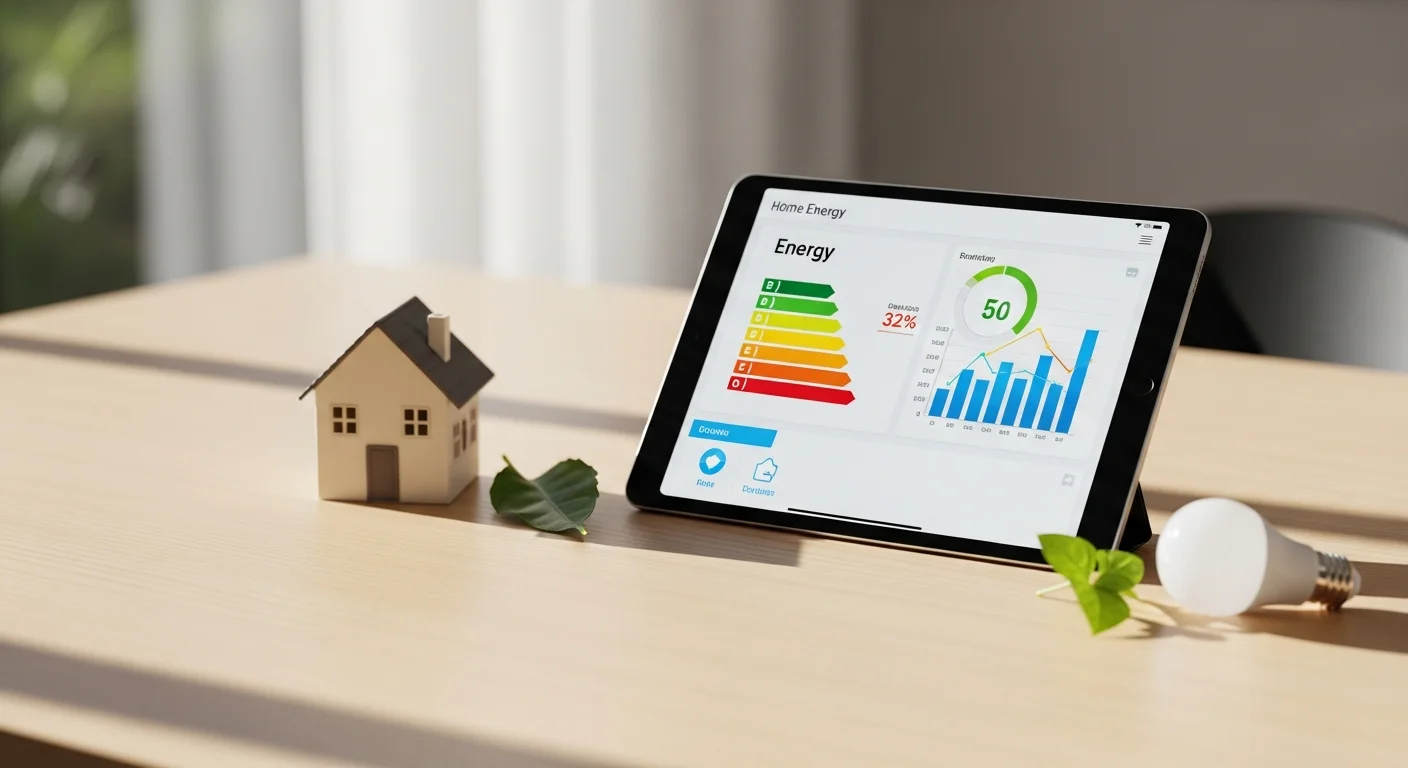
- A home energy score provides a standardized 1 to 10 rating of energy efficiency.
- Understanding the energy requirements of your home helps target cost-effective upgrades.
- Energy efficient homes often command higher resale prices in the 2026 real estate market.
- Simple insulation and HVAC improvements can lead to significant annual utility savings.
Maintaining a comfortable and affordable home in Winter 2026 starts with understanding exactly how your property consumes power. With utility costs fluctuating, homeowners in Orange County and beyond are seeking ways to optimize their living spaces for maximum performance. One of the most effective benchmarks for this is determining your estimated energy requirement to pinpoint where waste occurs.
A comprehensive efficiency assessment goes beyond just looking at your monthly bill; it looks at the envelope of your home, the age of your appliances, and the integrity of your insulation. By treating your house as a single integrated system, you can identify the weak points that are costing you money every month.
Want to know where your home stands? Calculate your score today!
Get Your Home Energy Score →Why Your Home Energy Efficiency Rating Matters in 2026
Home Energy Score Calculator
Buy NowThe Impact on Resale Value
In the current real estate market, buyers are increasingly savvy about long-term operational costs. According to research from the U.S. Department of Energy, homes with high efficiency ratings are often perceived as better maintained and more valuable. A high score acts as a verified certificate of quality for potential buyers.
Environmental Stewardship
Reducing your carbon footprint is no longer just a trend; it is a necessity for the modern homeowner. By optimizing your energy usage, you directly contribute to regional sustainability goals. Lowering your household emissions helps preserve the local environment for future generations while saving you money.
How to Improve Home Energy Score and Value
Sealing Air Leaks
Small gaps around windows and doors can lead to significant thermal loss. Using weatherstripping and caulk is a cost-effective way to improve your score. As noted by Energy Star, sealing air leaks can save up to 15% on heating and cooling costs annually.
Upgrading Attic Insulation
Most older homes have insufficient attic insulation. By increasing your R-value, you keep heat inside during Winter 2026 and outside during the summer months. This single upgrade is often the most impactful way to boost your numerical rating quickly.
Factors Influencing Your Estimated Energy Requirement
HVAC System Performance
Your heating and cooling systems are the primary drivers of your estimated energy requirement. Older units operate far less efficiently than modern heat pumps or high-SEER air conditioners. Regular maintenance ensures these systems don't work harder than necessary to maintain comfort.
Home Size and Geometry
The physical footprint of your home dictates how much energy is needed to regulate internal temperatures. Two-story homes often face different challenges than ranch-style layouts due to rising heat. Understanding how your home's geometry impacts your estimated energy requirement allows for more targeted mechanical upgrades.
Ready to lower your monthly bills? Use our free tool now.
Start Your Assessment →Energy Audit vs Home Energy Score: Which Do You Need?
Standardized Comparison
A Home Energy Score provides a standardized metric, similar to a miles-per-gallon rating for a car. It allows you to compare your home against others regardless of occupant behavior. According to Wikipedia, these ratings are essential for creating a baseline of residential efficiency.
Deep-Dive Diagnostics
An audit is a more invasive look into your home, often involving blower door tests and infrared cameras. While more expensive, it provides a granular list of repairs. For most 2026 homeowners, starting with a score is the most efficient first step to identify major red flags.
Top Energy Efficient Home Upgrades for Winter 2026
Smart Thermostat Integration
The latest smart thermostats in 2026 use AI to learn your habits and adjust temperatures automatically. This ensures you aren't heating an empty house. These devices can reduce your total estimated energy requirement by ensuring systems only run when necessary.
LED Lighting Transitions
Switching to LED bulbs remains one of the simplest and cheapest upgrades. Modern LEDs provide better color rendering and last significantly longer than older technologies. Data from the National Renewable Energy Laboratory highlights lighting as a primary area for quick ROI.
Using a Home Energy Savings Calculator for Results
| Upgrade Type | Estimated ROI | Comfort Impact |
|---|---|---|
| Attic Insulation | High | Significant |
| Smart Thermostat | Medium | Moderate |
| LED Retrofit | Very High | Low |
Inputting Accurate Data
To get the best results from a digital tool, you must provide accurate information about your home's age, square footage, and fuel types. This precision allows the calculator to generate a realistic prediction of potential savings. It serves as an excellent virtual starting point before committing to professional services.
Analyzing Recommendations
Once you have your score, the calculator will typically suggest specific actions. Prioritize the ones with the lowest cost and highest impact first. This strategic approach ensures you get the most value for every dollar invested in your property.
Frequently Asked Questions
What is a good home energy score?
A score of 10 represents the most efficient home, while a 1 is the least efficient. Most homes in the United States average around a 5, so anything above that is considered better than average. High scores indicate that the home is well-insulated and has efficient mechanical systems.
Does a high score increase home value?
Yes, many studies show that homes with verifiable energy efficiency ratings sell for a premium. Buyers value the transparency regarding future utility costs and the comfort associated with an efficient home. In competitive markets like Orange County, it can be a significant differentiator.
How long does an assessment take?
A typical professional assessment for a Home Energy Score takes about one to two hours, depending on the size of the home. The assessor will need access to all areas, including the attic and basement. Digital calculators can provide a preliminary estimate in just a few minutes.
Are there tax credits for efficiency?
In 2026, there are several federal and state-level incentives for making energy-efficient upgrades. Programs often cover a portion of the costs for insulation, windows, and HVAC upgrades. It is recommended to check with a tax professional to see which current credits apply to your project.
Is a score mandatory for selling a house?
Mandatory disclosure varies by city and state; however, many municipalities are now requiring a Home Energy Score at the time of listing. Even where not required, providing one voluntarily can build trust with potential buyers and speed up the sales process.
Conclusion
Improving your home's energy efficiency is a journey that pays dividends in both comfort and cost savings. By taking the time to understand your estimated energy requirement, you move from guessing about your bills to making data-driven decisions. Whether you start with small DIY seals or invest in a major solar installation, every step contributes to a more efficient future.
As we navigate through Winter 2026, the value of a sustainable home only continues to grow. We encourage you to use professional tools and expert advice to guide your path toward lower utility costs and a healthier living environment for your family. A small investment in knowledge today leads to significant returns tomorrow.
Stop wasting money on energy bills. Find your savings potential now!
Get Started Today →About the Author

Written by William Corcoran, Orange County Home Savings Expert
William Corcoran has helped Orange County families save money on their homes for over 15 years. Specializing in property tax reduction and smart refinancing, he offers expert guidance you can trust. www.energybot.com www.energystar.gov
Related Articles
Ready to Find Your Savings?
Get a free personalized report showing all rebates and incentives your home qualifies for.
Get My Free Report