Federal EV Incentives and Orange County Home Rebates: A Comprehensive 2026 Savings Guide

Key Takeaways
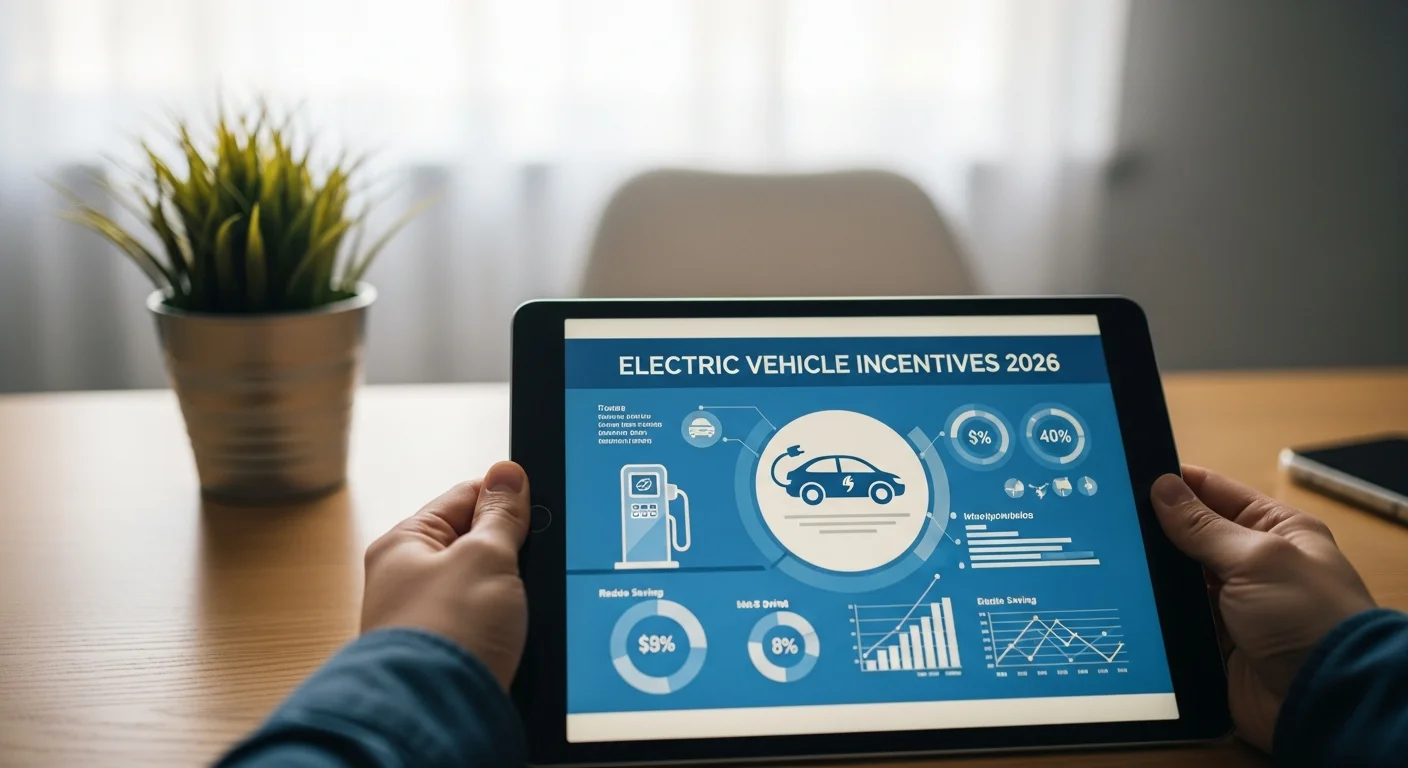
- Federal clean vehicle incentives offer up to seven thousand five hundred dollars at the point of sale for eligible buyers.
- Income limits and vehicle price caps remain strict requirements for eligibility in the Spring 2026 season.
- Orange County residents can stack federal credits with state rebates and local utility infrastructure programs.
- Personalized reports help homeowners identify specific property based incentives that automated tools often miss.
As we enter the Spring 2026 season, the landscape for sustainable transportation and energy-efficient living in Southern California has never been more rewarding. For many residents, the electric vehicle tax credit remains the primary driver for transitioning away from internal combustion engines. However, navigating the complex web of federal regulations and local Orange County incentives requires a strategic approach to maximize your total return on investment.
Homeowners in cities like Irvine, Anaheim, and Newport Beach are uniquely positioned to benefit from a multi-layered incentive structure. By understanding how to claim federal EV tax credit amounts alongside local utility programs, you can effectively lower the total cost of ownership for both your vehicle and your home energy infrastructure. This guide breaks down the latest 2026 updates to ensure you don't leave money on the table.
Ready to see your total potential savings?
Get Your Free Incentive Report →Understanding How the Electric Vehicle Tax Credit Works in 2026
Free Home Rebate & Incentive Report
Buy NowPoint-of-Sale Transfer Mechanisms
In 2026, the most significant advantage for buyers is the ability to transfer the credit directly to the dealership at the time of purchase. According to the IRS Clean Vehicle Credit guidelines, this allows for an immediate price reduction rather than waiting until tax season. This effectively acts as a larger down payment, reducing your monthly financing costs from day one.
New vs. Used Eligibility Requirements
The credit applies differently depending on the vehicle's age. New clean vehicles may qualify for up to $7,500, while used vehicles are eligible for 30% of the sale price, capped at $4,000. It is critical to verify the federal tax credit for clean vehicles eligibility for the specific VIN through authorized government portals before finalizing any transaction.
Income Limits for EV Tax Credit 2026: Do You Qualify?
Modified Adjusted Gross Income Thresholds
To ensure the program benefits middle-income families, strict income caps remain in place for the Spring 2026 season. For new vehicles, the limits are set at $300,000 for married couples filing jointly and $150,000 for individuals. If your income exceeds these limits, you may not be eligible for the federal portion of the savings.
Vehicle MSRP Price Caps
The price of the vehicle itself is also a qualifying factor. Generally, vans, SUVs, and pickup trucks must have an MSRP below $80,000, while sedans and other smaller vehicles must stay under $55,000. Checking the income limits for EV tax credit 2026 protocols ensures you select a car that fits within the legal definitions of the program.
California EV Rebates 2026 for OC Residents
State-Level Incentives and Clean Air Programs
California continues to lead with aggressive clean air goals. Programs managed by the California Air Resources Board provide additional rebates for low-to-moderate income households. These state-level California EV rebates 2026 can often be stacked on top of federal incentives, dramatically lowering the barrier to entry for Orange County drivers.
Access to HOV Lanes and Parking Perks
Beyond direct cash incentives, Orange County residents benefit from non-monetary perks. Clean air vehicle stickers allow single-occupant access to HOV lanes on the 405 and 5 freeways, saving valuable time during daily commutes. Additionally, many municipal areas offer preferred parking for electric vehicles at no extra cost.
Stop guessing and start saving with a local expert analysis.
Generate My Home Rebate Report →EV Charger Installation Rebates
Federal Alternative Fuel Infrastructure Credit
Buying the car is only half the battle; fueling it efficiently at home is the other. The federal government offers a 30% credit (up to $1,000) for the purchase and installation of a Level 2 home charging station. This EV charger installation rebates program is essential for homeowners looking to modernize their electrical panels.
Southern California Edison (SCE) Programs
Locally, Southern California Edison provides various programs for residential customers. According to the SCE EV resource center, residents can often access lower time-of-use (TOU) rates or direct rebates for installing smart chargers that communicate with the grid during off-peak hours.
Electric Vehicle vs Plug-in Hybrid Tax Credit
Battery Capacity and Credit Amount
Not all clean vehicles are treated equally under the law. Full Battery Electric Vehicles (BEVs) typically qualify for the maximum credit due to their larger battery sizes. In contrast, when comparing an electric vehicle vs plug-in hybrid tax credit, many PHEVs only qualify for a partial credit because their battery capacities are smaller.
Used Market Considerations
The criteria for the used electric vehicle tax credit differ slightly. For a used vehicle to qualify, it must be at least two model years old and be sold by a licensed dealer for less than $25,000. This opens up opportunities for budget-conscious buyers to enter the EV market while still receiving significant federal support.
| Incentive Type | Maximum Benefit |
|---|---|
| New Federal Tax Credit | $7,500 (Point-of-Sale) |
| Used Federal Tax Credit | $4,000 (Point-of-Sale) |
| Home Charger Credit | 30% of cost (up to $1,000) |
| Utility Infrastructure Rebates | Varies by Zip Code |
Stacking Incentives with Home Energy Reports
The Synergy of Vehicle and Home Efficiency
The true power of modern incentives lies in "stacking." When you purchase an EV, you likely also qualify for solar rebates, heat pump incentives, and weatherization programs. These Orange County home energy rebates work in tandem with your vehicle savings to transform your property into a high-performance, low-cost asset.
Why Personalized Data Matters
Generic advice often misses local city-specific programs. Whether you live in a multi-family unit or a single-family home in Mission Viejo, your available incentives change based on your specific utility provider and income bracket. A professional report provides the clarity needed to navigate these variables accurately.
Don't leave thousands of dollars on the table this Spring 2026.
Claim Your Personalized Rebate Report →Frequently Asked Questions
Can I get the tax credit if I lease an electric vehicle?
Leasing offers a unique loophole. While the consumer credit has income and vehicle price caps, the commercial credit (used by leasing companies) does not. Many leasing companies pass this $7,500 benefit to the customer in the form of lower monthly payments, regardless of the lessee's personal income.
What happens if my tax liability is lower than the credit amount?
With the current point-of-sale transfer rules, you receive the full value of the credit even if your total tax liability for the year is lower than the credit amount. This makes the incentive significantly more accessible to a wider range of taxpayers than previous non-refundable versions.
Does the credit apply to luxury electric vehicles?
Luxury vehicles are often excluded due to the MSRP caps of $80,000 for SUVs/Trucks and $55,000 for other vehicles. It is vital to check the final window sticker price before purchasing, as even small options could push a vehicle over the limit and disqualify it from the federal program.
How do I verify if a used EV is eligible for the credit?
To qualify, a used EV must be purchased through a dealer, have a sale price of $25,000 or less, and not have been previously transferred to another qualified buyer since August 2022. You can verify VIN eligibility on official government sites like FuelEconomy.gov.
Are there incentives for bi-directional charging at home?
Yes, bi-directional charging (Vehicle-to-Home or V2H) is increasingly eligible for advanced storage incentives. Because these systems allow your car to power your house during outages, they often fall under both clean energy storage credits and specialized utility pilot programs in Southern California.
In conclusion, securing your electric vehicle tax credit is just the first step in a much larger journey toward home energy independence. By taking advantage of the unique ecosystem of incentives available to Orange County residents in 2026, you can significantly reduce your carbon footprint while keeping more money in your bank account.
As technology and regulations continue to evolve throughout 2026, staying informed through personalized reporting is your best defense against missed opportunities. Our goal at Orange County Home Savings is to ensure every resident has a clear, actionable path toward a more efficient and affordable future.
About the Author

Written by William Corcoran, Orange County Home Savings Expert
William Corcoran has helped Orange County families save money on their homes for over 15 years. Specializing in property tax reduction and smart refinancing, he offers expert guidance you can trust. www.energybot.com www.energystar.gov
Related Articles
Ready to Find Your Savings?
Get a free personalized report showing all rebates and incentives your home qualifies for.
Get My Free Report