Home EV Charging Costs: 2026 Guide to Installation and Rebates
Key Takeaways
- Home charging is the most cost-effective way to power your electric vehicle in 2026.
- Level 2 stations provide significantly faster charging speeds than standard wall outlets.
- Local Orange County utility rebates can offset a major portion of installation hardware costs.
- Federal tax credits for residential charging equipment remain available throughout Winter 2026.
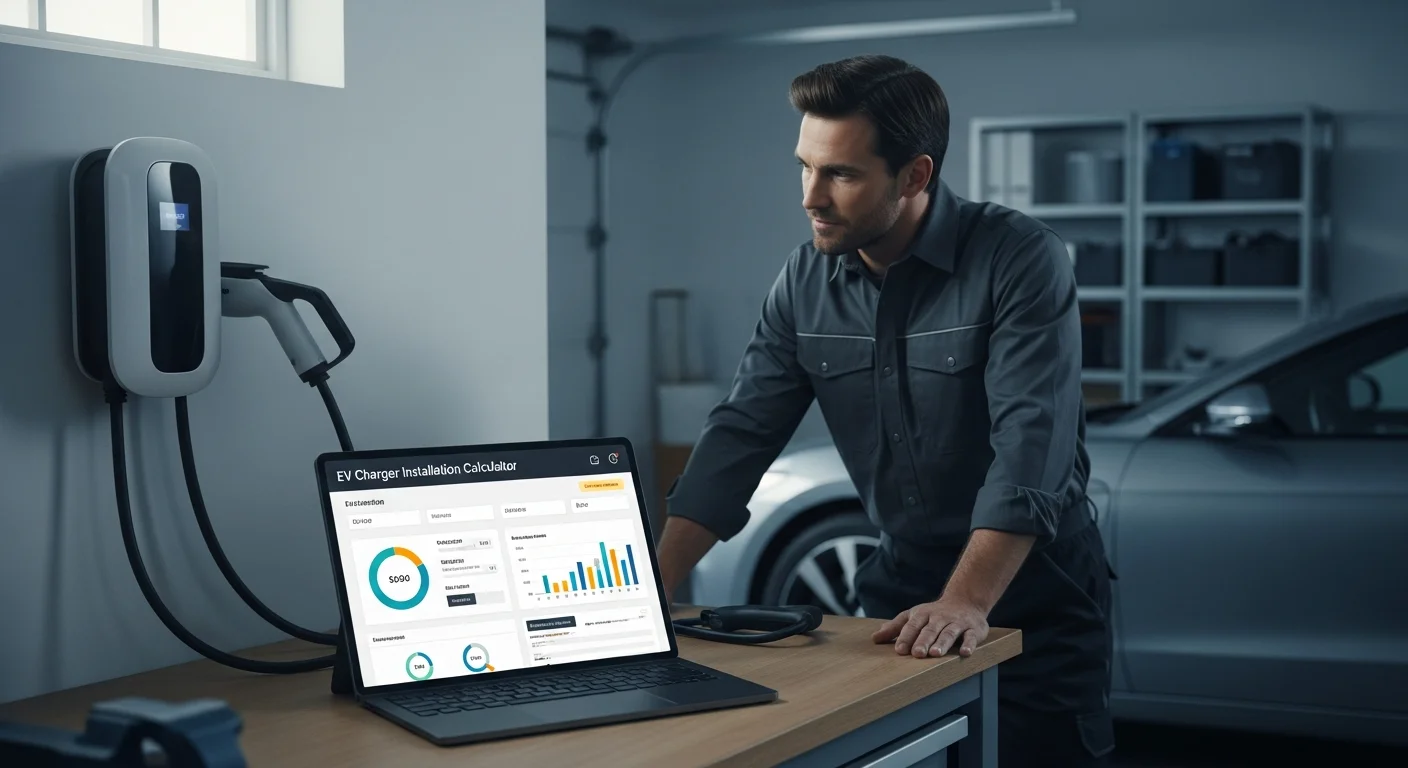
As we move into the Winter 2026 season, the transition to electric mobility has never been more accessible for Southern California residents. Choosing the right hardware for your car charger ev setup is the first step toward true energy independence and long-term fuel savings. With evolving technology and new state mandates, understanding the landscape of residential charging is essential for every homeowner.
In this guide, we will explore the critical components of a successful installation, from selecting the proper equipment to navigating the complex world of utility rebates. According to the U.S. Department of Energy, home charging accounts for nearly 80% of all electric vehicle refueling sessions, making it the most important infrastructure investment for EV owners.
Understanding Home Charging Costs
EV Charger Installation Calculator
Buy NowEquipment and Hardware Pricing
The initial cost of a home charging station in 2026 typically ranges from $400 to $900 for high-quality Level 2 hardware. Brands have focused on integrating smart-connectivity features that allow you to schedule charging during off-peak hours when electricity rates are lowest.
Electrical Labor and Permitting
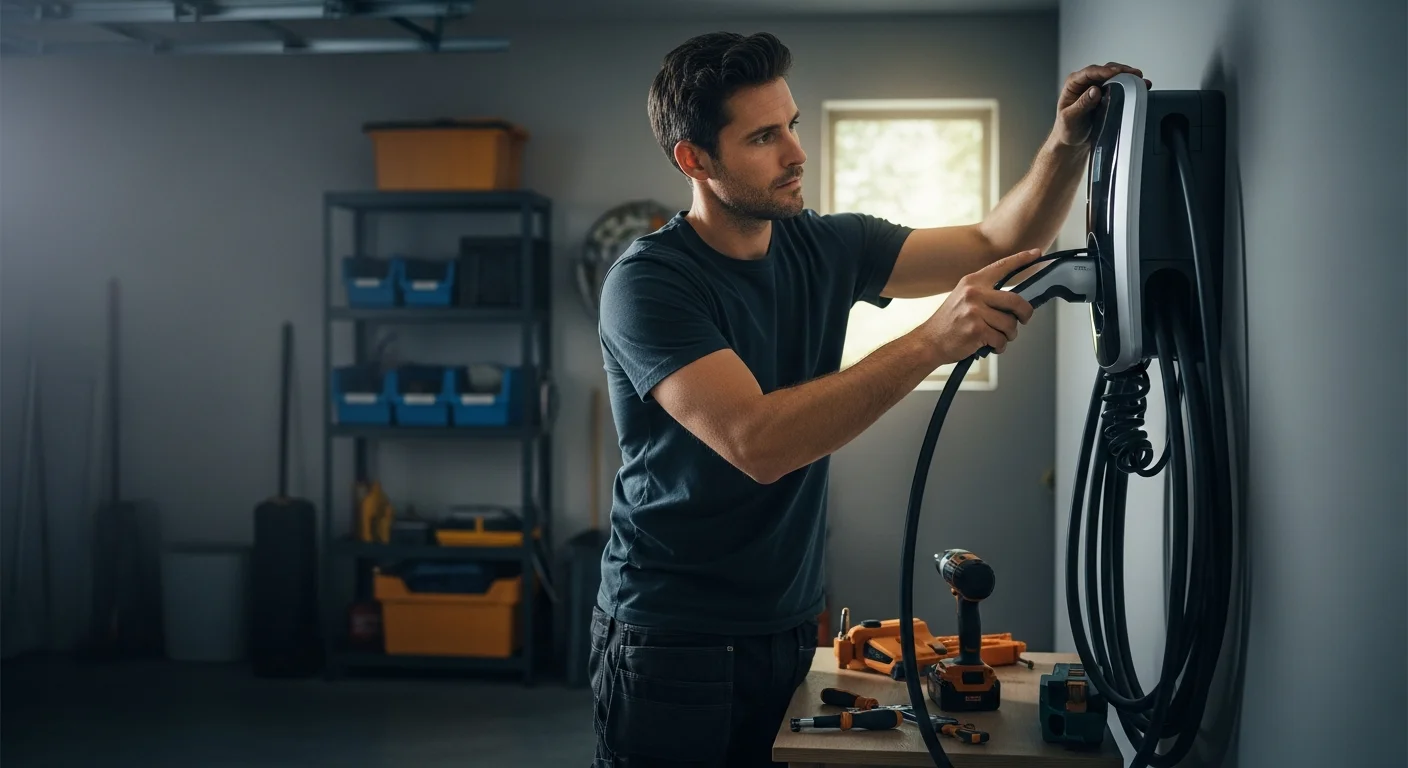
Labor costs vary based on the distance between your electrical panel and the garage. Most professional installations in Orange County require a dedicated 240V circuit and a municipal permit to ensure safety and compliance with the National Electrical Code.
Estimate Your 2026 Installation Costs Instantly
Use the Cost Calculator →2026 Rebates and Incentives for Your car charger ev
Federal Tax Credits for Residents
As of Winter 2026, the federal government continues to support residential infrastructure. According to the Internal Revenue Service, homeowners in eligible census tracts can claim a credit of 30% for the cost of hardware and installation.
Local Utility Programs in Orange County
Utilities like Southern California Edison (SCE) often provide localized incentives. These programs are designed to encourage the adoption of smart chargers that can communicate with the grid to balance load during peak demand periods.
Level 2 vs. Level 1: Choosing the Right Setup
The Speed Advantage of Level 2
While Level 1 uses a standard 120V outlet, a Level 2 car charger ev can provide 25-40 miles of range per hour of charging. This makes it possible to fully recharge even long-range vehicles overnight with ease.
| Charging Level | Voltage | Range Per Hour |
|---|---|---|
| Level 1 | 120V | 3-5 Miles |
| Level 2 | 240V | 25-40 Miles |
Discover Available Rebates for Your Home Today
Check My Eligibility →Professional Installation Factors in Orange County
Electrical Panel Capacity
Many older homes in Orange County may require a panel upgrade to support the additional load of a modern car charger ev. A professional electrician will assess your current service, often recommending 200-amp service for homes with multiple high-draw appliances.
Future-Proofing Your Home
According to research from the Environmental Protection Agency, installing higher-capacity wiring now can save thousands later if you decide to add a second electric vehicle or solar battery storage system.
Maximizing Your Energy Savings with Smart Tools
Using Cost Calculators
Before purchasing a car charger ev unit, it is wise to model your expected return on investment. Our proprietary tool helps you factor in local utility rates, rebate amounts, and installation labor to provide a clear financial picture.
Time-of-Use (TOU) Rate Plans
Switching to a TOU plan can dramatically lower the cost of powering your vehicle. By charging between midnight and 6:00 AM, you can often pay less than half the standard residential energy rate.
Calculate Your Total Savings in Seconds
Start Your Estimate →
Frequently Asked Questions
How much does a typical installation cost in 2026?
In 2026, most Orange County homeowners spend between $1,200 and $2,500 for a full professional installation including hardware. This range depends heavily on whether your electrical panel requires an upgrade or if the charger is located far from the main service point.
Can I install the charger myself?
While plug-in units are available, hardwired installations should always be performed by a licensed electrician. Professional installation ensures that your warranty remains valid and that the circuit meets all local safety codes and insurance requirements.
What is the best car charger ev for a Tesla?
Most Tesla owners choose the Tesla Wall Connector for its seamless integration, but J1772 universal chargers are also excellent options. Universal chargers provide more flexibility if you plan to own different EV brands in the future.
Are there still federal tax credits available?
Yes, for the 2026 tax year, the 30C tax credit remains active for eligible residential locations. This allows you to deduct 30% of the hardware and labor costs from your federal tax liability, up to a maximum of $1,000.
How do I find local rebates in Orange County?
Local rebates are typically managed by Southern California Edison or local municipal utilities. Using an online calculator is the fastest way to aggregate all available state, federal, and local incentives for your specific zip code.
Conclusion
Investing in a home car charger ev is a strategic move that enhances your property value and reduces your daily operating costs. By taking advantage of the robust 2026 incentives and professional installation standards, you can enjoy a reliable, fast charging experience for years to come.
Remember that the landscape of energy savings is constantly shifting. Staying informed about the latest utility programs and utilizing advanced estimation tools will ensure you never leave money on the table. For personalized assistance and to find the most accurate cost estimates for your Orange County home, visit our expert resources today.
About the Author

Written by William Corcoran, Orange County Home Savings Expert
William Corcoran has helped Orange County families save money on their homes for over 15 years. Specializing in property tax reduction and smart refinancing, he offers expert guidance you can trust. www.energybot.com www.energystar.gov
Related Articles
Ready to Find Your Savings?
Get a free personalized report showing all rebates and incentives your home qualifies for.
Get My Free Report