How to Calculate Pool Gallons: A Complete Guide to Swimming Pool Volume and Energy Savings
Key Takeaways
- Accurate volume measurements prevent chemical waste and water imbalance.
- Different pool shapes require specific mathematical formulas for precision.
- Knowing your pool's gallonage is critical for selecting energy-efficient pumps.
- Using a digital calculator can simplify the process and improve accuracy.
Owning a pool in Winter 2026 requires more than just skimming leaves; it demands a precise understanding of your equipment's efficiency. The foundation of any maintenance routine is calculating the volume of a pool correctly to ensure your pump and heater are sized appropriately for your specific needs.
When you have an accurate gallon count, you avoid the common pitfalls of over-treating water or over-working your filtration system. According to the U.S. Department of Energy, right-sizing your pump can lead to significant utility savings every month.
Why a Pool Capacity Calculation Guide is Essential
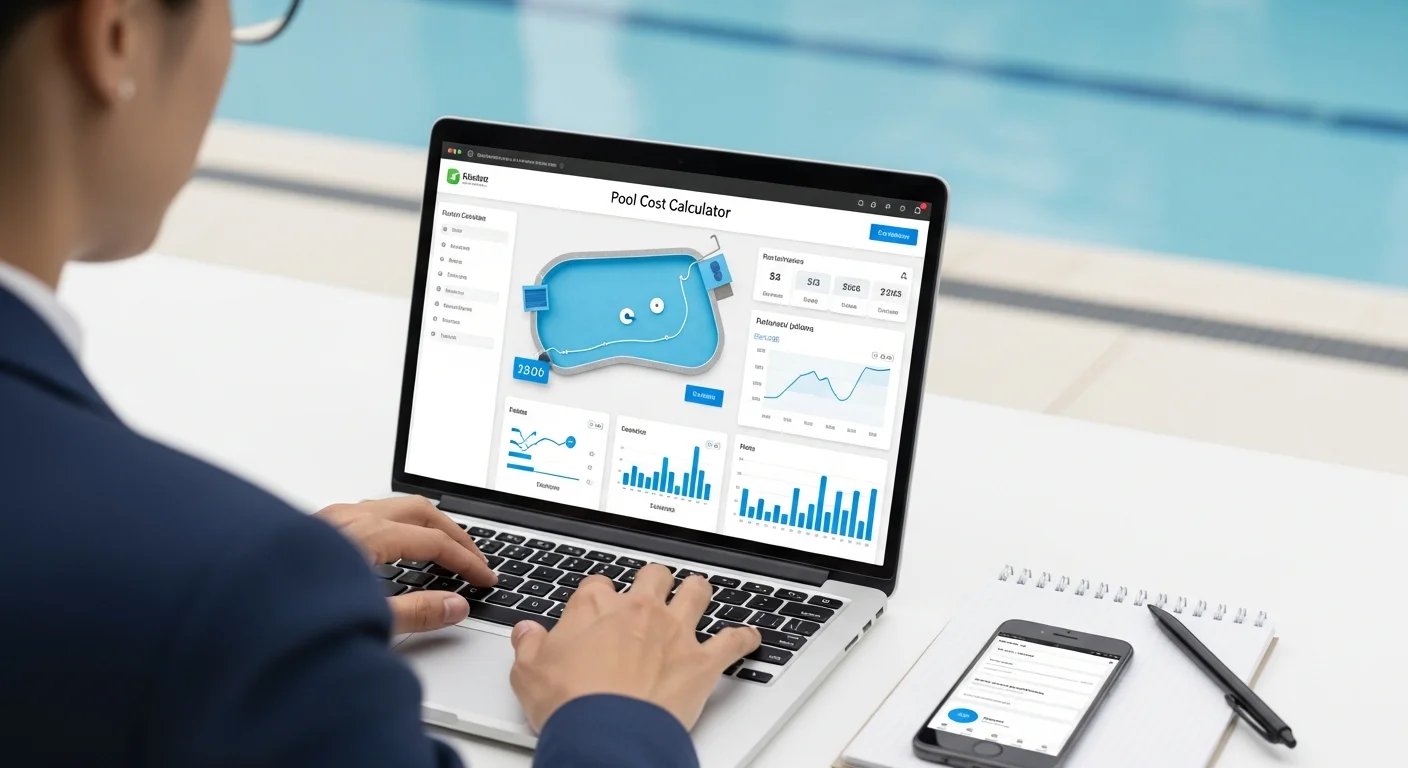
Pool Cost Calculator
Buy NowChemical Precision and Safety
Adding chemicals based on guesswork can lead to skin irritation or algae blooms. By following a pool capacity calculation guide, you ensure that every ounce of chlorine or pH balancer is used effectively, maintaining a safe environment for your family.
Equipment Longevity
Pool pumps and heaters are designed for specific flow rates. If your equipment is undersized for your volume, it will run constantly and fail prematurely, leading to expensive repairs in the 2026 season.
Want to see exactly how much you can save on your energy bills?
Use Our Free Efficiency Calculator →The Essential Swimming Pool Volume Formula for Common Shapes
Rectangular and Square Pools
For standard rectangular pools, the calculation is straightforward: Length x Width x Average Depth x 7.5. The multiplier of 7.5 converts cubic feet into gallons, which is the standard unit for chemical dosing.
Round and Circular Pools
Round pools require a slightly different swimming pool volume formula. You must multiply Pi (3.14) x Radius squared x Average Depth x 7.5 to find the total capacity accurately.
Step-by-Step Guide for Calculating the Volume of a Pool
Determining Average Depth
To find the average depth, measure the shallowest point and the deepest point. Add these two numbers together and divide by two; this ensures your calculating the volume of a pool process accounts for the slope of the floor.
Calculating Irregular Shapes
If your pool is a free-form shape, imagine it as a collection of smaller rectangles or circles. Calculate each section separately and sum them up for the most reliable estimate of total water capacity.
Using Volume to Maximize Pool Pump Energy Savings 2026
The Concept of Turnover Rate
Your turnover rate is how long it takes for all the water in the pool to pass through the filter. Most experts recommend at least one turnover every 24 hours. Knowing your gallons allows you to set your variable speed pump to the lowest effective RPM.
Optimization with Variable Speed Pumps
Achieving pool pump energy savings 2026 relies on running your pump longer at lower speeds. This is significantly more efficient than running a single-speed pump for a few hours at high velocity.
Is your current pool setup costing you too much?
Calculate Your Savings Potential →Calculate Pool Water Volume for Chemicals and Maintenance
| Pool Shape | Standard Formula | Primary Benefit |
|---|---|---|
| Rectangular | L x W x Avg Depth x 7.5 | High accuracy for modern designs |
| Circular | 3.14 x R² x Avg Depth x 7.5 | Prevents chemical overdosing |
| Oval | Long Axis x Short Axis x Avg Depth x 5.9 | Optimizes filtration cycles |
When you calculate pool water volume for chemicals, you protect the structural integrity of your pool. For example, excessive acidity from improper dosing can etch plaster and corrode metal components in your heating system.
Reducing Your Pool Maintenance Cost in 2026
Smart Heating Strategies
Heating a pool is often the largest expense for homeowners in Orange County. By knowing your exact volume, you can use a heater that reaches your target temperature without wasting energy, significantly lowering your pool maintenance cost 2026 targets.
Winter 2026 Efficiency Standards
The latest standards in Winter 2026 emphasize automation. According to the CDC Healthy Water guide, automated systems rely on accurate volume inputs to maintain precise disinfection levels, reducing the manual labor involved in pool care.
Ready to upgrade to a high-efficiency system?
Explore Energy Saving Solutions →Frequently Asked Questions
How do I find the average depth of my pool?
To calculate average depth, measure the depth at the shallow end and the deep end. Add these two measurements together and divide the total by two. For example, if your shallow end is 3 feet and the deep end is 8 feet, your average depth is 5.5 feet.
Does pool volume change based on water level?
Technically, yes, the actual volume of water fluctuates slightly as levels rise or fall due to rain or evaporation. However, for maintenance and chemical purposes, you should always use the capacity calculated when the pool is filled to the middle of the skimmer opening.
What is the most accurate way to calculate an irregular pool?
The most accurate method is to break the pool down into geometric subsections (rectangles, circles, or triangles). Calculate the volume of each section individually using the standard formulas and then add those figures together to reach a final total.
How often should I recalculate my pool volume?
You only need to calculate the volume once, unless you undergo a major renovation that changes the footprint or depth of the pool. Keep this number recorded in your maintenance log or your pool automation app for quick reference when buying chemicals.
Why is the number 7.5 used in pool formulas?
The number 7.5 represents the approximate number of gallons of water in one cubic foot. Since your pool measurements (length, width, depth) are typically taken in feet, multiplying the resulting cubic footage by 7.5 gives you the total gallon capacity.
In conclusion, calculating the volume of a pool is the single most important mathematical task for any pool owner. It influences everything from the amount of money you spend on chlorine to the monthly cost of running your filtration system. By taking the time to get these numbers right, you set the stage for a cleaner, safer, and more affordable swimming environment.
As we move through the 2026 season, homeowners in Orange County are increasingly turning to data-driven solutions to manage their utility costs. Utilizing professional calculators and energy-efficient equipment is no longer a luxury—it is a smart financial strategy for modern living.
About the Author

Written by William Corcoran, Orange County Home Savings Expert
William Corcoran has helped Orange County families save money on their homes for over 15 years. Specializing in property tax reduction and smart refinancing, he offers expert guidance you can trust. www.energybot.com www.energystar.gov
Related Articles
Ready to Find Your Savings?
Get a free personalized report showing all rebates and incentives your home qualifies for.
Get My Free Report