Mastering Your Pool Water Capacity: Formula and Savings Guide for 2026
Key Takeaways
- Accurate volume measurements prevent chemical waste and pump overworking.
- Standard formulas differ significantly between rectangular and round pool shapes.
- Average depth is a critical component for calculating total gallon capacity.
- Using a dedicated calculator can reveal significant annual energy savings.
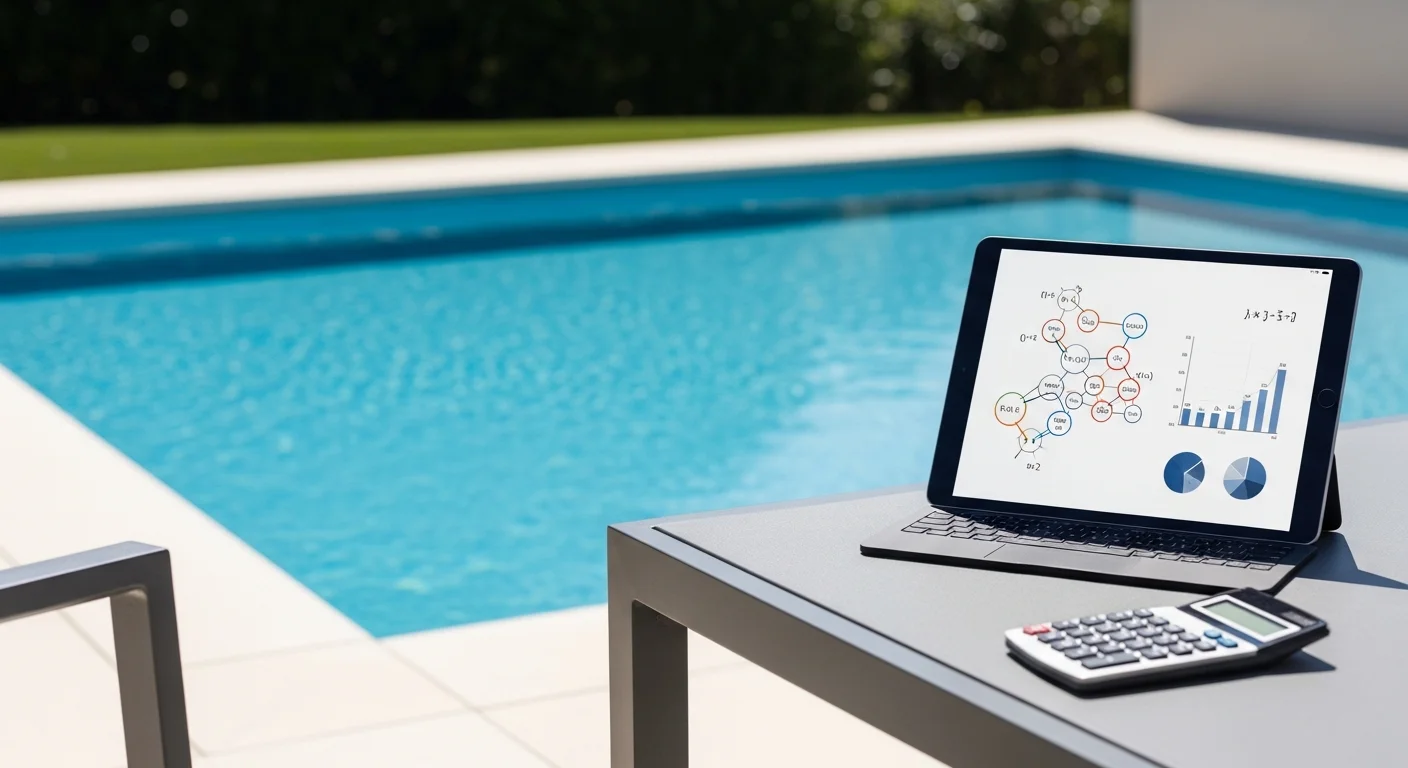
Owning a pool in Orange County is a luxury, but it comes with the responsibility of precise maintenance. One of the most essential tasks for any homeowner is to accurately calculate volume of a swimming pool to ensure water health and cost efficiency. As we move through the Winter 2026 season, understanding these metrics has become more vital than ever due to rising utility costs.
Without knowing your pool's exact gallonage, you risk improper chemical dosing and inefficient pump scheduling. This guide will walk you through the professional methods used to determine your pool's capacity and how that data translates into real-world savings on your monthly bills.
The Importance of Water Capacity Accuracy
Pool Cost Calculator
Buy NowProper Chemical Balancing
Pool chemicals are labeled based on treatment per 10,000 gallons. If you overestimate your volume, you will waste money on excess chlorine or acid. Conversely, underestimating leads to unsanitary conditions and potential algae growth.
Optimizing Pump Run Times
According to the U.S. Department of Energy, your pump should ideally circulate the entire volume of the pool at least once per day. Knowing your volume allows you to set the perfect timer on your variable speed pump.
Ready to see how much you could save on your energy bill?
Use Our Free Pool Savings Calculator →The Essential Steps to Calculate Volume of a Swimming Pool
Gathering Your Measurements
Before you begin the math, you need accurate length, width, and depth measurements. Use a long measuring tape and, if possible, a telepole to find the depth in the shallow and deep ends. Accurate data is the only way to effectively calculate volume of a swimming pool.
Determining Average Depth
For pools with a sloping bottom, add the shallow end depth to the deep end depth and divide by two. This average depth is the multiplier used in almost every standard volume formula to ensure the cubic footage represents the reality of the pool's floor.
Volume Formulas for Every Pool Shape
When you calculate volume of a swimming pool, the multiplier for gallons per cubic foot is typically 7.48. This conversion factor is standard across the industry for residential pool applications in 2026.
| Pool Shape | Formula (Gallons) |
|---|---|
| Rectangular | Length x Width x Avg Depth x 7.48 |
| Circular/Round | Diameter x Diameter x Avg Depth x 5.9 |
| Oval | Long Diameter x Short Diameter x Avg Depth x 6.7 |
Irregular Shapes
According to Wikipedia's swimming pool documentation, kidney or freeform pools are best measured by breaking them down into smaller geometric squares or circles and adding the volumes together.
Calculate your specific energy reduction potential in minutes.
Access the Efficiency Tool Now →Winter 2026 Energy Efficiency Strategies
Adjusting Filtration for the Season
During the Winter 2026 season, evaporation rates in Southern California decrease, but organic debris from winter storms may increase. Adjusting your run-time based on your calculated volume ensures clear water without wasting electricity.
The Role of Thermal Covers
Reducing heat loss is paramount in the colder months. Research from the Pool & Hot Tub Alliance suggests that covers can retain up to 70% of a pool's heat, which is a major factor in heating cost calculations.
Maximizing Savings with Modern Pump Technology
Why Variable Speed Trumps Single Speed
Single-speed pumps operate at a constant, high-energy rate. Variable-speed pumps allow you to match the flow rate to the specific needs of your pool volume, often reducing energy consumption by up to 80%.
Smart Automation Integration
New 2026 technology allows Orange County homeowners to control their pumps via smartphone apps. By integrating your volume data, these systems can automatically calculate the most efficient turnover rate for your specific backyard setup.
Stop overpaying for your pool's electricity. See your savings today.
Start Your Free Calculation →Frequently Asked Questions
How do I find the average depth of my pool?
Measure the shallowest part of the pool and the deepest part of the pool. Add these two numbers together and divide by two to find the average depth for your volume calculations.
What is the formula for a rectangular pool?
The standard formula is Length x Width x Average Depth x 7.48. This will give you the total number of gallons in a standard rectangular swimming pool.
How many gallons are in a cubic foot of water?
There are approximately 7.48 gallons of water in one cubic foot. This is the multiplier used after calculating the cubic feet of your pool space.
Why is my pool volume important for pump efficiency?
Your pump needs to circulate the total volume of your pool to keep it clean. If you don't know the volume, you might be running your pump much longer than necessary, wasting energy.
Does pool shape affect the volume formula?
Yes, different shapes use different multipliers to account for corner radius and diameter. Circular and oval pools use multipliers like 5.9 and 6.7 instead of 7.48.
Conclusion
Taking the time to accurately calculate volume of a swimming pool is more than just a math exercise; it is a financial strategy. In the Winter 2026 market, homeowners who understand their pool's capacity are better equipped to navigate rising energy prices and maintenance costs. By using the right formulas and adopting energy-efficient hardware, you can enjoy your pool without the stress of high utility bills.
As an Orange County home savings expert, I recommend re-evaluating your pool's efficiency every season. Whether you have a simple rectangular layout or a complex freeform design, the goal remains the same: maximum enjoyment with minimum waste. Start your journey toward a more efficient home today by using our specialized calculators and professional resources.
About the Author

Written by William Corcoran, Orange County Home Savings Expert
William Corcoran has helped Orange County families save money on their homes for over 15 years. Specializing in property tax reduction and smart refinancing, he offers expert guidance you can trust. www.energybot.com www.energystar.gov
Related Articles

Ready to Find Your Savings?
Get a free personalized report showing all rebates and incentives your home qualifies for.
Get My Free Report