How to Calculate Your Ideal AC Capacity: A Guide to Energy Efficient HVAC Upgrades in 2026
Key Takeaways
- Accurate HVAC sizing is critical to preventing short-cycling and reducing monthly energy bills
- New 2026 standards prioritize high-efficiency heat pump technology for residential climate control
- Home insulation and window quality significantly impact the required BTU capacity for any room
- Utilizing digital tools helps homeowners qualify for the latest federal and local energy tax credits
As we navigate the winter 2026 season, homeowners are increasingly focused on optimizing their indoor environments while managing rising utility costs. One of the most common mistakes in home improvement is installing a heating or cooling system that is either too large or too small for the space. To avoid these pitfalls, many savvy residents are turning to a professional btu estimator to determine the exact requirements for their specific floor plan.
According to the U.S. Department of Energy, a system that is improperly sized will fail to remove humidity effectively and will undergo excessive wear and tear due to constant cycling. In 2026, with the introduction of smarter inverter-driven technologies, getting the math right is more important than ever for achieving peak performance.
Ready to lower your energy bills?
Calculate Your Savings Now →Why Accurate HVAC Sizing Matters for 2026 Comfort
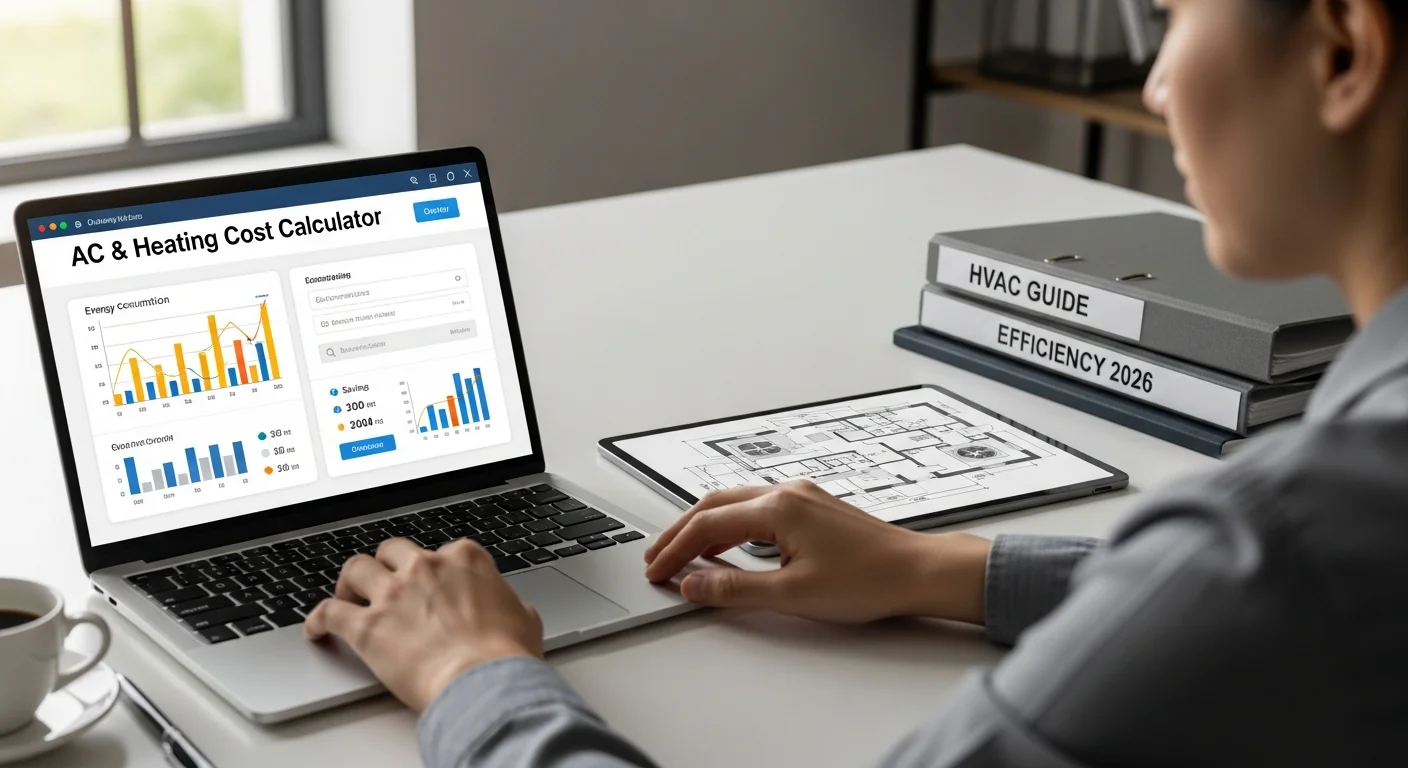
AC & Heating Cost Calculator
Buy NowThe Dangers of Oversized Systems
An oversized unit might cool a room quickly, but it often shuts off before it can properly dehumidify the air. This leads to a "clammy" feeling indoors and can promote mold growth in hidden areas. Furthermore, the frequent on-off switching consumes significantly more electricity than a steady run-time.
The Struggle of Undersized Units
Conversely, an undersized system will run perpetually during a heatwave, struggling to reach the set temperature. This results in extreme mechanical stress and a shortened lifespan for the equipment. Residents often find that their hvac sizing guide recommendations prevent these expensive long-term issues.
Using a Professional BTU Estimator for Precise Climate Control
A btu estimator serves as the foundation for any successful HVAC project. By inputting variables such as square footage, ceiling height, and local climate data, these tools provide a data-driven starting point for contractors and homeowners alike.
Digital Accuracy vs. Manual Guesswork
In the past, many used simple rules of thumb, like "one ton per 500 square feet." However, modern home designs with open concepts and varied insulation levels make these old methods obsolete in 2026. Digital tools account for the building envelope's specific nuances.
Integration with Smart Home Ecosystems
Many modern calculators now integrate with smart thermostat data to provide a real-time assessment of your home's thermal performance. This allows for a more dynamic btu estimator experience that reflects how your home actually behaves during seasonal shifts.
Factors Influencing Your Heating and Cooling Load Calculation
Insulation and Building Materials
The R-value of your insulation and the type of windows installed are major drivers in any heating and cooling load calculation. High-performance double-pane windows can reduce the required cooling capacity by up to 20% compared to older single-pane alternatives.
Sun Exposure and Orientation
A room facing south with large windows will naturally require more cooling power than a north-facing room shaded by trees. Professional assessments always consider the solar heat gain coefficient (SHGC) of your glass surfaces.
Get a custom quote for your 2026 HVAC project!
Start Your Calculation →Air Conditioner Capacity Guide: Choosing the Right Tonnage
Navigating an air conditioner capacity guide involves understanding the relationship between BTUs and "tons" of cooling. One ton of cooling is equivalent to 12,000 BTUs per hour. For most residential applications, units range from 1.5 to 5.0 tons.
| Square Footage | Estimated BTUs Needed | Standard Tonnage |
|---|---|---|
| 600 - 1,000 sq ft | 18,000 - 24,000 | 1.5 - 2.0 Tons |
| 1,000 - 1,500 sq ft | 24,000 - 30,000 | 2.0 - 2.5 Tons |
| 1,500 - 2,000 sq ft | 30,000 - 36,000 | 2.5 - 3.0 Tons |
Multi-Zone vs. Single-Zone Systems
If your btu estimator reveals a high requirement for a single room, consider a multi-zone ductless system. This allows you to distribute cooling power exactly where it is needed without wasting energy on unoccupied spaces.
Comparing Heat Pump vs Central Air Cost and Efficiency
When analyzing heat pump vs central air cost, it is vital to look beyond the initial purchase price. According to Wikipedia's overview of heat pumps, these systems provide both heating and cooling by moving heat rather than generating it, which is significantly more efficient.
The Shift Toward Electrification
In 2026, many regional mandates are pushing for full electrification. Heat pumps have become the gold standard for residential climate control due to their high SEER2 (Seasonal Energy Efficiency Ratio) ratings and their ability to operate effectively in varying temperatures.
Return on Investment (ROI)
While the upfront cost of a heat pump may be higher, the operational savings usually bridge the gap within 3 to 5 years. This is especially true when combined with the 2026 federal tax credits available for high-efficiency appliance installations.
Maximizing Orange County HVAC Savings with Smart Upgrades
Local Rebates and Incentives
Residents in Southern California have access to unique Orange County hvac savings programs. Local utilities often provide cash-back incentives for homeowners who choose Energy Star certified equipment that exceeds state efficiency minimums.
The Role of Professional Audits
Combining a professional home energy audit with your sizing calculation ensures that you aren't just buying a new machine to compensate for leaky ductwork. Sealing your home first can often lower the BTU requirement for your new system.
Stop guessing and start saving today!
Open the Cost Calculator →Frequently Asked Questions
How many BTUs per square foot are typically needed?
Generally, you need about 20 BTUs for every square foot of living space. However, this number varies based on ceiling height, insulation quality, and the number of windows in the room.
Does a higher SEER rating mean I need fewer BTUs?
No, the SEER rating measures efficiency (how much electricity is used), while BTUs measure capacity (how much heat is moved). You still need the same capacity, but a higher SEER unit will provide it more cheaply.
What is the difference between a BTU and a Ton?
One "ton" of AC capacity is equal to 12,000 BTUs. If your home requires 36,000 BTUs of cooling, you would look for a 3-ton air conditioning unit.
Can I use a portable AC for a whole house calculation?
Portable units are much less efficient than central air. A 10,000 BTU portable unit will not cool the same area as 10,000 BTUs of central air because of the heat generated by the portable unit itself.
How do 2026 tax credits affect my HVAC choice?
Current 2026 regulations offer significant rebates for systems that meet high efficiency thresholds. Using a precise calculation ensures you buy the right tier of equipment to qualify for these thousands of dollars in savings.
Conclusion
Investing in a new HVAC system is a major decision that impacts your comfort and finances for the next decade. By utilizing a btu estimator before you begin shopping, you empower yourself with the data needed to make an informed choice. Right-sizing is the most effective way to ensure your home remains a sanctuary during the peak of summer and the depths of winter.
As we look toward the remainder of 2026, the trend toward high-efficiency heat pumps and smart climate integration continues to grow. Don't let an oversized or underpowered system drain your bank account—get an accurate assessment and enjoy the benefits of modern, efficient home cooling and heating today.
About the Author

Written by William Corcoran, Orange County Home Savings Expert
William Corcoran has helped Orange County families save money on their homes for over 15 years. Specializing in property tax reduction and smart refinancing, he offers expert guidance you can trust. www.energybot.com www.energystar.gov
Related Articles


Ready to Find Your Savings?
Get a free personalized report showing all rebates and incentives your home qualifies for.
Get My Free Report