AC Unit Size for Home: How to Right Size Your HVAC System for Maximum Savings in 2026
Key Takeaways
- Properly sizing your HVAC system prevents energy waste and premature equipment failure
- Modern heat pumps offer significant utility bill reductions compared to traditional gas furnaces
- Climate specific variables in Orange County require precise calculations for cooling efficiency
- Utilizing professional estimation tools can identify thousands in potential rebate savings
As we navigate the Winter 2026 season, homeowners in Orange County are increasingly focused on balancing indoor comfort with rising utility expenses. Choosing the correct AC unit size for home applications is no longer just about staying cool; it is about maximizing every dollar spent on energy. By utilizing a professional btu calculator, homeowners can avoid the common pitfalls of over-sized or under-sized equipment.
The landscape of home climate control has shifted rapidly over the last year. New efficiency standards and local environmental goals have made precise sizing more critical than ever before. Understanding your home's thermal envelope is the first step toward a sustainable and cost-effective upgrade.
Importance of a Right Size HVAC System
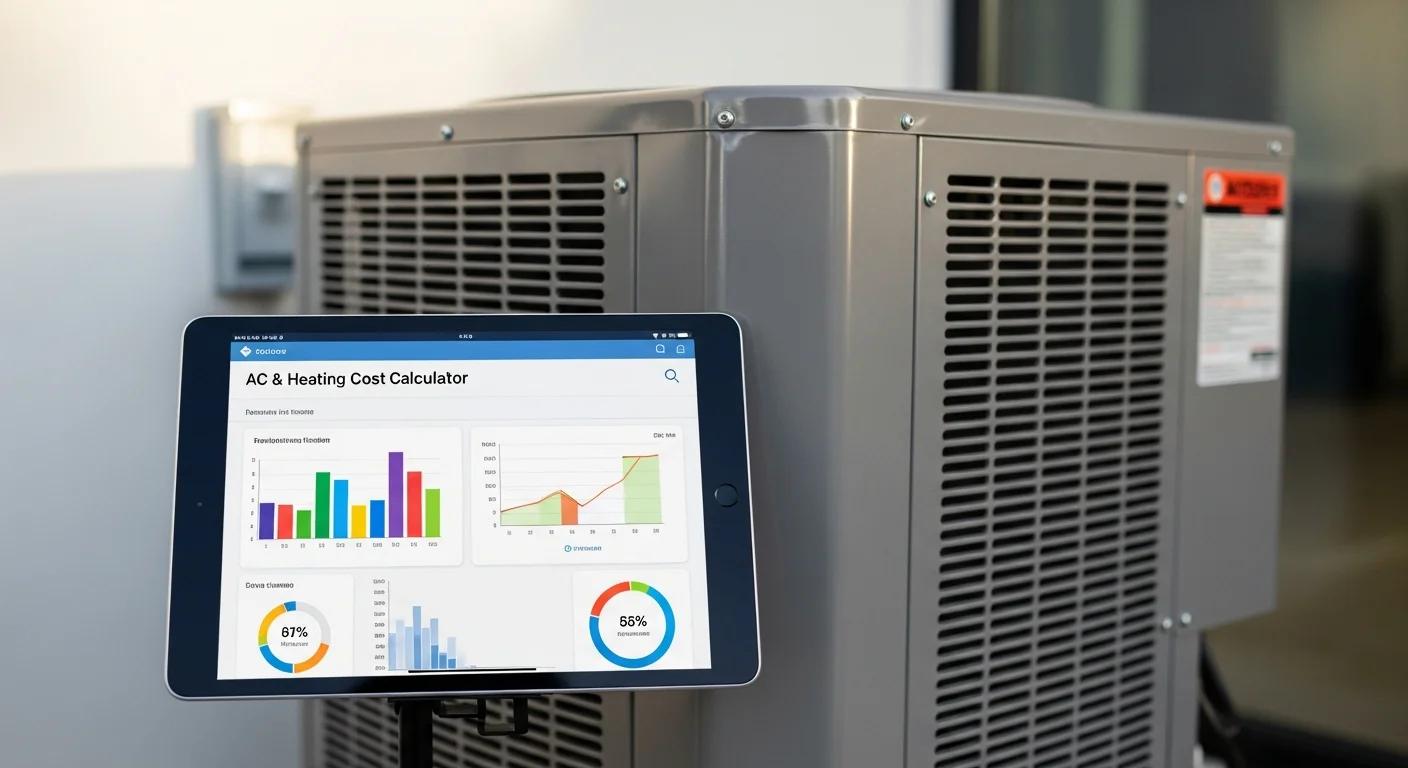
AC & Heating Cost Calculator
Buy NowPreventing Short Cycling Issues
When a system is too large for the space, it reaches the target temperature too quickly. This results in "short cycling," where the unit turns on and off frequently, leading to massive wear and tear. According to the U.S. Department of Energy, properly sized systems maintain more consistent humidity levels and last significantly longer.
Enhancing Indoor Air Quality
A correctly sized unit runs long enough to pull air through the filtration system effectively. This ensures that allergens and dust are consistently removed from your breathing space. In 2026, advanced HEPA integration is becoming standard for many Orange County HVAC upgrades.
Want to see how much you could save with a 2026 heat pump upgrade?
Calculate Your Savings Now →Optimizing Efficiency with a Professional BTU Calculator
Accounting for Climate and Insulation
Not all square footage is created equal. A btu calculator must take into account your ceiling height, window placement, and the quality of your attic insulation. Research from Wikipedia's HVAC entries notes that geographical location dramatically alters the required cooling capacity for the same floor plan.
Personalizing the Load Calculation
Once you run the numbers through the btu calculator, you will see how variables like the number of occupants affect the results. Professional load calculations, known as Manual J calculations, are the gold standard used by experts like William Corcoran to ensure precision.
Benefits of Heat Pump Installation in 2026
Dual-Season Performance
Modern heat pumps provide both heating and cooling in a single unit. In the Winter 2026 season, these systems are proving to be far more efficient than traditional furnaces. As noted by the Environmental Protection Agency, switching to a heat pump can significantly reduce a home's carbon footprint.
Financial Incentives and Rebates
The financial landscape for energy efficient HVAC upgrades has never been more favorable. Federal and state rebates often cover a significant portion of the installation costs for high-efficiency heat pumps. This makes the return on investment much faster than in previous years.
| Upgrade Type | Estimated Saving Benefit |
|---|---|
| High-Efficiency Heat Pump | Up to 50% reduction in heating costs |
| Smart Thermostat Integration | 10-15% reduction in overall energy usage |
| Zoned Ductwork | Eliminates waste in unoccupied rooms |
Ready to lower your utility bills? Check your eligibility for Orange County savings.
View Savings Calculator →HVAC Replacement Cost 2026: Market Analysis
Material and Labor Trends
While material costs have stabilized somewhat in 2026, specialized labor for advanced inverter-driven systems remains a key factor in pricing. Investing in a high-quality installation ensures that the SEER2 ratings advertised on the box are actually achieved in your home. According to EIA Energy Outlooks, efficiency is the primary driver for long-term property value.
Long-term ROI Calculations
When analyzing the HVAC replacement cost in 2026, it is vital to look beyond the initial purchase price. A system with a higher upfront cost but better efficiency ratings will often pay for itself within 5-7 years through lower monthly bills and fewer repairs.
Calculate BTU for Room and Whole-Home Zoning
The 1000 Sq Ft Benchmark
Many homeowners ask how many btu for 1000 sq ft is necessary. While the general rule of thumb is roughly 18,000 to 21,000 BTUs, factors such as sun exposure and window quality can shift this requirement by 20% or more. This is why a simple btu calculator should only be the starting point of your research.
Multi-Zone vs Single-Unit Systems
In larger homes, a single massive unit may not be as effective as multiple smaller units or a ductless mini-split system. Zoning allows you to control the climate in individual rooms, which is a key component of modern energy efficient HVAC upgrades. This prevents you from cooling an empty guest room or home office during the day.
Stop guessing on your AC size. Get a professional estimation today.
Open Cost Calculator →Frequently Asked Questions
How do I know if my AC is the wrong size?
If your system runs for less than 10 minutes at a time or struggles to lower the temperature on a hot day, it is likely sized incorrectly. High humidity levels indoors are also a common sign that your unit is too large to complete a full dehumidification cycle.
Can I use a btu calculator for heat pumps too?
Yes, heat pumps require the same BTU measurements as traditional air conditioners. However, you should also consider the heating capacity (HSPF2) to ensure the system can handle Winter 2026 low temperatures without relying too heavily on backup heat.
Are there tax credits for HVAC upgrades in 2026?
Under the current legislation, homeowners can claim significant tax credits for installing high-efficiency heat pumps and biomass boilers. These credits are designed to offset the higher cost of premium, energy-saving equipment.
What SEER2 rating should I look for in Orange County?
For the 2026 market, look for systems with a SEER2 rating of at least 16 for standard homes, though 18+ is recommended for maximum long-term savings. Higher ratings provide better performance during the intense heat waves common in Southern California.
How often should I replace my HVAC system?
Most systems last 12-15 years. However, if your unit uses R-22 refrigerant or requires frequent repairs, upgrading to a 2026 model could save you more in energy bills than the cost of keeping the old unit running.
Conclusion
The key to a comfortable and affordable home in 2026 lies in precise engineering. By taking the time to calculate the exact needs of your space, you can invest in a system that provides consistent comfort without overpaying on your monthly bill. Don't guess on your next upgrade; use our professional btu calculator today to get the most accurate estimate for your home.
At Orange County Home Savings, we specialize in helping homeowners navigate the complex world of HVAC upgrades. Whether you are looking for the latest heat pump technology or simply need to understand your current system's performance, our team is here to provide expert guidance tailored to the 2026 energy market.
About the Author

Written by William Corcoran, Orange County Home Savings Expert
William Corcoran has helped Orange County families save money on their homes for over 15 years. Specializing in property tax reduction and smart refinancing, he offers expert guidance you can trust. www.energybot.com www.energystar.gov
Related Articles


Ready to Find Your Savings?
Get a free personalized report showing all rebates and incentives your home qualifies for.
Get My Free Report