AC and Heating Cost Calculator: Estimating Your Energy Efficient HVAC Upgrade Costs and Heat Pump Savings
Key Takeaways
- Calculate potential savings of up to 50 percent by switching to modern heat pump technology
- Understand the long term financial benefits of energy efficient HVAC systems over traditional units
- Identify federal and local tax credits that significantly lower initial installation expenses
- Determine the payback period for your investment using our specialized online savings tool
Homeowners today are facing a dual challenge: rising utility rates and the urgent need for environmental sustainability. Navigating the world of climate control can be overwhelming, especially when trying to balance immediate expenses with future rewards. Our AC and heating cost calculator is designed to cut through the confusion by providing personalized data for your home.
According to the Department of Energy guide to heat pump systems, these units can provide equivalent cooling and heating at as little as one-quarter of the cost of operating conventional appliances. This potential for massive reduction in monthly overhead is why many are looking closer at their current setups.
How an AC and Heating Cost Calculator Estimates Your Savings
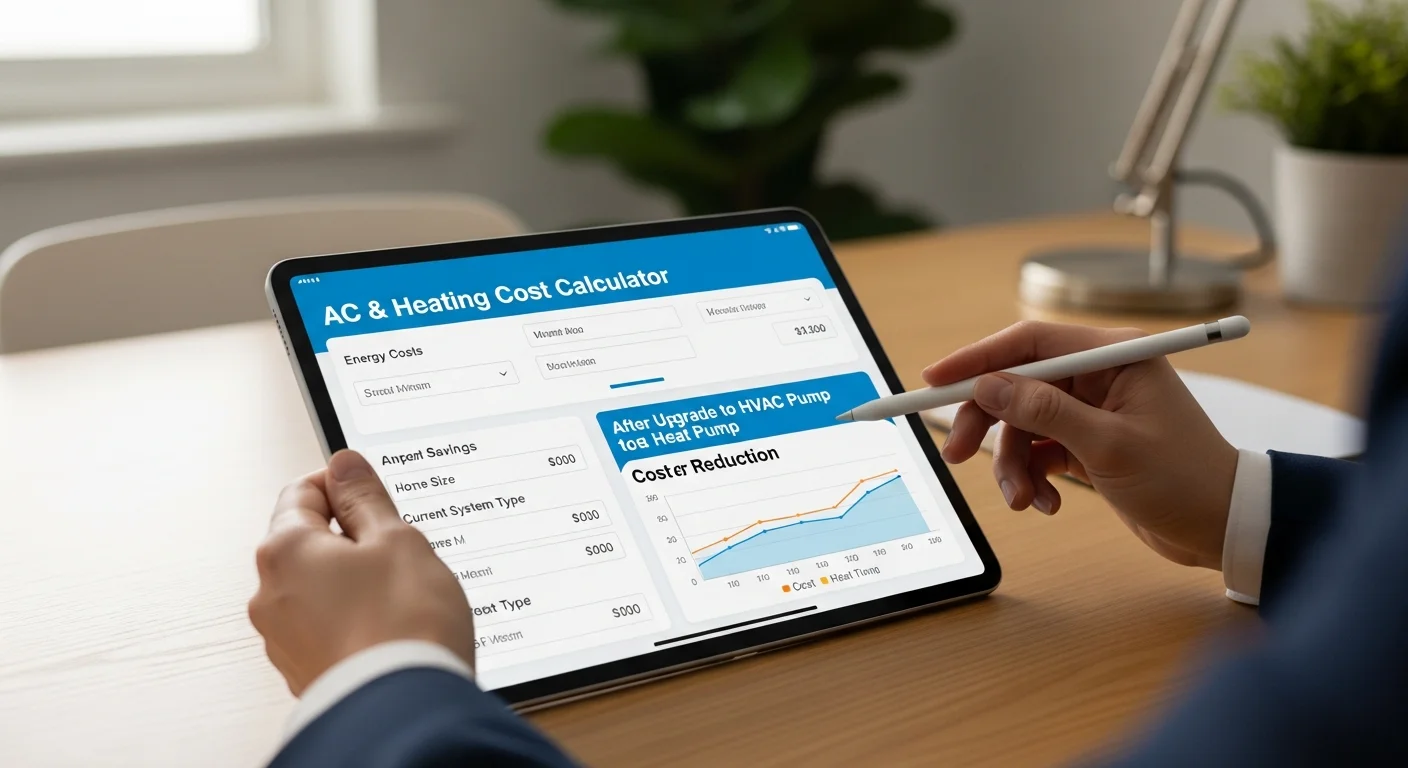
AC & Heating Cost Calculator
Buy NowInputting Your Current Energy Usage
The first step in any accurate estimation is assessing your current baseline. The calculator analyzes your monthly utility bills and the square footage of your property to determine how much you are currently spending per thermal unit of comfort.
Factoring in Local Climate Data
Climate plays a critical role in how hard your system has to work. In regions like Orange County, the moderate temperatures often make the best heat pump savings calculator results highly favorable compared to more extreme weather zones.
Want to see your specific savings potential?
Use Our HVAC Savings Calculator →Evaluating Energy Efficient HVAC Upgrade Costs
Initial Investment vs. Long-Term Value
While the upfront price of high-efficiency units is typically higher than standard models, the ROI is found in the reduced operational costs. Modern systems often pay for themselves through energy savings within a few years of installation.
Available Rebates and Tax Credits
According to Energy Star federal tax credit information, homeowners can claim up to $2,000 annually for heat pump installations. These incentives directly lower the total energy efficient HVAC upgrade costs for most families.
Heat Pump vs Central Air Cost Comparison
Efficiency Ratings (SEER2 and HSPF2)
A standard central air conditioner only cools, whereas a heat pump handles both seasons. By comparing the SEER2 ratings, you can see how much less electricity a heat pump uses during the summer months compared to an aging AC unit.
| System Type | Primary Benefit | Avg. Efficiency |
|---|---|---|
| Standard Central AC | Lower initial cost | 14-16 SEER |
| Modern Heat Pump | Year-round high efficiency | 20+ SEER / 10+ HSPF |
Ready to upgrade your home's efficiency?
Get Your Free Estimate Now →How Much Can I Save with a Heat Pump in California?
The Impact of Mild Weather on Performance
California's temperate climate is the perfect environment for heat pump technology. Because the units don't have to work against sub-zero temperatures, they operate at peak efficiency nearly all year long.
State-Specific Rebates and Programs
California offers various local utility rebates that can be stacked with federal incentives. These programs make gas furnace vs electric heat pump savings even more dramatic, often resulting in hundreds of dollars saved per year in operation.
Maximizing Benefits of Energy Efficient HVAC Systems
Improved Indoor Air Quality
New systems offer advanced filtration that older units lack. This helps remove allergens and dust, creating a healthier living environment for those with respiratory concerns.
Smart Thermostat Integration
Modern HVAC systems are designed to work seamlessly with smart technology. This allows for automated temperature adjustments that further reduce energy waste when you aren't home.
Why Is My Electric Bill So High? Reducing Waste
Identifying Inefficient Older Units
If your system is over 10 years old, it likely has a SEER rating far below current standards. This old hvac system energy waste is the primary driver of sky-high electric bills during the summer and winter peaks.
The Hidden Cost of Frequent Repairs
Continuing to patch up an old unit is often a case of diminishing returns. The high cost of furnace repair or compressor replacement can often equal a significant down payment on a new, warrantied system.
Frequently Asked Questions
How much can I save with a heat pump?
Most homeowners save between 20% and 50% on their heating and cooling costs. The exact amount depends on your current fuel source and local electricity rates.
Is a heat pump worth it in California?
Yes, California is one of the best locations for heat pumps because the mild winters allow the system to remain in its most efficient mode. It also helps meet state goals for reducing gas usage.
What is the average HVAC upgrade cost?
Upgrade costs vary based on home size and system complexity, but generally range from $8,000 to $16,000 before rebates. Incentives can often reduce this by several thousand dollars.
How does the AC and heating cost calculator work?
It uses your current energy bills, home size, and local climate data to compare your current system's performance against high-efficiency modern alternatives. It provides a clear projection of monthly savings.
Are there tax credits for HVAC upgrades?
Under the Inflation Reduction Act, homeowners can qualify for a federal tax credit of up to $2,000 for a heat pump. Additional local utility rebates may also apply depending on your provider.
Upgrading your home’s HVAC system is more than just a repair; it is a strategic investment in your property’s value and your daily comfort. By utilizing an AC and heating cost calculator, you take the guesswork out of the equation and base your decisions on hard data.
As utility costs continue to rise, the gap between traditional systems and energy-efficient alternatives will only widen. Taking action now allows you to lock in lower monthly expenses and enjoy a more comfortable home environment immediately.
Stop overpaying on your energy bills today.
Calculate Your Savings Potential →About the Author

Written by William Corcoran, Orange County Home Savings Expert
William Corcoran has helped Orange County families save money on their homes for over 15 years. Specializing in property tax reduction and smart refinancing, he offers expert guidance you can trust. www.energybot.com www.energystar.gov
Related Articles
Ready to Find Your Savings?
Get a free personalized report showing all rebates and incentives your home qualifies for.
Get My Free Report