Sustainable Home Upgrades 2026: Energy Efficient Water Heating Solutions and Rebates
Key Takeaways
- Modern heat pump and solar technologies can reduce water heating costs by over sixty percent
- California offers substantial state and local rebates for energy efficient upgrades in 2026
- Combining federal tax credits with local incentives can significantly lower initial installation costs
- Smart calculators are essential for determining precise ROI and available savings for your specific zip code
As we move through Winter 2026, homeowners in Orange County are facing higher utility rates than ever before. Traditional gas and electric resistance heaters are becoming increasingly expensive to operate, prompting a shift toward sustainable alternatives. While many are investigating the installation of a solar powered water heater to leverage California’s abundant sunshine, others are looking toward advanced heat pump technology to achieve similar carbon-neutral goals.
Choosing the right system requires understanding both the technology and the financial landscape. According to the U.S. Department of Energy, water heating is typically the second-largest energy expense in any home. By upgrading to 2026-standard equipment, you can effectively hedge against future energy price spikes while contributing to state-wide decarbonization efforts.
Energy Efficient Water Heating Solutions for 2026
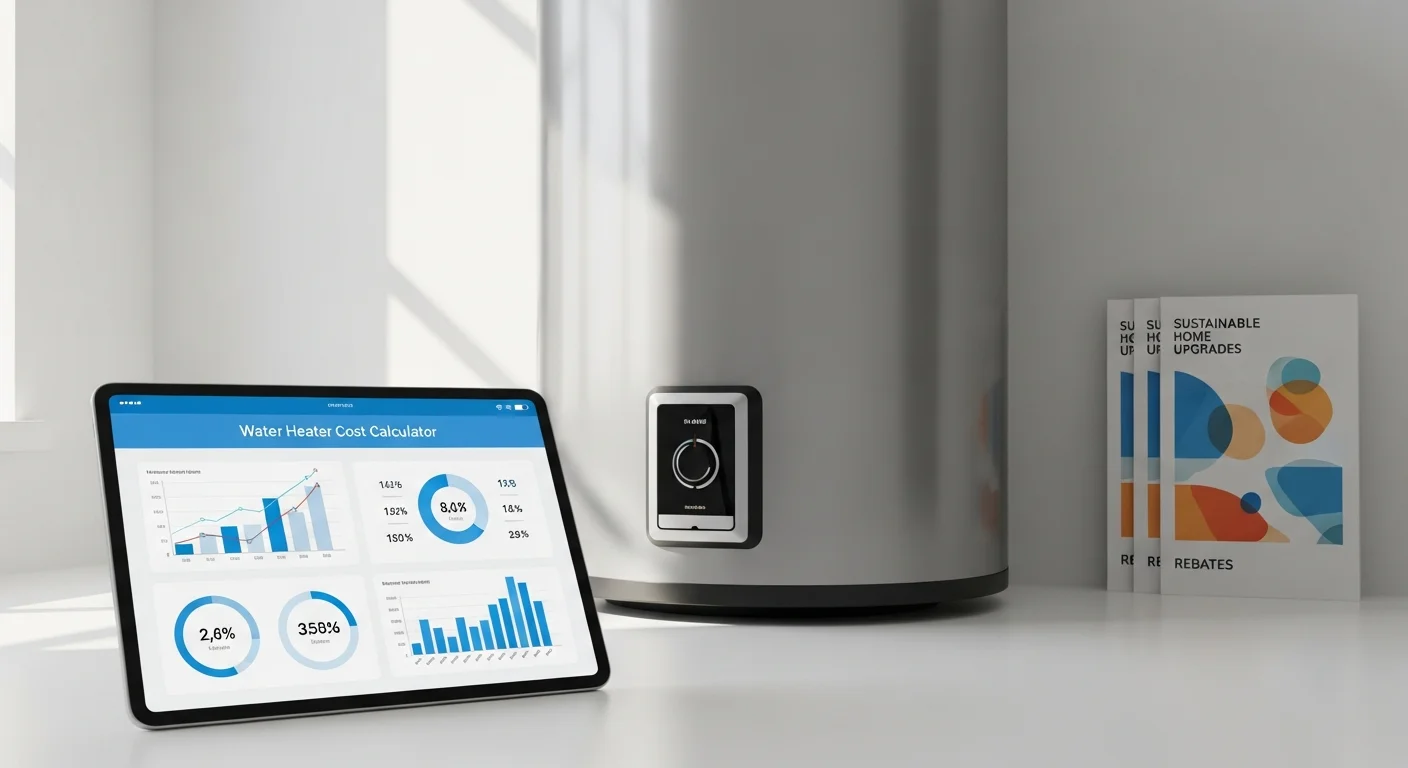
Water Heater Cost Calculator
Buy NowThe Rise of Hybrid Systems
Hybrid water heaters, which combine heat pump technology with traditional heating elements, have become the gold standard in 2026. These units pull heat from the surrounding air and transfer it to the water, making them incredibly efficient during the mild California winters. They offer the reliability of a tank system with the efficiency of renewable energy sources.
Smart Technology Integration
Today's energy efficient water heating solutions come equipped with Wi-Fi connectivity and smart grid capabilities. This allows your water heater to operate during off-peak hours when electricity is cheapest. By integrating with home energy management systems, these appliances can significantly lower your monthly operational overhead.
Want to see how much you could save on your next upgrade?
Calculate Your Rebates Now →Exploring the Solar Powered Water Heater and Alternatives
Active vs. Passive Solar Thermal
The design of a solar powered water heater typically falls into two categories: active and passive. Active systems use pumps to circulate water through solar collectors, while passive systems rely on natural convection. In 2026, active systems have become more popular due to their increased control and higher thermal efficiency in diverse weather conditions.
Photovoltaic (PV) Water Heating
A modern variation of the solar powered water heater involves using standard solar panels to power a high-efficiency electric heat pump. This approach is often more versatile than traditional solar thermal collectors because excess energy can be used to power other household appliances. According to Wikipedia, solar thermal collectors remain a highly effective way to convert sunlight directly into domestic hot water.
Maximizing Best Heat Pump Water Heater Rebates
Federal Tax Credits (25C)
Under the updated 2026 federal guidelines, homeowners can claim a significant portion of the cost for a heat pump water heater as a tax credit. This is part of the ongoing effort to modernize the American housing stock. When combined with a solar powered water heater, these credits can stack to provide thousands of dollars in upfront relief.
Local Orange County Utility Programs
Local utilities are offering some of the best heat pump water heater rebates seen in years. These programs often provide instant point-of-sale discounts or mail-in rebates that can cover up to 50% of the equipment costs. Navigating these requires staying up-to-date with current seasonal offerings from Southern California Edison and other local providers.
Check your eligibility for local Orange County water heater incentives.
Get Your Free Estimate →California Water Heater Incentives 2026
SGIP and TECH Clean California
The Self-Generation Incentive Program (SGIP) and the TECH Clean California initiative continue to provide robust funding for homeowners. According to the California Energy Commission, these programs are designed to accelerate the adoption of low-emission technologies. In Winter 2026, additional funding has been released to help residents upgrade before the peak summer cooling season begins.
Income-Qualified Rebates
Equity remains a focus for California water heater incentives 2026. Lower-income households may qualify for 100% cost coverage for heat pump installations. This ensures that the benefits of energy efficiency are accessible to all residents, regardless of their financial starting point.
| System Type | Efficiency (EF) | Estimated 2026 Rebate |
|---|---|---|
| Solar Thermal | High / Renewable | $2,000 - $4,500 |
| Heat Pump (Hybrid) | 3.5 - 4.0 EF | $1,000 - $3,800 |
| Tankless Electric | 0.98 EF | $300 - $600 |
Using a Residential Water Heater Savings Calculator
Determining Your ROI
A residential water heater savings calculator is the best way to determine how long it will take for your new system to pay for itself. By inputting your current fuel type and local utility rates, you can see a side-by-side comparison of annual operating costs. Research from the Energy Star program suggests that high-efficiency models can save an average family over $500 per year.
The Importance of Zip Code Specific Data
Rebates vary wildly between different cities in Orange County. Using a tool that analyzes specific municipal programs alongside state and federal incentives ensures you don't leave money on the table. These calculators are updated in real-time to reflect the 2026 funding levels for all major local programs.
Ready to maximize your energy savings this year?
Use Our Savings Calculator →Frequently Asked Questions
How much does a solar water heater cost in 2026?
In 2026, the average cost for a solar water heater installation ranges between $7,000 and $12,000 before rebates. However, after applying federal tax credits and California state incentives, many homeowners see their out-of-pocket costs drop by 30% to 50%.
Is a heat pump better than a solar powered water heater?
It depends on your roof space and climate. While a solar powered water heater offers the lowest operating cost by using direct sunlight, heat pumps are often easier to install and more affordable upfront while still being up to 400% more efficient than standard electric tanks.
Do solar water heaters work on cloudy days in Winter 2026?
Yes, modern solar collectors are designed to absorb diffuse radiation on cloudy days. Most systems also include a backup electric or gas heating element to ensure you have hot water even during extended periods of heavy overcast or during the shorter days of the Winter 2026 season.
What are the maintenance requirements for solar water heaters?
Maintenance typically involves an annual inspection of the pumps and valves, as well as checking the antifreeze levels in closed-loop systems. Most systems are designed to last 20 years or more with minimal professional intervention.
Can I combine multiple rebates for one installation?
Often, yes. You can usually stack federal tax credits with local utility rebates. However, some state programs like TECH Clean California may have specific rules about "double-dipping" with other state-funded incentives. Always verify with a specialist or use a calculator tool.
In conclusion, investing in a solar powered water heater or a high-efficiency heat pump is one of the most impactful decisions an Orange County homeowner can make in 2026. Not only do these systems provide immediate relief from rising energy costs, but they also significantly increase property value and meet the stringent environmental standards of the modern era.
By utilizing the 2026 rebate landscape effectively, the transition to sustainable water heating becomes an economically savvy move rather than just an environmental one. Start by calculating your potential savings today and take the first step toward a more efficient, cost-effective home.
About the Author

Written by William Corcoran, Orange County Home Savings Expert
William Corcoran has helped Orange County families save money on their homes for over 15 years. Specializing in property tax reduction and smart refinancing, he offers expert guidance you can trust. www.energybot.com www.energystar.gov
Related Articles

Ready to Find Your Savings?
Get a free personalized report showing all rebates and incentives your home qualifies for.
Get My Free Report