Solar Panel Savings Calculator: How Much Can I Save with Solar Panels and California Solar Incentives?
Key Takeaways
- Solar savings calculators provide an accurate estimate of potential utility bill reductions based on local sunlight and energy rates.
- California homeowners can still benefit significantly from the 30 percent federal solar tax credit and local rebates.
- Switching to solar helps lock in fixed energy costs and protects against rising utility rates in Orange County.
- The payback period for a residential solar system in California typically ranges from five to nine years.
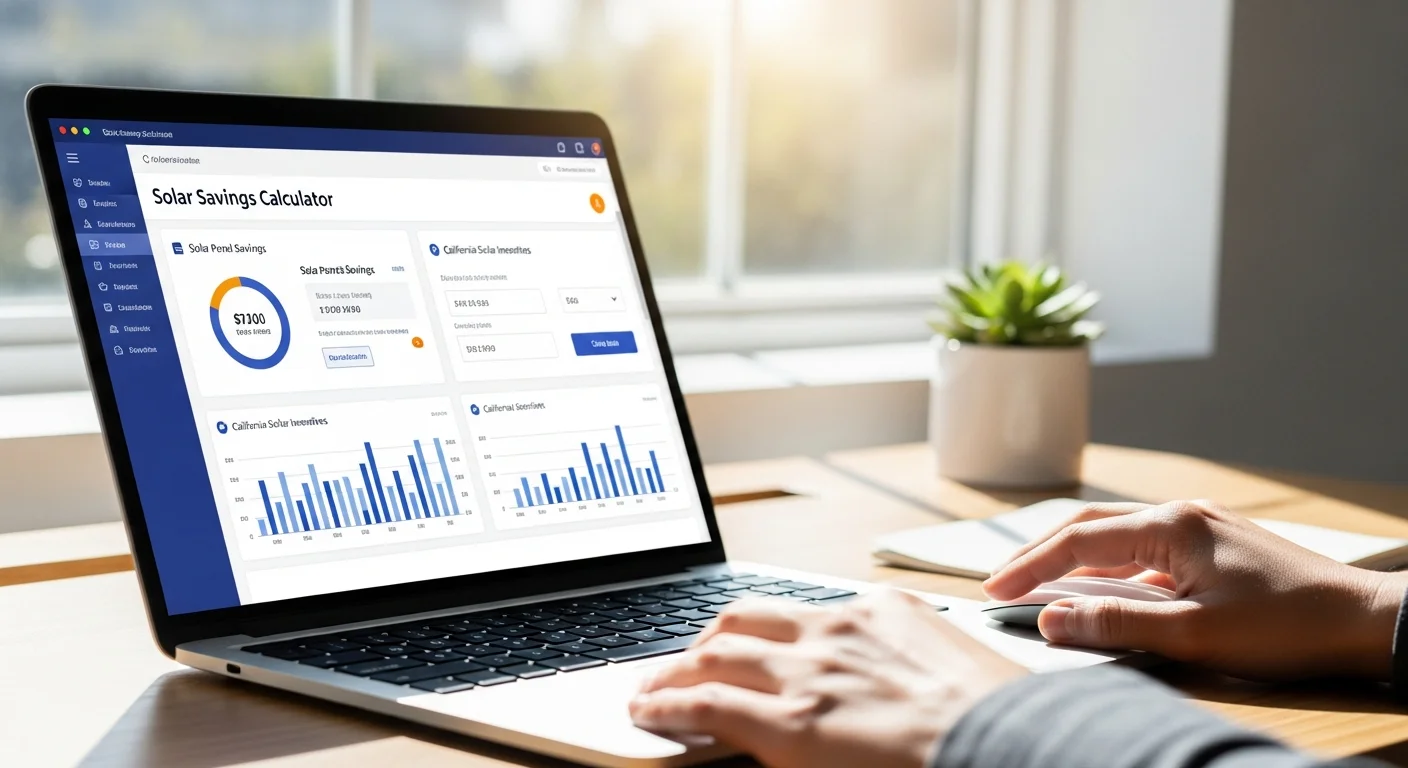
With electricity rates climbing annually, many homeowners are asking, "how much can I save with solar panels?" The answer depends on your location, roof orientation, and available incentives. Utilizing a professional solar panel savings calculator is the first step toward financial independence from the grid.
Orange County residents face some of the highest utility costs in the nation. By understanding your potential ROI, you can make an informed decision about transitioning to renewable energy. This guide breaks down the math behind the savings and explores the current landscape of incentives.
Ready to see your specific savings? Use our expert tool now.
Calculate Your Solar Savings →Understanding How a Solar Panel Savings Calculator Works
Solar Savings Calculator
Buy NowInputting Your Energy Data
A high-quality solar panel savings calculator starts by analyzing your historical energy usage. By inputting your average monthly bill or kWh usage, the tool determines the system size required to offset your costs.
Analyzing Geographic Sunlight Data
Sunlight exposure varies by zip code. Calculators use historical weather patterns to estimate how many peak sun hours your roof will receive annually. This directly impacts the total energy production and your subsequent savings.
Accounting for System Efficiency
Not all solar panels are created equal. The calculator factors in the efficiency of modern photovoltaic cells and potential degradation over time, ensuring your 25-year projections remain realistic.
Benefits of Solar Panels in Orange County for Homeowners
Lower Monthly Utility Expenses
One of the primary benefits of solar panels in Orange County is the immediate reduction in your monthly Southern California Edison (SCE) bill. By generating your own power, you avoid tiered pricing structures that penalize high energy users.
Increased Property Valuation
According to research from the Lawrence Berkeley National Laboratory, homes with solar panels often sell for a premium compared to non-solar homes. This makes solar an investment in your home's equity.
Environmental Stewardship
Reducing your carbon footprint is a significant advantage. By switching to clean energy, the average household can offset several tons of CO2 emissions annually, contributing to California's aggressive green energy goals.
California Solar Incentives 2024: Maximizing Your Investment
Federal Investment Tax Credit (ITC)
The most impactful of the California solar incentives 2024 is the federal tax credit. According to Energy.gov, homeowners can deduct 30 percent of the total system cost from their federal income taxes.
Net Energy Metering (NEM 3.0)
While the transition to NEM 3.0 changed how solar energy is credited, it increased the importance of battery storage. Pairing solar with a battery now offers the highest level of savings under current California utility regulations.
Local Rebates and Programs
Various municipal utilities and non-profits offer localized rebates for energy efficiency upgrades. Checking for these local programs can further reduce the upfront cost of your installation.
Don't miss out on 2024 tax credits. Check your eligibility today.
Start Your Free Calculation →Solar Panels vs Utility Bills: The Long-Term Financial Impact
| Comparison Metric | Traditional Utility Bill | Solar Power System |
|---|---|---|
| Monthly Cost Trend | Rising (Approx. 5-7% annually) | Fixed or Zero |
| Energy Source | Grid (Mixed fossil/renewable) | 100% Clean Solar Energy |
| Long-term Equity | None (Pure expense) | Increases Home Value |
Protection Against Inflation
When comparing solar panels vs utility bills, the most significant factor is inflation. Utility companies frequently raise rates to cover infrastructure costs, whereas solar allows you to lock in your energy price for decades.
Energy Independence
Generating your own power means you are less reliant on the aging electrical grid. This is especially valuable during periods of peak demand when the grid is under stress and prices are at their highest.
Avoidance of Peak Pricing
Time-of-Use (TOU) rates can make evening energy consumption very expensive. Solar combined with battery storage allows you to use your stored solar energy during these peak hours, maximizing your savings.
How to Calculate Solar Payback Period for Your Home
Total System Cost vs Net Cost
To calculate solar payback period, first determine the net cost. Subtract the federal tax credit and any local rebates from the gross installation price to find your actual out-of-pocket investment.
Estimating Annual Savings
Multiply your average monthly utility bill by 12 to get an annual baseline. A solar system designed for 100% offset will essentially eliminate this cost, providing your "annual solar earnings."
The Payback Formula
Simply divide your net system cost by your annual energy savings. For most Orange County homeowners, this number lands between 6 and 8 years, after which your electricity is essentially free.
Are Solar Panels Worth It in California Under NEM 3.0?
The Shift Toward Battery Storage
Many ask are solar panels worth it in California following the NEM 3.0 update. The consensus among experts is a resounding yes, provided you include a battery to store excess daytime energy for night use.
Comparing Solar ROI to Traditional Investments
Solar often provides a better return than the stock market or high-yield savings accounts. It is a low-risk, high-reward investment that pays dividends in the form of avoided costs every single month.
Long-term Reliability and Warranty
Modern solar systems come with 25-year performance warranties. This guaranteed lifespan ensures that your investment remains productive long after the initial payback period has passed.
Stop overpaying for power. Get your personalized report now.
Calculate Your ROI →Frequently Asked Questions
How accurate is a solar savings calculator?
While a calculator provides a very strong estimate based on average sunlight and local utility rates, a professional site audit is needed for 100% accuracy. Factors like specific roof shading and local permitting fees can slightly adjust the final numbers.
Does the federal tax credit apply to battery storage?
Yes, under current IRS rules, the 30 percent federal tax credit applies to both the solar panels and the associated battery storage systems. This makes the transition to a fully self-sufficient energy system much more affordable for homeowners.
What happens if I sell my home before the solar payback period?
Solar panels generally increase the market value of a home. According to research from the Solar Energy Industries Association (SEIA), the added equity often covers or exceeds the remaining cost of the system, allowing you to recoup your investment at the time of sale.
How do weather conditions like clouds affect solar savings?
Solar panels still generate electricity on cloudy days using indirect sunlight, though at a reduced rate. A professional calculator accounts for these historical weather patterns in Orange County to ensure your annual savings estimates are realistic.
Will I still receive a utility bill after going solar?
Most homeowners will still receive a small monthly bill for grid connection fees, typically ranging from $10 to $15. However, your actual energy usage charges can be reduced to zero or even result in a credit depending on your system size and consumption habits.
Investing in solar energy is one of the most effective ways for California homeowners to take control of their financial future. By using a solar savings calculator, you can strip away the guesswork and see exactly how the numbers work for your specific property.
As utility rates continue to soar, the window for maximizing your ROI is now. Between the federal tax credit and the long-term protection against energy inflation, the question is no longer if solar is worth it, but how much you are losing by waiting. Take the first step today by calculating your potential savings.
About the Author

Written by William Corcoran, Orange County Home Savings Expert
William Corcoran has helped Orange County families save money on their homes for over 15 years. Specializing in property tax reduction and smart refinancing, he offers expert guidance you can trust. www.energybot.com www.energystar.gov
Related Articles
Ready to Find Your Savings?
Get a free personalized report showing all rebates and incentives your home qualifies for.
Get My Free Report