Modern Landscape Evolution: Maximizing Water Rebates and Savings in Spring 2026
Key Takeaways
- California homeowners can access significant financial incentives for water-efficient landscaping in 2026
- Modern synthetic turf technologies now offer superior heat dissipation and natural aesthetics
- Replacing traditional lawns can reduce residential outdoor water consumption by over sixty percent annually
- Professional calculators are essential for estimating total project ROI and rebate eligibility accurately
As we move into Spring 2026, California homeowners are facing a new landscape of water management and conservation. The decision to replace grass with turf has transitioned from a niche aesthetic choice to a strategic financial investment. With rising utility costs and evolving climate mandates, the shift toward sustainable outdoor spaces is more critical than ever for property value preservation.
According to the Metropolitan Water District, outdoor irrigation accounts for roughly half of all residential water use in Southern California. By modernizing your yard, you are not just following a trend; you are participating in a statewide movement to protect our most precious resource while significantly lowering your monthly overhead.
Maximize Savings with the 2026 California Rebate Programs
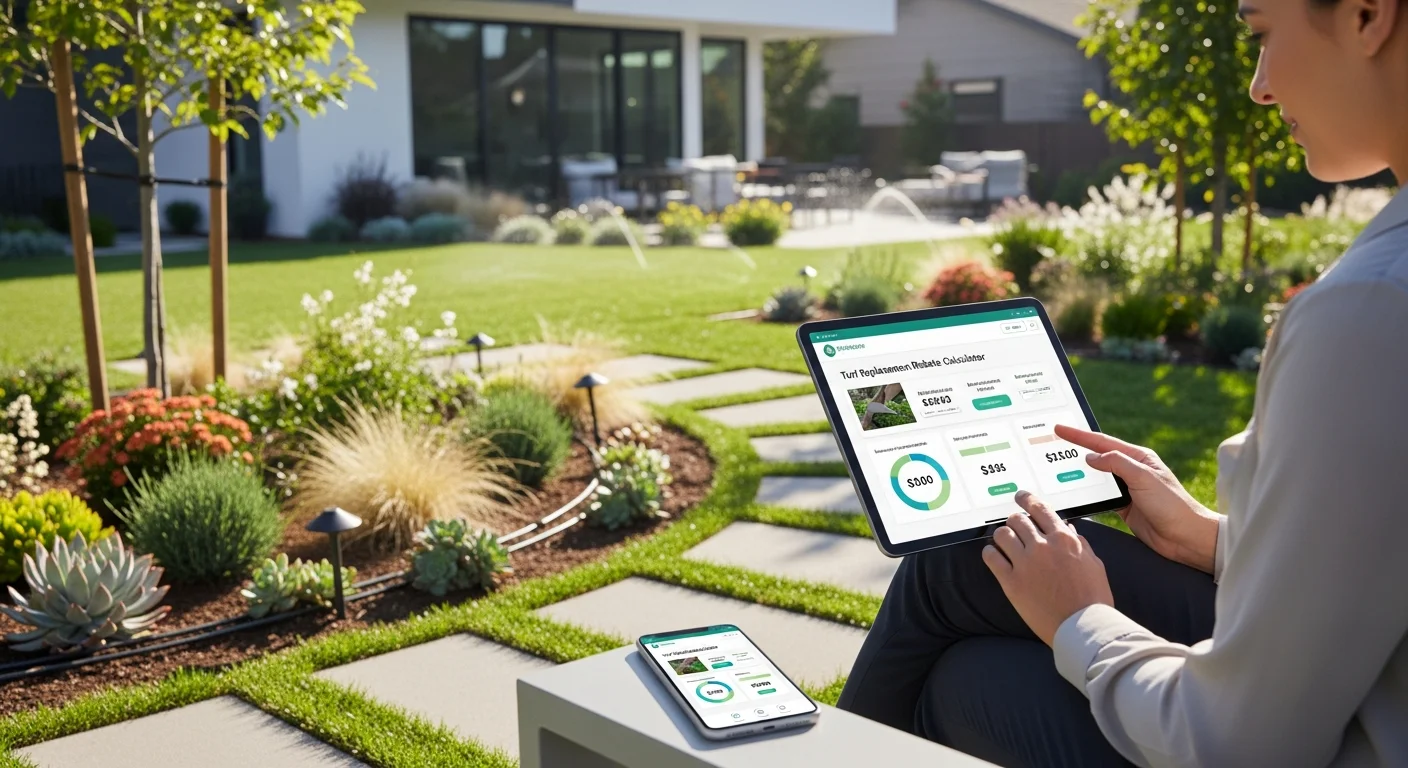
Turf Replacement Rebate Calculator
Buy NowUnderstanding the 2026 Rebate Tiers
The current year has introduced tiered rebate structures that reward homeowners who integrate diverse water-saving elements. Beyond simple turf installation, programs now incentivize the inclusion of native plants and permeable surfaces. Navigating these requirements requires precision to ensure you capture every available dollar from local and state agencies.
Navigating Pre-Approval Requirements
According to the California Department of Water Resources, many rebate denials occur because homeowners begin construction before receiving official authorization. It is vital to document your existing natural lawn and submit a detailed project plan before removing a single square foot of sod.
Ready to see how much you could save on your lawn transformation?
Access the 2026 Rebate Calculator →Environmental Benefits When You Replace Grass with Turf
Drastic Reduction in Water Consumption
When you choose to replace grass with turf, the most immediate impact is the elimination of thousands of gallons of potable water use. Research from EPA WaterSense indicates that standard lawns require significant irrigation to remain healthy in arid climates, whereas synthetic alternatives remain green with zero ongoing watering.
Eliminating Chemical Runoff
Traditional lawns often depend on fertilizers, pesticides, and herbicides that can eventually leach into local groundwater. Modern turf solutions eliminate the need for these chemicals, providing a safer environment for local wildlife and domestic pets while protecting the Orange County Water District aquifer systems.
Top Synthetic Turf Trends for Spring 2026
Heat-Reflective Blade Technology
One of the most significant breakthroughs in 2026 is the widespread adoption of heat-reflective turf fibers. These materials stay significantly cooler than previous generations, making artificial landscapes more comfortable for families even during the peak of a California summer.
Eco-Friendly Organic Infills
The trend toward sustainability has reached the very core of turf installation. In Spring 2026, we are seeing a massive shift away from rubber crumb toward organic infills like cork, walnut shells, and zeolite, which improve drainage and environmental safety.
Comparing Maintenance: Synthetic vs. Natural Lawns
Deciding to replace grass with turf involves a long-term comparison of effort and expense. While natural grass requires weekly attention, modern synthetic options demand only occasional rinsing or brushing to maintain their lush appearance.
| Maintenance Task | Natural Grass (Weekly) | Synthetic Turf (Monthly/Yearly) |
|---|---|---|
| Irrigation | 3-4 times per week | None (occasional dust rinse) |
| Mowing/Trimming | 1-2 times per week | None |
| Fertilization | Quarterly chemicals | Zero chemicals needed |
Stop wasting weekends on lawn care and start saving money today.
Calculate Your Potential Rebate →How to Calculate Your Landscaping ROI in Orange County
Property Value Enhancement
Curb appeal remains a primary driver of home valuation in 2026. A perpetually green, neatly manicured yard suggests a well-maintained home, potentially increasing resale speed and final closing prices in competitive markets like Irvine or Newport Beach.
Long-term Utility Savings
With water rates projected to continue their upward trajectory through the end of the decade, the ROI on turf replacement has never been clearer. Most homeowners find that the combination of rebates and monthly bill reductions allows the system to pay for itself in under five years.
Step-by-Step Transition to a Sustainable Backyard
Site Evaluation and Drainage Planning
Proper drainage is the foundation of a successful turf project. In Spring 2026, we recommend integrating bioswales or rain gardens to complement your turf, as suggested by the UC Division of Agriculture and Natural Resources.
Selecting the Right Texture and Color
Modern turf comes in a variety of heights and shades designed to mimic specific grass species like fescue or bermuda. Choosing a style that matches your local neighborhood aesthetic ensures your project looks natural and professional.
Don't leave money on the table. Use our expert tool to find every available credit.
Start Your Free Calculation →Frequently Asked Questions
How much is the average turf rebate in 2026?
In Spring 2026, most Southern California municipal programs offer between $2.00 and $5.00 per square foot, though these amounts can vary based on local funding. Some specific "premium" rebates are available if you also install smart irrigation controllers or rain barrels alongside your new turf.
Is artificial turf safe for pets and children?
Yes, 2026-grade synthetic turf is designed with non-toxic, lead-free materials that are specifically engineered for family use. High-end pet turf features antimicrobial backing and rapid-flow drainage systems to prevent odors and bacterial growth.
Does artificial grass get too hot in the summer?
While synthetic surfaces do retain more heat than natural grass, 2026 technology includes cooling infills and UV-stabilized fibers that reduce surface temperatures by up to 20 percent. Integrating shade trees or using a light mist on extremely hot days can also help maintain a comfortable surface.
How long does synthetic turf typically last?
High-quality professional installations are designed to last between 15 and 20 years with minimal maintenance. Most premium manufacturers in 2026 provide warranties covering UV degradation and manufacturing defects for at least a decade.
Can I install turf myself and still get a rebate?
Most rebate programs allow for DIY installation as long as the project meets all design specifications and material requirements. However, many homeowners prefer professional installation to ensure the precision grading and seam work necessary for long-term durability and the highest possible property value increase.
The Future of California Landscaping
The decision to replace grass with turf is a powerful statement of environmental stewardship and fiscal responsibility. As we embrace the innovations of Spring 2026, the barriers to entry have never been lower, thanks to sophisticated rebate programs and advanced materials that offer more realism than ever before.
By taking advantage of the current incentives, you can transform your home into a sustainable oasis that saves you time, money, and stress. As an Orange County home savings expert, I encourage every homeowner to evaluate their yard's potential and explore the significant benefits that modern water-saving technologies can provide for decades to come.
About the Author

Written by William Corcoran, Orange County Home Savings Expert
William Corcoran has helped Orange County families save money on their homes for over 15 years. Specializing in property tax reduction and smart refinancing, he offers expert guidance you can trust. www.energybot.com www.energystar.gov
Related Articles
Ready to Find Your Savings?
Get a free personalized report showing all rebates and incentives your home qualifies for.
Get My Free Report