Modular Living Trends: Exploring Modern Prefabricated Guest House Costs in 2026
Key Takeaways
- Modular construction can reduce on-site building timelines by up to fifty percent
- Average costs for detached secondary units in 2026 range from one hundred fifty to three hundred thousand dollars
- Factory-controlled environments significantly reduce material waste and weather-related delays
- Standardized designs simplify the permitting process with local building departments
The housing landscape is shifting rapidly as we move through the spring of 2026. Homeowners are increasingly seeking efficient ways to expand their living space without the headache of long-term construction. Choosing a prefabricated adu has become a primary solution for those looking to add rental income or house family members.
Modern technology has transformed the industry from simple utility structures to architectural masterpieces. Today, modular units offer high-end finishes and sustainable features that rival traditional luxury homes. This guide explores how these factory-built homes are redefining property development in 2026.
The Evolution of Modular Living in 2026
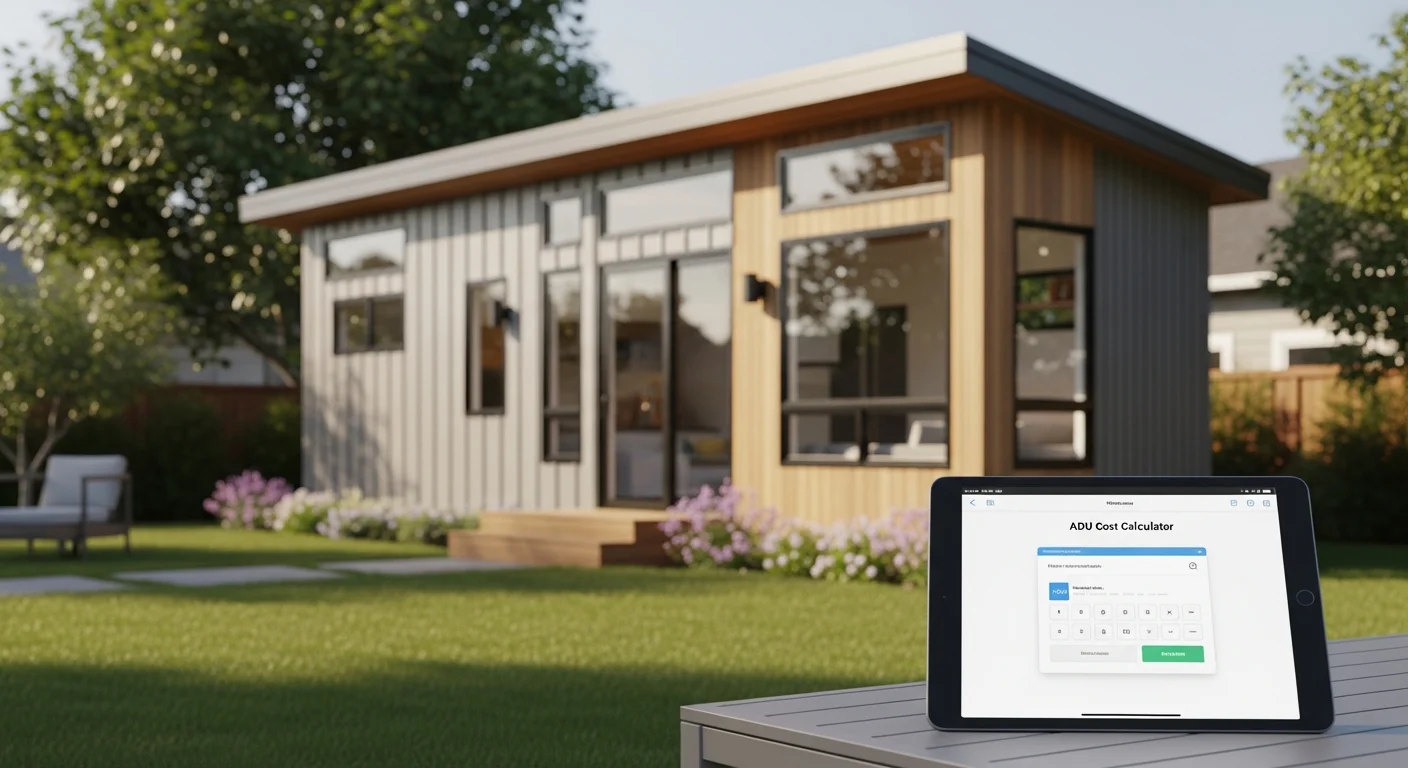
ADU / Granny Flat Cost Calculator
Buy NowModern Prefab ADU Designs 2026
The latest trends in 2026 focus on biophilic design and net-zero energy standards. Most modular units now come standard with solar readiness and high-efficiency HVAC systems. These designs maximize vertical space and natural light, making even a small footprint feel expansive.
Smart Home Integration
Factory-built units are now pre-wired for advanced automation. From energy monitoring to remote security, these units arrive on-site fully equipped for the digital age. This precision wiring is often more reliable than field-installed systems.
Prefabricated ADU vs. Traditional Stick-Built Construction
Cost Predictability
One of the greatest advantages of a prefabricated adu is the lack of price fluctuations. While traditional builds often suffer from supply chain delays and labor shortages, modular units are built under contract in controlled environments. This locks in your pricing early in the project.
Site Disturbance
Traditional construction can turn your backyard into a noisy zone for months. Modular housing moves 80% of the labor to a factory, meaning heavy machinery and crews are only present for a few weeks. This preserves your landscaping and keeps neighbors happy.
Want to see how much your modular project will cost?
Access the ADU Cost Calculator →Understanding the Total Investment for a Secondary Suite
Base Price vs. All-in Cost
When asking how much does a prefab adu cost, many people only look at the unit price. According to the California Department of Housing and Community Development, site preparation and utility trenching can add significant amounts to the final total.
Financing Options
By 2026, specialized secondary dwelling unit financing has become more accessible. Many lenders now offer renovation loans that consider the projected rental income of the ADU. This allows homeowners to leverage their equity to fund the entire construction.
| Feature | Benefit |
|---|---|
| Build Speed | Completed in 4-6 months compared to 12+ months |
| Quality Control | Factory precision eliminates human error and weather damage |
| Waste Reduction | Up to 30% less material waste than site-built homes |
Navigating Permits and Regulations for Modular Units
Prefab ADU Permit Process
Statewide mandates have forced local jurisdictions to streamline the prefab adu permit process. In many cases, pre-approved floor plans are available, which can cut months off the typical approval timeline. According to Terner Center for Housing Innovation, these standardized units are critical for meeting housing needs.
Setback Requirements
Even in 2026, you must respect property lines. Generally, you need at least a 4-foot rear and side setback for most detached structures. It is vital to check your local zoning before ordering your module.
Ready to plan your 2026 build? Start with our free tool.
Estimate ADU Costs Online →Maximizing Return on Investment with Backyard Housing
Accessory Dwelling Unit ROI
The financial gains from adding a unit go beyond rental checks. Adding a well-designed prefabricated adu can increase total property value by up to 30%. Data from the U.S. Census Bureau shows that residential values in high-density areas continue to favor multi-generational properties.
Rental Income Potential
In markets like Orange County, a one-bedroom unit can yield significant monthly returns. Because the construction costs are lower for modular units, the path to being "in the green" is much shorter than with traditional custom builds.
The Construction Timeline: From Factory to Foundation
Granny Flat Construction Timeline
Efficiency is the hallmark of the 2026 modular market. Once your prefabricated adu design is finalized, factory assembly usually takes only 6-8 weeks. Simultaneously, your site preparation occurs, allowing for a seamless delivery day.
Delivery and Installation
The "set day" is an exciting event where cranes lift your home into place. Once the unit is on the foundation, utility hookups and finishing touches take approximately 2-4 weeks. Guidelines from Energy.gov emphasize that this rapid installation reduces energy loss during construction.
Calculate your potential rental ROI in minutes.
Check Current ADU Costs →Frequently Asked Questions
How much does a prefab ADU cost in 2026?
The total investment typically ranges between $180,000 and $320,000 for a fully finished unit. This includes the structure, delivery, foundation, and utility hookups. Costs vary based on finishes and site complexity.
Are prefabricated units as durable as traditional homes?
Yes, they are often more durable because they must withstand the stress of transport and crane lifting. They are built to the same (or stricter) state building codes as site-built homes.
What is the permitting timeline for modular ADUs?
Permit approval usually takes 2 to 4 months. Using pre-approved designs can often expedite this process to the shorter end of that window.
Can I finance a prefab ADU with a home equity loan?
Absolutely. Home Equity Lines of Credit (HELOC) or Home Equity Loans are the most common ways to fund these projects in 2026. Some modular companies also offer in-house financing.
Are modular units energy efficient?
Most 2026 models are extremely efficient, featuring high-R-value insulation and air-tight construction. Many meet or exceed Title 24 energy standards in California automatically.
Conclusion
As we look at the remainder of 2026, the case for modular construction continues to grow. Whether you are seeking a place for elderly parents or a way to combat rising living costs, a prefabricated adu offers a predictable, high-quality, and fast solution. The combination of factory precision and site efficiency is unmatched by traditional methods.
Investing in your property now sets you up for long-term financial stability. By understanding the costs and benefits of modern modular design, you can make an informed decision that enhances your lifestyle and your net worth. Start your journey today by accurately estimating your project needs.
About the Author

Written by William Corcoran, Orange County Home Savings Expert
William Corcoran has helped Orange County families save money on their homes for over 15 years. Specializing in property tax reduction and smart refinancing, he offers expert guidance you can trust. www.energybot.com www.energystar.gov
Related Articles
Ready to Find Your Savings?
Get a free personalized report showing all rebates and incentives your home qualifies for.
Get My Free Report