Prefab Guest House Costs and Benefits: A Complete Guide to Accessory Dwelling Unit Investment in 2026
Key Takeaways
- Prefabricated units offer a faster construction timeline than traditional ground-up builds
- California laws in 2026 continue to streamline the permitting process for secondary dwellings
- Homeowners can see an immediate increase in property value and potential rental yield
- Modern modular designs for Winter 2026 prioritize energy efficiency and sustainable materials
As we move through the Winter 2026 season, the demand for flexible housing solutions has never been higher. Homeowners are increasingly looking for ways to maximize their property's potential, whether for multi-generational living or passive income. One of the most efficient ways to achieve this is through a prefab adu, which offers a streamlined alternative to traditional construction.
The landscape of home expansion has shifted toward modularity and precision engineering. By choosing a factory-built unit, you can bypass many of the headaches associated with standard job sites, such as weather delays and unpredictable labor costs. In today's market, these units represent a fusion of architectural beauty and functional efficiency.
Want to know exactly what your project will cost?
Use Our Cost Estimator Tool →Understanding Accessory Dwelling Unit Benefits
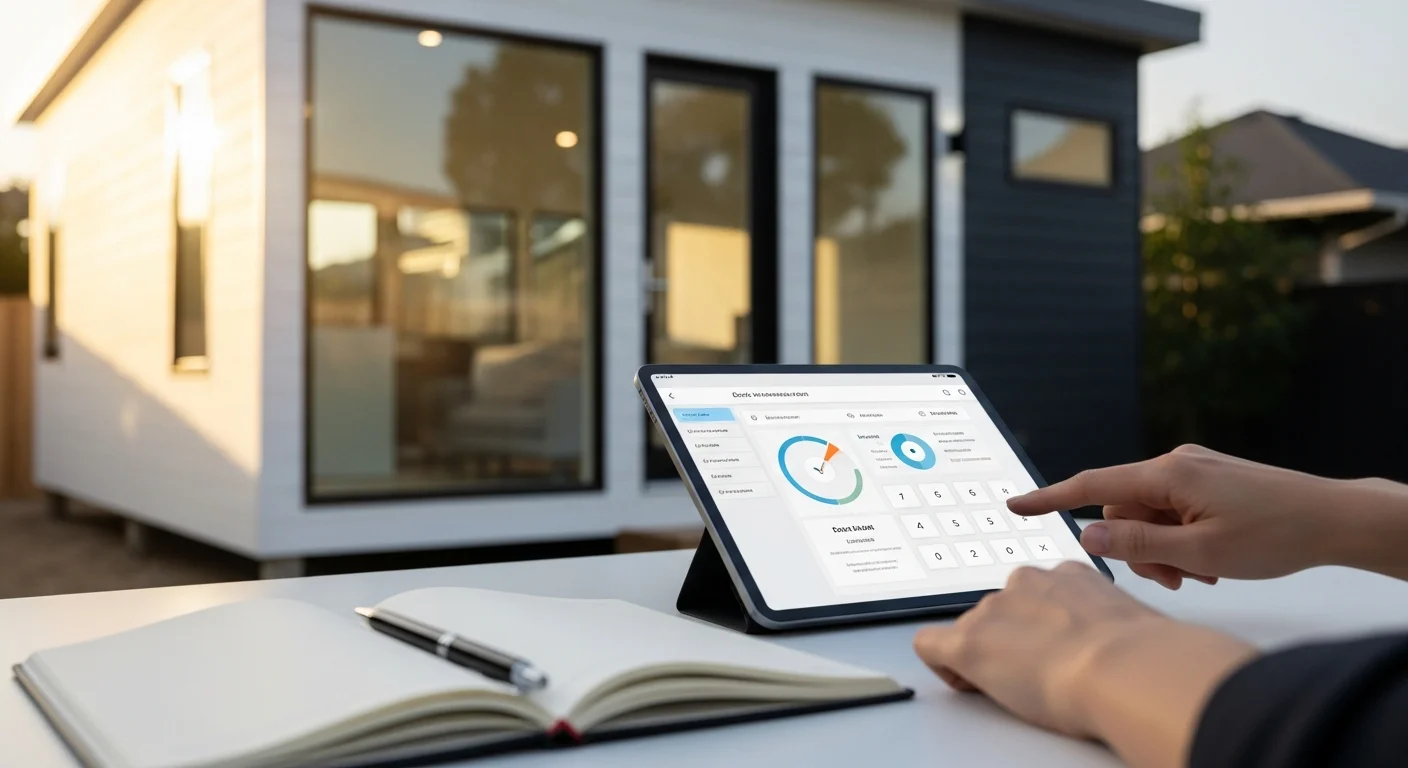
ADU / Granny Flat Cost Calculator
Buy NowImmediate Property Value Increase
Adding a secondary unit is one of the most reliable ways to boost your home's equity. According to the California Department of Housing and Community Development, these units provide essential housing stock while directly benefiting the homeowner's financial portfolio. In 2026, buyers are specifically looking for properties that feature versatile living spaces.
Passive Income Generation
The rental market remains strong in early 2026, and a well-designed unit can command premium rates. Whether you are targeting long-term tenants or traveling professionals, the granny flat rental income potential can often cover the monthly financing costs of the build itself, turning your backyard into a profit center.
Comparing Prefab ADU vs Stick Built Construction
The Speed of Modular Installation
The primary advantage of a prefab adu is the timeline. While a traditional stick-built structure might take six to nine months of active construction on your property, a prefabricated unit is built in a climate-controlled factory and installed in a matter of weeks. This minimizes the noise and disruption to your daily life.
Quality Control and Sustainability
Factory-built homes are subject to rigorous inspections at every stage of the assembly process. This ensures that the insulation, framing, and finishes meet high standards that are sometimes hard to maintain on a windy or rainy job site. Furthermore, waste is significantly reduced in a factory setting, making it a greener choice for 2026.
Ready to see modern 2026 floor plans?
Browse ADU Designs Now →Estimating Prefab Guest House Costs
Base Prices vs. All-In Expenses
When researching prefab guest house costs, it is vital to distinguish between the unit price and the "all-in" cost. You must account for site preparation, utility hookups, and foundation work. In 2026, average turn-key projects range from $150,000 to over $350,000 depending on size and luxury finishes.
| Cost Factor | 2026 Estimate Range |
|---|---|
| Base Unit Manufacturing | $90,000 - $220,000 |
| Site Prep & Foundation | $15,000 - $45,000 |
| Permits & Impact Fees | $5,000 - $15,000 |
| Utility Connections | $8,000 - $20,000 |
The ADU Permit Process 2026
State-Mandated Timelines
According to Wikipedia's housing overview, legislative updates have forced many local jurisdictions to approve or deny applications within 60 days. This makes the adu permit process 2026 much more predictable than it was just a few years ago.
Maximizing Granny Flat Investment Value
Smart Financing Strategies
Many homeowners are utilizing Home Equity Lines of Credit (HELOC) or specialized ADU construction loans to fund their projects. Because these units are considered permanent improvements, they are often appraised at a high value, allowing for favorable how to finance a prefab adu options.
Explore local savings and financing options in Orange County.
Get Your Free ADU Quote →Frequently Asked Questions
What is the average cost of a prefab ADU in 2026?
In 2026, most turn-key prefab projects cost between $180,000 and $300,000. This typically includes the design, manufacturing, transportation, and final installation on your property.
Do prefab ADUs hold their value like traditional homes?
Yes, modern modular units are built to the same building codes as traditional homes. They are considered permanent real estate improvements and contribute significantly to the overall appraisal value of your property.
How long does the installation take?
Once the unit arrives on-site, the physical installation often takes less than a week. However, the total timeline including permitting and site preparation usually spans 4 to 6 months.
Can I rent out my prefab unit in California?
Yes, California law permits the rental of ADUs. Many homeowners use them as long-term rentals to generate a steady stream of passive income, especially in high-demand areas.
Is a permit required for a prefab ADU?
Absolutely. Even though the unit is built in a factory, you must obtain local building and safety permits. The 2026 regulations have simplified this, but professional guidance is still recommended.
Conclusion: Making the Move to a Modern Prefab ADU
Deciding to build a prefab adu is a significant step toward future-proofing your home and your finances. With the advancements in modular technology and the supportive legislative environment of 2026, there has never been a more opportune time to expand your living space. By focusing on quality design and professional installation, you can create a space that serves your family for decades.
As an expert in Orange County home savings, I recommend starting with a clear budget and a realistic timeline. Use the tools available to you to estimate costs early and consult with professionals who understand the local landscape. Your journey to a more versatile property begins with one smart decision today.
About the Author

Written by William Corcoran, Orange County Home Savings Expert
William Corcoran has helped Orange County families save money on their homes for over 15 years. Specializing in property tax reduction and smart refinancing, he offers expert guidance you can trust. www.energybot.com www.energystar.gov
Related Articles


Ready to Find Your Savings?
Get a free personalized report showing all rebates and incentives your home qualifies for.
Get My Free Report