How to Lower Pool Electricity Bill: Benefits of Energy Efficient Pool Equipment and Cost Calculators
Key Takeaways
- Switching to a variable speed pump can reduce energy costs by up to ninety percent.
- Utilizing a pool heating cost calculator helps identify hidden expenses in seasonal temperature maintenance.
- Heat pumps are significantly more energy efficient than traditional gas heaters for mild climates.
- Optimizing pump runtime based on turnover rates prevents unnecessary electricity consumption.
Owning a pool in Southern California is a dream for many, but the monthly utility invoices can quickly turn that dream into a financial burden. If you have been wondering how to lower pool electricity bill costs without sacrificing water clarity, you are not alone. Many homeowners overlook the fact that the pool pump is often the second largest consumer of energy in the home.
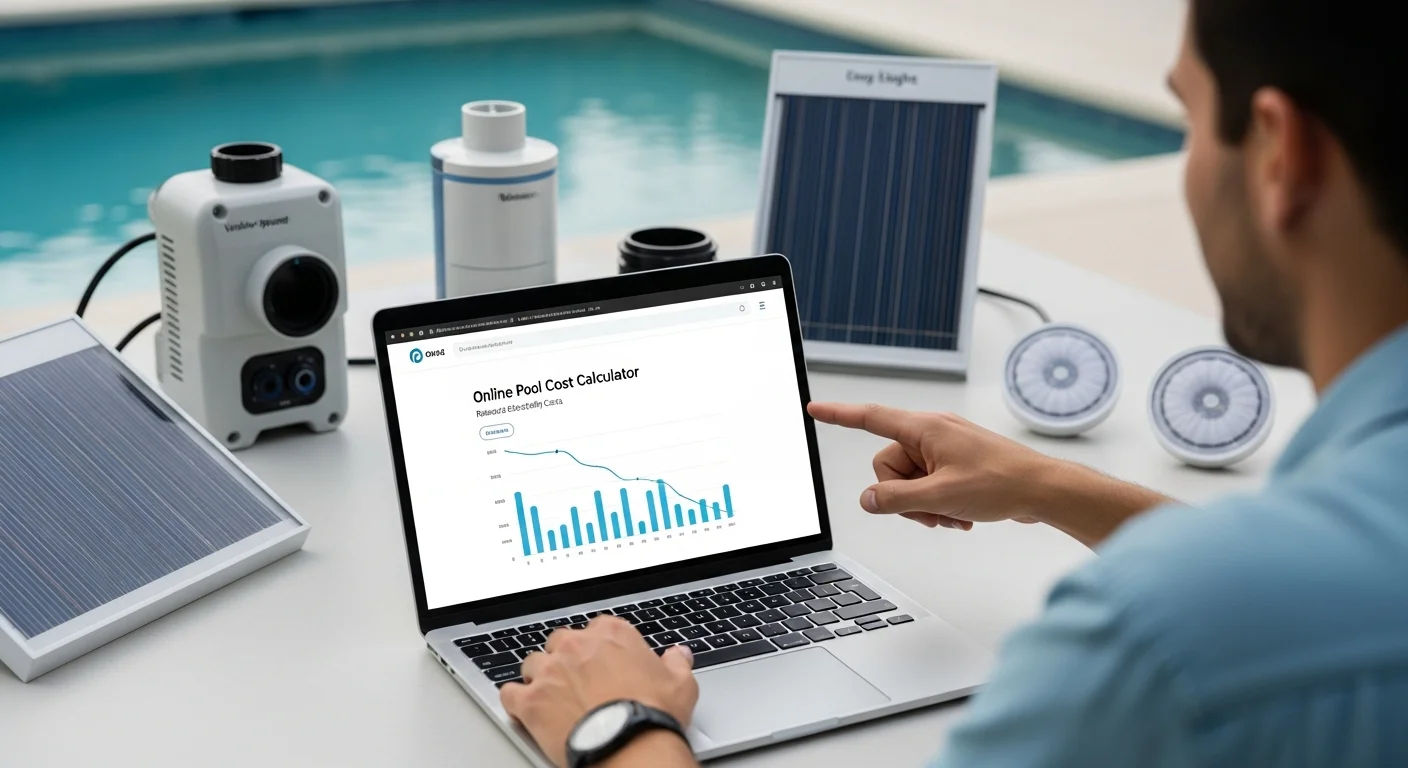
Modern technology has introduced incredible ways to monitor and reduce these expenses. By utilizing a pool heating cost calculator and upgrading to smarter equipment, you can pinpoint exactly where your money is going. This guide explores the transition from traditional high-cost maintenance to a streamlined, energy-efficient backyard oasis.
Stop overpaying for your pool maintenance today!
Use Our Free Efficiency Calculator →Understanding Pool Pump Energy Savings
Pool Cost Calculator
Buy NowThe Impact of Variable Speed Pumps
Traditional single-speed pumps operate at one constant, high-energy level regardless of the task. In contrast, pool pump energy savings are primarily achieved by slowing the motor down during filtration. According to the U.S. Department of Energy, slower speeds significantly reduce friction in the pipes, leading to massive efficiency gains.
Calculating Your Current Consumption
Before you can save, you must understand your baseline. Most older pumps pull between 1,500 and 2,500 watts per hour. By identifying your local kilowatt-hour rate, you can determine your average pool maintenance cost per month just for circulation.
Using a Pool Heating Cost Calculator for Precision
Gas vs. Electric Heat Pumps
Choosing between gas and electric requires a deep dive into your usage patterns. A pool heating cost calculator allows you to compare the high-intensity heat of gas with the steady efficiency of a heat pump. According to Wikipedia's research on heat pumps, these devices move heat rather than creating it, making them 300% to 600% efficient.
Estimating Seasonal Heating Expenses
Temperature fluctuations in Orange County can cause heating bills to skyrocket during the shoulder months. Using a specialized tool helps you decide if a solar cover or a heat pump upgrade is the best pool energy efficiency tip for your specific ZIP code.
Why is My Pool Bill So High? Common Culprits
Inefficient Filtration Schedules
Many owners run their pumps for 12 hours a day because they were told to do so decades ago. However, running a pump during peak utility hours is a common reason for why is my pool bill so high. Shifting operations to off-peak hours can save hundreds of dollars annually.
Aging Equipment Performance
As motors age, their internal resistance increases, requiring more electricity to move the same amount of water. According to Energy Star, certified pumps use significantly less energy and often qualify for local utility rebates.
Ready to upgrade to a Variable Speed Pump?
Get Your Custom Savings Report →Variable Speed vs Single Speed Pool Pump Comparison
| Feature | Single Speed Pump | Variable Speed Pump |
|---|---|---|
| Energy Consumption | High (Constant 100%) | Low (Adjustable 10-100%) |
| Annual Cost | $800 - $1,200 | $150 - $300 |
| Noise Level | Loud | Ultra-Quiet |
| Lifespan | 5-7 Years | 10-12 Years |
Return on Investment (ROI) Timelines
While the upfront cost of energy efficient pool upgrades is higher, the ROI is remarkably fast. Most homeowners in Orange County find that a variable speed pump pays for itself in electricity savings within 18 to 24 months.
Top Benefits of Energy Efficient Pool Equipment
Environmental Impact and Sustainability
Reducing your kilowatt usage does more than save money; it lowers your home's carbon footprint. According to the National Renewable Energy Laboratory, residential energy efficiency is a key component of state-wide sustainability goals.
Reduced Noise and Wear
One of the most immediate variable speed pool pump benefits is the silence. Running at lower RPMs means the motor generates less heat and vibration, which extends the life of your entire filtration system including the filter and heater.
How to Calculate Pool Pump Runtime for Maximum Efficiency
Turnover Rate Requirements
To keep water clean, you generally need one full turnover per day. You can learn how to calculate pool pump runtime by dividing your total pool volume by the pump's flow rate at its designated speed setting.
Off-Peak Hours Scheduling
Consulting a pool pump cost calculator california expert will reveal that utility rates can triple during the afternoon. Programming your pump to run from late evening through early morning ensures you benefit from the lowest possible electricity rates.
Calculate your specific pool heating and pump costs now!
Access the Calculator →Frequently Asked Questions
How much can I save by switching to a variable speed pump?
Most homeowners save between $500 and $1,000 per year on their electricity bills. The exact amount depends on your local utility rates and how many hours you currently run your old pump.
Is a heat pump better than a gas heater for a pool?
For constant temperature maintenance in climates like Orange County, a heat pump is far more cost-effective. Gas heaters are better for quickly heating a spa but are very expensive for daily pool heating.
How long should I run my pool pump every day?
Typically, a pool needs 6 to 8 hours of circulation at medium speeds, or 12 hours at very low speeds. The goal is to move the total volume of water through the filter at least once.
Do solar covers really help with heating costs?
Yes, solar covers are the most effective way to prevent heat loss due to evaporation. Using a cover can reduce your heating energy needs by 50% to 70%.
Are there rebates for energy-efficient pool pumps in California?
Many local utilities, such as Southern California Edison, frequently offer rebates for Energy Star certified pool pumps. Check with your provider or an expert at Orange County Home Savings for current offers.
Conclusion
Managing your home's energy consumption doesn't have to be a guessing game. By focusing on high-impact areas like your pool circulation and heating systems, you can achieve significant monthly savings. Using a professional pool heating cost calculator is the first step toward reclaiming your budget from high utility fees.
Whether you choose to invest in a variable speed pump or simply optimize your current runtime schedule, every small change contributes to long-term financial health. At Orange County Home Savings, we are dedicated to helping you find the most efficient path to a beautiful and affordable swimming pool experience.
About the Author

Written by William Corcoran, Orange County Home Savings Expert
William Corcoran has helped Orange County families save money on their homes for over 15 years. Specializing in property tax reduction and smart refinancing, he offers expert guidance you can trust. www.energybot.com www.energystar.gov
Related Articles
Ready to Find Your Savings?
Get a free personalized report showing all rebates and incentives your home qualifies for.
Get My Free Report