Measuring Your Yard for Success: How to Calculate Lawn Square Footage for Rebates in 2026
Key Takeaways
- Accurate measurements are critical for securing the maximum possible rebate amount in 2026.
- Regional water districts often require precise square footage documentation before approving applications.
- Sustainable landscaping reduces annual water consumption by up to sixty percent for most residential homes.
- Modern estimation tools help eliminate the common errors found in manual yard measurements.
As we move through Winter 2026, California homeowners are facing a unique opportunity to revitalize their outdoor spaces while capitalizing on significant financial incentives. Transitioning from traditional grass to water-wise alternatives has never been more beneficial, but the process begins with precision. Utilizing a high-quality lawn area calculator is the essential first step in ensuring your project qualifies for every available dollar.
The drought conditions of previous years have led to more stringent reporting requirements for 2026. Water districts now demand highly accurate square footage data to justify rebate payouts. Without a proper measurement strategy, homeowners risk having their applications delayed or even rejected during the audit phase.
The Importance of Accurate Landscape Area Measurement
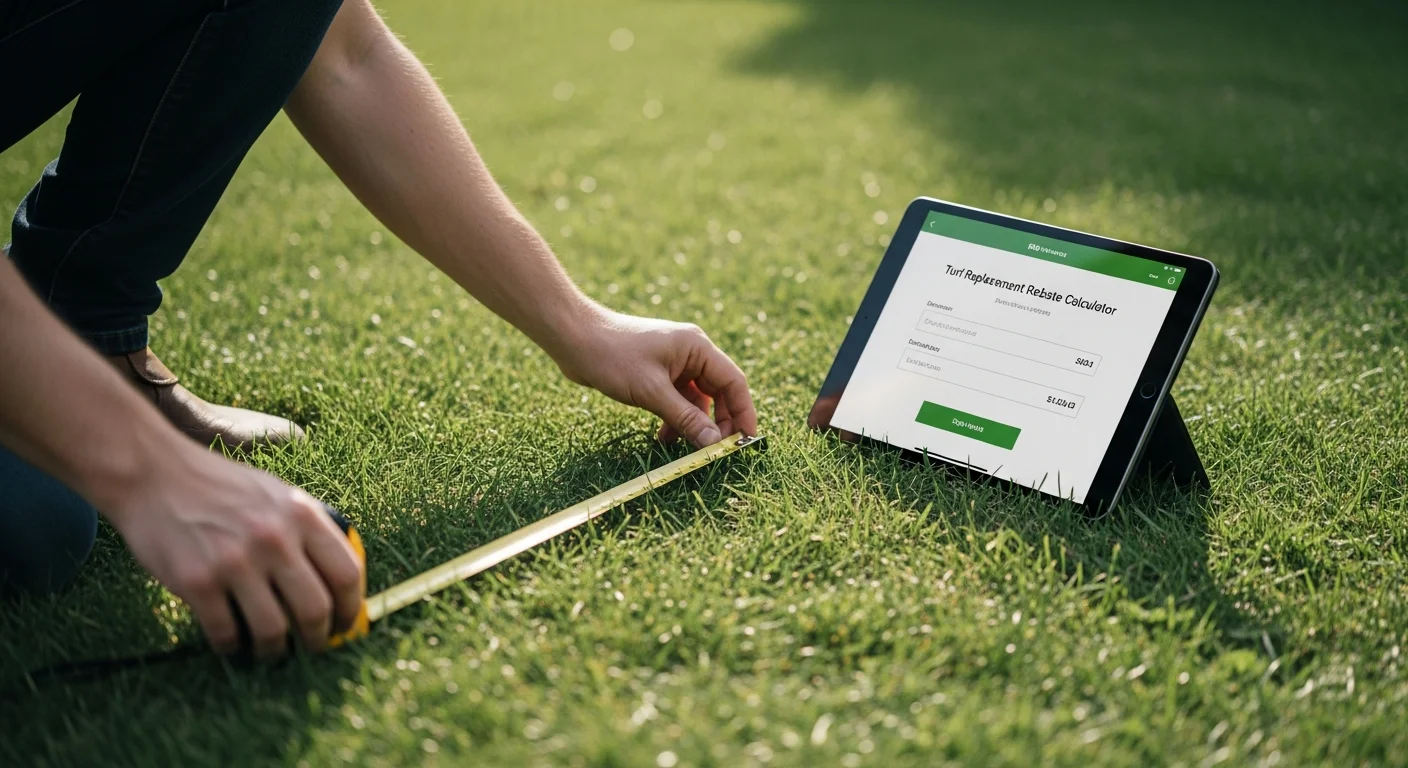
Turf Replacement Rebate Calculator
Buy NowEliminating Estimation Errors
Many homeowners attempt to eyeball their yard size or use pace-counting methods, which often lead to inaccuracies. According to EPA WaterSense research, residential outdoor water use can vary wildly based on inaccurate turf sizing. Precise measurement ensures you buy the correct amount of mulch, rocks, or native plants.
Meeting Water District Standards
Regional agencies like the Metropolitan Water District have specific guidelines for rebate eligibility. As noted in the MWD Conservation Guide, any area submitted for turf replacement must be measured to the nearest square foot to prevent over-allocation of funds.
Ready to see how much you can save?
Calculate Your Rebate Now →How to Use a Lawn Area Calculator for Maximum Rebates
Inputting Your Yard Dimensions
By inputting specific dimensions into a high-quality lawn area calculator, you eliminate the guesswork that often leads to application denials. You should measure the length and width of multiple sections if your yard is not a perfect rectangle. Most modern tools allow for irregular shape inputs to provide a comprehensive total.
Verifying Data Against Satellite Imagery
Some advanced tools cross-reference your manual inputs with geographic information systems (GIS). This layer of verification is increasingly used by the Orange County Water District to audit rebate claims remotely, saving time for both the homeowner and the agency.
Top Benefits of Drought-Tolerant Landscaping in 2026
Environmental Impact and Water Conservation
Drought-tolerant plants, or xeriscaping, significantly reduce the strain on local reservoirs. According to the California Department of Water Resources, replacing natural turf with native species can save over 40 gallons of water per square foot annually.
Lower Maintenance Requirements
Traditional lawns require weekly mowing, fertilizing, and aeration. In contrast, 2026 sustainable garden trends focus on "low-touch" ecosystems that thrive with minimal intervention, freeing up your weekends and reducing noise pollution from gas-powered mowers.
Maximize your outdoor savings today.
Access the 2026 Turf Tool →California Water Saving Rebates: What You Need to Know
Current Funding Levels for 2026
Funding for turf replacement varies by year and district. For Winter 2026, many Southern California programs are offering between $2 and $5 per square foot. It is vital to check the latest updates on UC Division of Agriculture and Natural Resources for regional variations in incentive pricing.
Pre-Approval vs. Post-Installation
Never remove your grass before receiving a formal "Notice to Proceed." Most 2026 rebate programs require an initial inspection or photo documentation of the existing living turf before they will commit to a payout.
Step-by-Step Landscape Area Measurement Guide
Measuring Rectangular vs. Irregular Zones
Break your yard into simple geometric shapes. For a rectangle, multiply length times width. For circular areas, measure from the center to the edge (radius), square that number, and multiply by 3.14. A lawn area calculator can handle these complex formulas automatically, ensuring your totals are mathematically sound.
Excluding Non-Plantable Surfaces
Do not include driveways, walkways, or patios in your turf replacement square footage. Rebates are strictly for the removal of irrigated grass and its replacement with permeable, drought-tolerant alternatives.
| Landscape Feature | Rebate Eligibility |
|---|---|
| Living Grass/Turf | Primary Eligible Feature |
| Mulch/Bark Cover | Eligible Replacement Material |
| Concrete Patios | Non-Eligible Surface |
| Native Shrubs | Eligible Replacement Material |
Sustainable Landscaping ROI and Long-Term Savings
Property Value Increases
In 2026, curb appeal is increasingly defined by sustainability. Homes with professional xeriscaping often command higher prices in the Orange County market because buyers recognize the value of lower utility bills and modern design aesthetics.
Immediate Utility Bill Reduction
The Return on Investment (ROI) for turf replacement isn't just about the one-time rebate check. Most homeowners see their monthly water costs drop significantly, often recouping any out-of-pocket project expenses within the first 24 to 36 months of completion.
Don't miss the 2026 rebate window.
Get Your Custom Yard Quote →Frequently Asked Questions
How do I measure my yard for a turf rebate?
The best way is to divide your lawn into geometric sections and measure the square footage of each. Using a dedicated calculator helps ensure that your total area matches the strict requirements set by California water agencies for 2026.
Can I get a rebate for artificial grass?
Rebate eligibility for artificial turf varies by local water district. Some agencies prefer living, drought-tolerant plants over synthetic materials to support local biodiversity and reduce heat-island effects. Always check your specific zip code guidelines before starting.
What is the deadline for the 2026 turf rebate program?
Most programs operate on a first-come, first-served basis until funding is exhausted for the fiscal year. It is highly recommended to submit your application in the Winter or Spring of 2026 to ensure funds are still available for your project.
Do I need a permit for turf replacement?
While a city permit is rarely required for simple landscape changes, you must adhere to your Homeowners Association (HOA) rules. Most California HOAs are legally required to allow drought-tolerant landscaping, but they may still require an architectural review of your design.
What happens if my measurements are wrong?
If your submitted measurements exceed the actual square footage found during an inspection, the water district will reduce your rebate payout accordingly. Significant discrepancies can lead to the disqualification of your entire application, making accuracy vital.
As we conclude this guide, remember that sustainable landscaping is an investment in both your property and California's future. By taking the time to precisely measure your lawn area, you are setting the foundation for a successful, high-payout transformation.
Don't leave money on the table this season; start with a reliable lawn area calculator to ensure your measurements are audit-ready. The team at Orange County Home Savings is here to help you navigate the complexities of the 2026 rebate landscape and achieve the outdoor space you have always wanted.
About the Author

Written by William Corcoran, Orange County Home Savings Expert
William Corcoran has helped Orange County families save money on their homes for over 15 years. Specializing in property tax reduction and smart refinancing, he offers expert guidance you can trust. www.energybot.com www.energystar.gov
Related Articles

Ready to Find Your Savings?
Get a free personalized report showing all rebates and incentives your home qualifies for.
Get My Free Report