2026 EV Charger Installation Cost Guide: How to Maximize Home Charging Rebates
Key Takeaways
- Level 2 charging stations are the standard for efficient home charging in 2026.
- Local Orange County rebates can offset up to 50 percent of total installation expenses.
- Electrical panel upgrades are often necessary for older homes to support new charging loads.
- Professional installation is required to maintain manufacturer warranties and safety standards.
As we move into Spring 2026, the transition to sustainable transportation has reached a record pace in Southern California. For many homeowners, the primary hurdle isn't choosing the vehicle, but deciding to install electric car charger equipment that balances speed, cost, and reliability.
Modern home charging is no longer just about a plug in the wall; it is a sophisticated integration of smart technology and electrical infrastructure. According to the U.S. Department of Energy, over 80% of EV charging happens at home, making this investment central to the EV ownership experience.
Calculate Your Potential Rebates Today
Access EV Cost Calculator →EV Charger Installation Cost in 2026
EV Charger Installation Calculator
Buy NowAverage National vs Local Pricing
The price for home charging setups has stabilized in 2026, though labor costs in California remain above the national average. Most homeowners can expect to pay between $800 and $2,500 for a standard installation, depending on the distance from the electrical panel to the garage.
Factors Impacting Your Final Bill
Several variables influence the final quote, including the need for a 240V circuit, trenching through concrete, or upgrading a legacy electrical panel. According to Consumer Reports, more complex jobs involving sub-panels can push costs toward the higher end of the spectrum.
Selecting Your Home Electric Vehicle Charging Station
Hardwired vs. NEMA 14-50 Plugs
Hardwired stations offer higher amperage (typically up to 48A or 50A) and are more resistant to extreme weather. Conversely, NEMA 14-50 plugs allow for portability, meaning you can take the charger with you if you move, though they are capped at 40A for continuous safety.
Smart Features for 2026 Models
The latest Spring 2026 models integrate directly with solar panel systems and home battery storage like the Tesla Powerwall. This allows you to charge your vehicle strictly using excess solar energy, effectively reducing your fuel cost to zero during peak sunlight hours.
| Charger Type | Miles Per Hour of Charge | Electrical Requirement |
|---|---|---|
| Level 1 (Basic) | 3-5 Miles | Standard 120V Outlet |
| Level 2 (Home Standard) | 25-40 Miles | 240V Dedicated Circuit |
| Level 3 (DC Fast) | 100+ Miles (15 min) | Commercial Grade 480V |
Detailed Requirements to Install Electric Car Charger Systems
Assessing Panel Capacity
Before you install electric car charger hardware, an electrician must perform a load calculation. Many older Orange County homes have 100A panels, which may require an upgrade to 200A to safely accommodate a Level 2 charger along with AC units and electric dryers.
Permitting and Codes in California
The California Energy Commission mandates specific safety protocols for EVSE (Electric Vehicle Supply Equipment). Obtaining a permit ensures that your installation is inspected by the city, protecting your home insurance coverage and resale value.
Ready to Upgrade Your Home Energy?
Get Your Free Estimate →Orange County Rebates and Incentives
SCE Charge Ready Home Program
Southern California Edison often provides incentives for residents who install smart chargers. These programs are designed to encourage charging during off-peak hours (midnight to 6 AM) to help balance the grid and lower your monthly utility bill.
Federal Tax Credit (Section 30C)
The federal tax credit for EV infrastructure has been extended into 2026. Homeowners in eligible census tracts can claim a credit of 30% of the cost of hardware and installation, up to $1,000, significantly lowering the total barrier to entry.
Level 2 Charger Installation: Professional vs DIY
Why Experience Matters
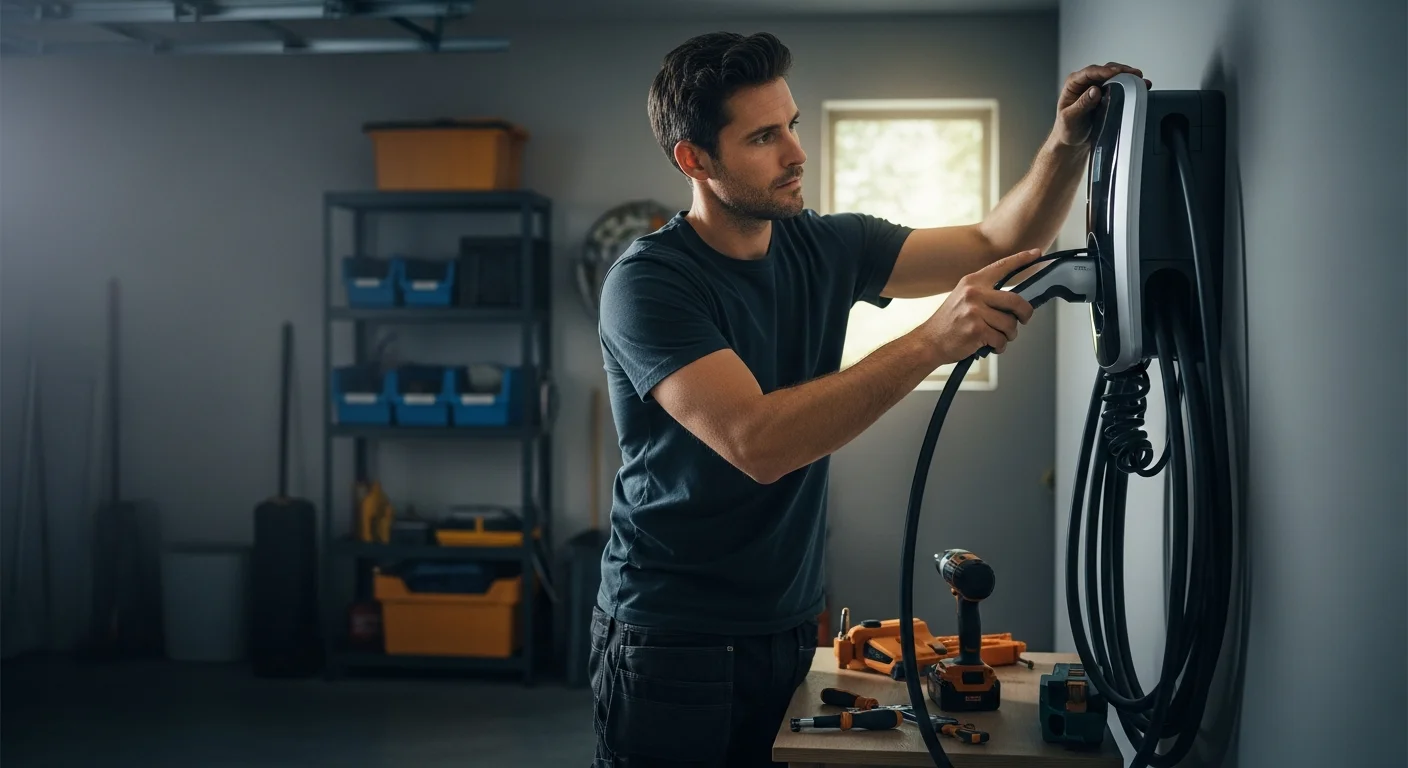
While many DIY enthusiasts might be tempted to handle the wiring themselves, EV charging involves high continuous loads. A professional can install electric car charger units with the correct wire gauge (usually 6 AWG for a 50A circuit) to prevent overheating and fire hazards.
Maintenance and Troubleshooting
Professional installers often provide a labor warranty alongside the manufacturer's warranty. If your station experiences connectivity issues or charging faults, having a certified expert to call ensures your daily commute is never interrupted.
How to Save on EV Charger Installation
Using the OC Home Savings Tool
Our proprietary calculator helps you navigate the complex landscape of 2026 rebates. By entering your zip code and existing panel information, you can get a transparent look at what your out-of-pocket costs will be after federal and local incentives are applied.
Strategic Placement for Savings
Positioning your charger as close to your electrical panel as possible is the single best way to save on installation. Every foot of conduit and heavy-duty wire adds to the labor and material cost of the project.
Stop Guessing Your Installation Costs
Use Our Free Cost Calculator →
Frequently Asked Questions
Can I use a standard 120V outlet for my new EV?
Yes, this is known as Level 1 charging. However, it only adds about 3-5 miles of range per hour, which is often insufficient for daily commuters compared to a dedicated Level 2 setup.
Do I need a permit to install an EV charger in Orange County?
Yes, most municipalities in Orange County require an electrical permit to ensure the installation meets California building codes and fire safety standards.
How long does the installation process typically take?
A standard installation usually takes between 3 to 6 hours. If a main service panel upgrade is required, the project may span two days and involve coordination with your utility provider.
Is there a difference between Tesla and non-Tesla chargers?
In 2026, many manufacturers have adopted the NACS (Tesla) plug standard. However, adapters are widely available, and many home stations now feature interchangeable cables to support any vehicle model.
What happens if my home has a 100-amp electrical panel?
You may need a panel upgrade or a smart load management device. These devices automatically throttle the charger if other high-power appliances are running to prevent tripping the main breaker.
Taking the step to install electric car charger infrastructure is one of the smartest upgrades you can make to your home in Spring 2026. Not only does it provide the ultimate convenience of waking up to a full battery every morning, but it also increases your property value in a market that increasingly prioritizes green technology.
By leveraging the latest rebates and utilizing our specialized cost calculator, you can ensure that your transition to electric driving is as affordable as it is efficient. Don't leave your home energy future to chance; consult with the experts at Orange County Home Savings today.
About the Author

Written by William Corcoran, Orange County Home Savings Expert
William Corcoran has helped Orange County families save money on their homes for over 15 years. Specializing in property tax reduction and smart refinancing, he offers expert guidance you can trust. www.energybot.com www.energystar.gov
Related Articles

Ready to Find Your Savings?
Get a free personalized report showing all rebates and incentives your home qualifies for.
Get My Free Report