How to Measure Roof Pitch: A Homeowner’s Guide to Roof Slope and Replacement Costs
Key Takeaways
- Roof pitch is the vertical rise of a roof over a horizontal 12-inch run.
- Accurate measurements are critical for estimating material needs and labor costs.
- Steeper roofs often qualify for different rebate tiers in 2026 energy programs.
- Modern digital tools allow homeowners to calculate slope without climbing a ladder.
As we enter the Spring 2026 home improvement season, many Southern California residents are looking at their homes with an eye for efficiency. One of the most critical factors in planning a major exterior upgrade is figuring out roof pitch, as this measurement dictates everything from the types of shingles you can use to the final cost of labor. Whether you are aiming for a cool roof rebate or simply need an accurate quote, knowing your slope is the first step.
According to the Wikipedia guide on Roof Pitch, the term describes the vertical rise over a horizontal span. In the United States, this is typically expressed as a ratio over 12 inches. For example, a "4-in-12" pitch means the roof rises 4 inches for every 12 inches of horizontal distance.
Want to see how your pitch impacts your savings?
Calculate Your Roof Cost Now →Understanding the Basics: Roof Slope vs. Pitch
Roof Replacement Calculator
Buy NowWhile many homeowners use these terms interchangeably, there is a technical difference that contractors in 2026 still emphasize. Slope refers to the incline of a single roof plane, while pitch refers to the ratio of the total rise to the total span of the entire roof structure.
The Ratio Explained
The standard format is x:12. A low-slope roof might be a 2:12, whereas a steep Victorian-style home might feature a 12:12 pitch. Understanding this ratio is essential for choosing materials that comply with Energy Star cool roof standards.
Common Pitches for Residential Homes
In Orange County, most suburban homes built between 1980 and 2026 fall between a 4:12 and 8:12 pitch. These moderate slopes are ideal for standard asphalt shingles and facilitate efficient water runoff.
Safety First: Preparing for Figuring Out Roof Pitch
Before you attempt any measurement, safety must be your top priority. Falling from a roof is a leading cause of home improvement injuries. According to FEMA safety guidelines, you should never walk on a wet or mossy roof.
Essential Tools for Measurement
- A sturdy 12-inch level
- A measuring tape or ruler
- A pencil and notepad
- Non-slip footwear
Measuring from the Attic
An often-overlooked tip for figuring out roof pitch safely is to measure from the inside of your attic. By placing your level against a rafter, you can get an accurate reading without ever setting foot on a ladder.
The Level and Tape Measure Method
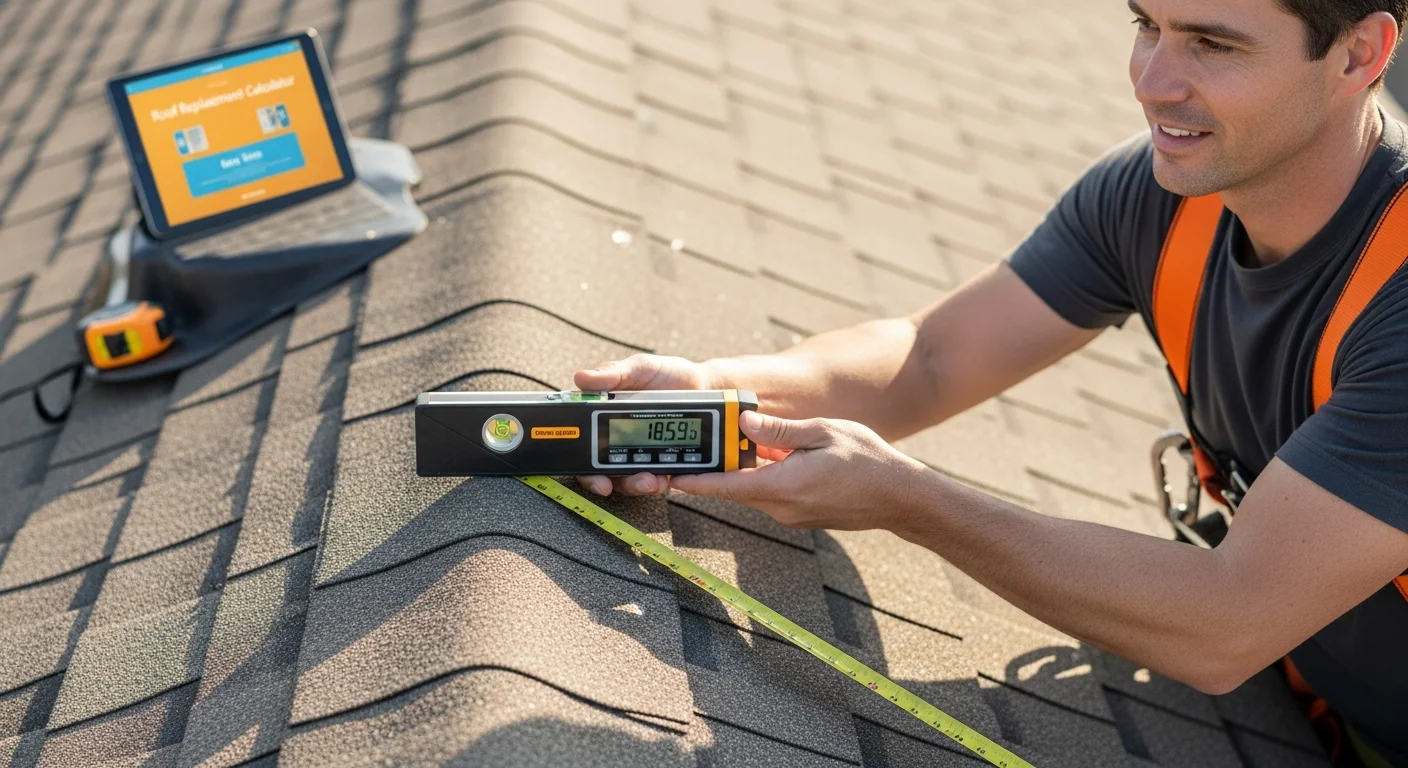
This is the traditional "old school" method used by contractors. It is highly accurate and requires no special technology. Simply hold a 12-inch level perfectly horizontal against the roof surface or a rafter.
Step-by-Step Execution
- Place one end of the level against the roof.
- Ensure the bubble indicates it is level.
- Measure the vertical distance from the other end of the level down to the roof surface.
- That vertical measurement is your "rise."
Interpreting the Results
If the distance from the end of your 12-inch level to the roof is 6 inches, you have a 6:12 pitch. This information is vital when using a roof pitch calculator for homeowners to determine total square footage.
Need an accurate estimate for your Spring 2026 project?
Use the Online Calculator →Using a Smartphone App for Roof Angles
In 2026, mobile technology has made roofing tasks significantly easier. Various smartphone apps utilize the internal gyroscope to measure angles instantly. This is a great alternative for figuring out roof pitch from the ground or while standing on a ladder.
How Angle Finder Apps Work
Most apps allow you to point your camera at the roof's gable end. The software overlays a digital protractor to identify the degrees of the slope, which the app then converts into a standard pitch ratio.
Accuracy Considerations
While convenient, digital tools can sometimes be off by a fraction. It is always best to cross-reference digital readings with a physical measurement if you are ordering expensive materials like slate or metal roofing.
How Roof Steepness Affects Your 2026 Replacement Budget
Pitch directly influences the "walkability" of a roof. If a roof is too steep for a contractor to walk on safely without harnesses and scaffolding, the labor costs will increase significantly. This is a major factor in roof replacement cost 2026 projections.
| Pitch Range | Cost Impact | Material Options |
|---|---|---|
| Flat to 2:12 | Moderate (Special sealing) | TPO, PVC, EPDM |
| 4:12 to 7:12 | Standard pricing | Asphalt, Tile, Shingles |
| 9:12 and higher | High (Safety equipment) | Slate, High-end Metal |
Cool Roof Rebates
Many 2026 incentive programs, like those discussed by the U.S. Department of Energy, require specific solar reflectance index (SRI) ratings that vary based on the roof's slope. Steeper roofs may have different aesthetic requirements for these rebates.
The Financial Benefits of Professional Roof Inspections
While doing it yourself is a great start, having a professional confirm your findings can save thousands. Professionals use advanced drones and satellite imagery to provide precision measurements that insurance companies and rebate providers trust.
Qualifying for Orange County Savings
Local experts understand the specific micro-climates of Orange County. They can recommend whether a high-reflectivity tile or a modern cool-shingle is best for your specific pitch and sun exposure.
Ready to maximize your 2026 home energy savings?
Get Your Free Rebate Estimate →Frequently Asked Questions
Is roof pitch the same as roof angle?
They are related but expressed differently. Pitch is a ratio (rise over run), while angle is measured in degrees. A 4:12 pitch, for example, is approximately an 18.4-degree angle.
Can I change my roof pitch during a replacement?
Yes, but it is a major structural undertaking. It involves changing the rafters or trusses, which requires architectural plans and city permits. Most homeowners stick to their existing pitch to control costs.
Why does pitch matter for cool roof rebates?
Rebate programs often distinguish between low-slope and steep-slope roofs because the energy-saving materials perform differently at various angles. Accurate measurement ensures you apply for the correct tier.
What is the most common roof pitch in California?
The 4:12 to 6:12 range is the most common for residential ranch-style and contemporary homes. It offers a balance of aesthetic appeal and effective drainage for seasonal rains.
Can I measure pitch from the ground?
Yes, by using a smartphone app or by standing back and using a speed square aligned with the roof's gable edge. However, measuring from the surface or rafters is generally more precise.
In conclusion, figuring out roof pitch is a vital skill for any homeowner planning for the 2026 season. Whether you use a traditional level, a smartphone app, or measure from the safety of your attic, having this data ready will help you navigate the complexities of replacement costs and rebate qualifications.
If you are unsure about your measurements or want to ensure you are getting the best possible deal on a new cool roof, don't hesitate to reach out to the pros. Expert help with figuring out roof pitch and rebate eligibility can turn a stressful renovation into a streamlined, cost-effective success.
About the Author

Written by William Corcoran, Orange County Home Savings Expert
William Corcoran has helped Orange County families save money on their homes for over 15 years. Specializing in property tax reduction and smart refinancing, he offers expert guidance you can trust. www.energybot.com www.energystar.gov
Related Articles

Ready to Find Your Savings?
Get a free personalized report showing all rebates and incentives your home qualifies for.
Get My Free Report