Unlock Savings: Understanding Turf Replacement Costs and Water-Wise Rebates in Orange County
Key Takeaways
- Turf replacement significantly reduces water bills and landscape maintenance requirements.
- Orange County residents can qualify for substantial rebates to offset project expenses.
- Project scope, material choices, and labor rates are key factors influencing total costs.
- Online calculators like the Orange County Home Savings tool simplify rebate estimation and financial planning.
- Investing in drought-tolerant landscaping enhances property value and promotes environmental sustainability.
As we move deeper into 2026, many Orange County homeowners are evaluating their outdoor spaces with an eye toward sustainability and efficiency. The lush, green lawns of yesteryear are increasingly giving way to drought-tolerant landscapes, driven by environmental consciousness and the desire for lower utility bills. One of the most common questions that arises during this transition is about the cost to replace sod and how to make this investment as financially smart as possible.
Replacing a traditional lawn with water-efficient alternatives is a significant home improvement project. It not only conserves one of California's most precious resources but can also transform your yard into a beautiful, low-maintenance oasis. Understanding the various financial implications, from upfront expenses to long-term savings and available rebates, is crucial for any homeowner considering this impactful upgrade.
This comprehensive guide will break down the essential aspects of turf replacement, from calculating potential costs to navigating the generous rebate programs available to Orange County residents. We’ll empower you with the knowledge to make informed decisions for a greener, more sustainable home.
Understanding the Value of Turf Replacement
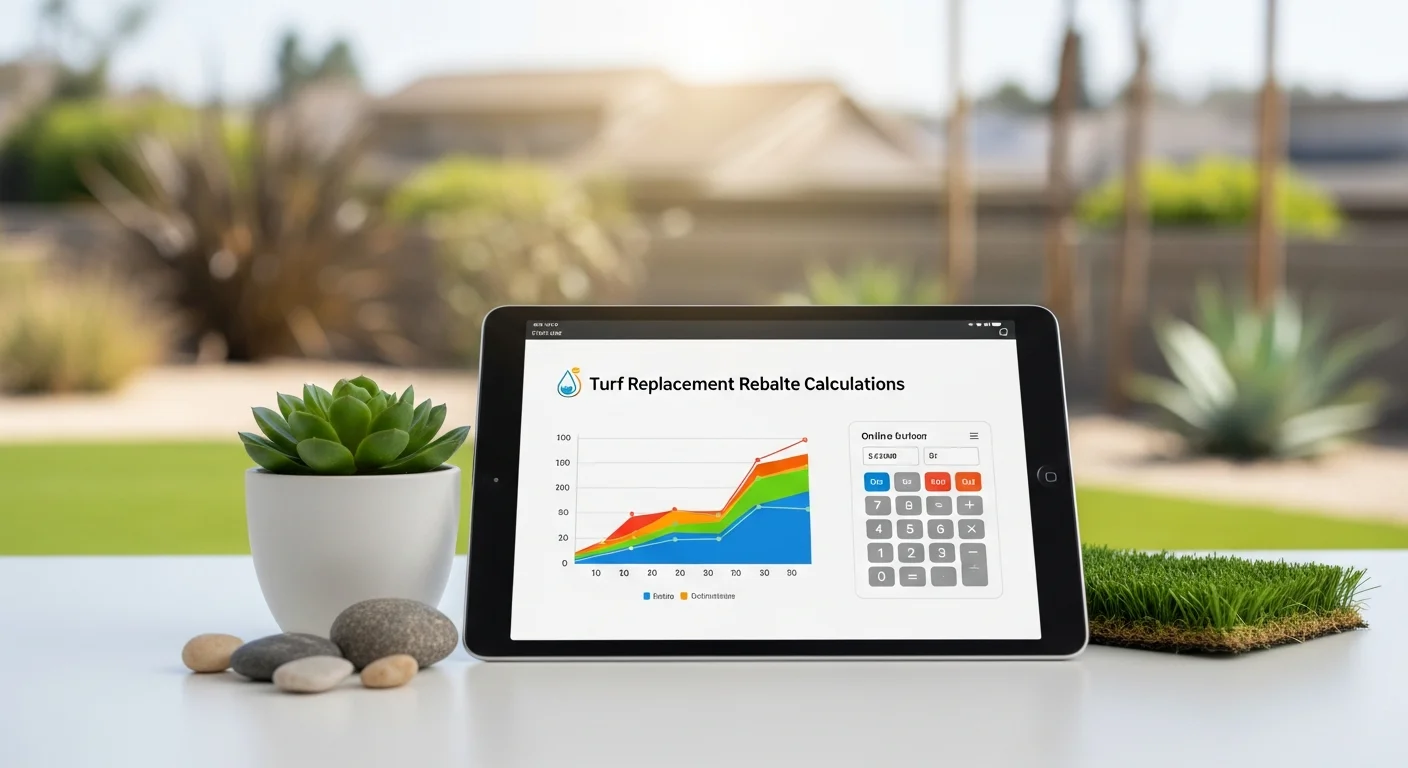
Turf Replacement Rebate Calculator
Buy NowTransitioning from a traditional lawn to a water-wise landscape is more than just a trend; it's an investment in your property and the environment. The benefits extend far beyond immediate cost savings, impacting everything from local ecosystems to your daily routine.
Environmental Impact & Water Conservation
One of the primary drivers for turf replacement in Southern California is the urgent need for water conservation. Traditional lawns are notoriously thirsty, consuming a significant portion of household water use. According to the Metropolitan Water District of Southern California, replacing grass with drought-tolerant landscaping can reduce outdoor water use by 50-80%.
Beyond water, turf replacement promotes biodiversity by introducing native plants that support local wildlife. It also reduces reliance on chemical fertilizers and pesticides, contributing to healthier soil and groundwater. The U.S. Environmental Protection Agency's WaterSense program highlights these significant environmental advantages.
Reduced Maintenance and Cost Savings
Imagine fewer hours spent mowing, fertilizing, and weeding. Drought-tolerant landscapes typically require far less maintenance than conventional lawns. This translates directly into savings on gardening services, water bills, and the purchase of lawn care products.
While there's an initial investment, the long-term financial benefits are substantial. Many homeowners report significant reductions in their monthly water bills, making the upfront lawn removal expenses a worthwhile investment over time.
Ready to transform your yard and save water? Calculate your potential rebates today!
Calculate Your Savings Now →Factors Influencing the Cost to Replace Sod
Understanding the cost to replace sod involves several variables. Project costs can fluctuate widely based on your specific choices and local market conditions in Orange County. By breaking down these factors, you can better estimate your budget.
Project Scope and Existing Landscape
The size of your lawn is the most obvious cost determinant. Larger areas naturally require more materials and labor. Beyond size, the existing landscape plays a role. Are there old irrigation systems to remove? Is the terrain uneven, requiring significant grading? These preparation steps add to the overall labor and disposal costs.
Complex designs involving retaining walls, pathways, or intricate planting schemes will also increase labor hours and material expenses compared to a simpler, more open design. Considering these elements upfront will help provide a realistic budget from the start.
Material Choices: Artificial Turf vs. Drought-Tolerant Plants
Your choice of new ground cover significantly impacts the total turf replacement cost. Artificial turf, while offering a perpetually green look and minimal maintenance, typically has a higher upfront installation cost per square foot. Factors like pile height, infill type, and quality of turf can vary these prices.
Drought-tolerant plants, on the other hand, offer a wide range of price points depending on their size, rarity, and whether they are native or ornamental. Mulch, gravel, and decomposed granite are often used as permeable ground covers and are generally more budget-friendly than artificial turf, especially when purchased in bulk. The UC Cooperative Extension offers extensive resources on suitable plant choices for our region.
Professional Installation vs. DIY
While a DIY approach can save on labor costs, professional installation ensures proper execution and longevity. Landscaping companies bring expertise in design, plant selection, irrigation modification, and efficient installation techniques. This is particularly important for complex designs or when dealing with significant grading or drainage issues.
For those with extensive landscaping experience, handling parts of the project, like plant installation or laying mulch, can reduce overall expenses. However, for demolition, grading, or installing artificial turf, hiring experienced professionals is often recommended for the best results, as noted by HomeAdvisor's lawn installation cost guide.
Maximizing Your Orange County Water-Saving Landscaping Rebates
Orange County is at the forefront of water conservation efforts, and fortunately, this means residents have access to generous rebate programs that can significantly reduce the financial burden of turf replacement. Understanding these incentives is key to maximizing your savings.
Navigating Local and Regional Programs
Several agencies offer rebates for water-saving landscaping. The SoCal WaterSmart program, administered by the Metropolitan Water District, is a major source of turf removal rebates, often supplemented by local water agencies within Orange County. These programs typically offer a specific dollar amount per square foot of turf removed and replaced with approved drought-tolerant landscaping.
Eligibility requirements usually include a pre-application, site inspection, and specific criteria for plant coverage, irrigation modification, and stormwater retention. It's vital to review the most current guidelines for 2026, as rebate amounts and terms can change.
How Our Calculator Simplifies Rebate Estimation
Manually calculating potential rebates can be complex, involving different rates, maximums, and specific program rules. Our Turf Replacement Rebate Calculator at Orange County Home Savings simplifies this process dramatically. By entering details about your lawn area and project type, you can get an instant estimate of the rebate amount you could receive.
This tool is designed to provide quick, accurate, and up-to-date projections, helping you understand the financial feasibility of your water-wise landscaping project. It's an invaluable first step in planning your conversion, saving you time and potential headaches.
Our rebate calculator makes saving water simple. Find out how much you can get back!
Calculate My Rebate →Exploring Low Water Landscaping Options and Their Costs
When replacing your lawn, you're not just getting rid of grass; you're opening up a world of beautiful, sustainable landscape possibilities. Each option comes with its own aesthetic, maintenance needs, and cost implications.
The Beauty of Native and Mediterranean Gardens
California native plants and species adapted to Mediterranean climates thrive in Orange County with minimal water once established. Options include vibrant sages, fragrant lavenders, colorful succulents, and resilient grasses. These plants not only conserve water but also provide habitat for local pollinators and birds, creating a thriving ecosystem in your backyard.
The initial cost for these gardens varies greatly depending on the density of planting and the size of plants chosen. However, their long-term benefits in terms of water savings and reduced upkeep are significant. Resources like the California Native Plant Society provide excellent guidance on selection and design.
The Durability and Appeal of Artificial Grass
For those who desire the look and feel of a traditional lawn without the water and maintenance, artificial turf is a compelling alternative. Modern synthetic grasses are remarkably realistic, durable, and can last for many years, even decades, with proper installation and occasional cleaning.
While the upfront artificial turf installation cost 2026 can be higher than drought-tolerant plantings, the zero-water use and minimal maintenance often justify the investment for many homeowners. It's particularly popular for play areas, pet zones, or high-traffic sections of the yard.
| Feature | Benefit for Homeowners |
|---|---|
| Significant Water Savings | Drastically reduced water bills, especially in Orange County. |
| Lower Maintenance Needs | More free time, less cost for mowing, weeding, and fertilizing. |
| Increased Property Value | Appeals to eco-conscious buyers, enhances curb appeal with modern landscaping. |
| Access to Rebate Programs | Offsets initial investment, making the project more affordable. |
| Environmental Contribution | Supports local ecosystems and reduces carbon footprint. |
Calculating Your Potential Turf Replacement Savings
The financial benefits of turf replacement extend beyond immediate rebates. Understanding the long-term savings and how this upgrade impacts your home's value can solidify your decision.
Long-Term Financial Benefits
The most consistent savings come from reduced water usage. Over years, these savings can amount to thousands of dollars, effectively paying for a significant portion of the initial investment. Furthermore, cutting down on lawn care means less money spent on fertilizers, pesticides, and potentially landscaping services. The California Department of Water Resources emphasizes the importance of these long-term water conservation benefits.
Enhancing Property Value in 2026
In today's real estate market, especially in drought-prone regions, a water-wise landscape is a significant selling point. Homebuyers in 2026 are increasingly looking for properties that are not only beautiful but also sustainable and cost-efficient to maintain. A well-designed drought-tolerant yard or high-quality artificial turf can boost your home's curb appeal and market value.
According to a study by The American Society of Landscape Architects, sustainable landscaping features are among the most requested from homeowners, indicating a strong return on investment for such upgrades.
Ready to estimate your total savings and transform your landscape?
Start Your Savings Estimate →Making Informed Decisions for Your Drought-Tolerant Landscape
Embarking on a turf replacement project requires careful planning and consideration. With the right information and tools, you can create a beautiful, water-efficient landscape that aligns with your budget and lifestyle.
Planning for Success
Before breaking ground, visualize your new space. Consider factors like sunlight exposure, traffic patterns, and desired aesthetic. Sketch out a design, or consult with a landscape designer who specializes in drought-tolerant concepts. Think about how the new landscape will integrate with your home's architecture and existing features.
Remember to account for irrigation modifications, which are often a requirement for rebate eligibility. Drip irrigation systems are highly efficient for watering individual plants and can be a cost-effective upgrade. Reviewing detailed guides on Xeriscaping principles can provide a strong foundation.
Partnering with Local Experts
Whether you're going DIY or hiring professionals, leverage local expertise. Nurseries can offer advice on plant suitability for Orange County's climate and soil. Landscape contractors can provide quotes, manage the project, and ensure all rebate requirements are met. Always seek multiple bids and check references to find the right partner for your project.
Many local water agencies also offer workshops and resources for homeowners interested in water-wise landscaping, providing valuable insights into design, plant care, and rebate application processes. Connecting with these resources can lead to a more successful and satisfying outcome.
Frequently Asked Questions
How much can I save on water bills after replacing my lawn?
Water bill savings vary significantly based on your current water usage, the size of your lawn, and the efficiency of your new landscape. Homeowners typically see reductions of 50% to 80% on their outdoor water use, translating into substantial monthly savings. Over several years, these savings can offset a large portion of your initial investment.
Are there specific plants required for turf replacement rebates in Orange County?
While specific plant lists are not always mandatory, rebate programs generally require a certain percentage of the converted area to be covered by drought-tolerant plants. These plants must be low-water use, and some programs may exclude certain species. Always check the current guidelines of the SoCal WaterSmart program and your local water agency for precise requirements.
Can I install artificial turf and still get a rebate?
Yes, artificial turf is typically eligible for turf removal rebates under most programs in Orange County. However, there may be specific requirements regarding permeable materials, sub-base, and the overall design to ensure proper drainage and water retention. It's crucial to confirm eligibility with the specific rebate program before starting your project.
How long does the turf replacement rebate application process take?
The application process usually involves several steps, including pre-application, site inspection, project completion, and post-inspection. The entire process, from initial application to receiving your rebate check, can take anywhere from 2 to 6 months, depending on the volume of applications and the efficiency of the administrating agency. Timely submission of all required documentation is key.
Do I need a professional landscaper to qualify for rebates?
No, most turf replacement rebate programs allow for homeowner (DIY) projects as long as all program requirements are met. However, hiring a professional landscaper can help ensure compliance with complex guidelines and deliver a higher quality, more aesthetically pleasing outcome. Always ensure you understand all requirements if undertaking the project yourself.
What are the general steps to apply for a turf replacement rebate?
The general steps include: 1) Checking eligibility and reviewing program rules on the SoCal WaterSmart website, 2) Submitting a pre-application with photos of your existing lawn, 3) Receiving a notice to proceed after approval, 4) Completing your turf replacement project according to guidelines, 5) Submitting a post-completion application with new photos and receipts, and 6) Undergoing a final inspection before rebate issuance.
Conclusion
Transforming your Orange County landscape from a water-intensive lawn to a beautiful, drought-tolerant garden is one of the most impactful home improvements you can undertake in 2026. While understanding the initial cost to replace sod is a critical first step, the long-term benefits in water savings, reduced maintenance, and enhanced property value far outweigh the investment.
With generous rebate programs and powerful tools like the Orange County Home Savings Turf Replacement Rebate Calculator, navigating this transition is more accessible than ever. You have the opportunity to create a sustainable outdoor space that not only saves you money but also contributes positively to our environment.
Don't let questions about the initial investment deter you from a smarter, greener future. Take the first step today by exploring your options and calculating your potential savings. Your beautiful, water-wise yard awaits!
About the Author

Written by William Corcoran, Orange County Home Savings Expert
William Corcoran has helped Orange County families save money on their homes for over 15 years. Specializing in property tax reduction and smart refinancing, he offers expert guidance you can trust. www.energybot.com www.energystar.gov
Related Articles

Ready to Find Your Savings?
Get a free personalized report showing all rebates and incentives your home qualifies for.
Get My Free Report