2026 Landscaping Trends: How to Save Money on Landscaping with a Water-Saving Landscape Conversion
Key Takeaways
- Current California rebates can significantly offset the initial investment for new landscaping
- Sustainable garden designs in 2026 offer higher property value increases than traditional turf
- Homeowners can reduce monthly water expenses by over sixty percent after a successful conversion
- Using a dedicated rebate calculator ensures you do not leave money on the table during the planning phase
As we move through the Winter 2026 season, California homeowners are facing a shifting landscape in residential property management. The economic and environmental pressure to move away from thirsty, high-maintenance grass has never been higher. When evaluating the cost to replace lawn sections of your property, it is essential to look beyond the initial labor and materials to see the long-term financial windfalls of sustainable design.
Modern landscaping is no longer just about aesthetics; it is a strategic financial decision. With rising utility rates and evolving local ordinances, the 2026 market favors properties that demonstrate water independence and climate resilience. By integrating smart technology and native flora, you can transform a liability into a high-performing asset.
Want to see how much you can save in 2026?
Use the Rebate Calculator →Calculating Your Landscaping Investment: Cost to Replace Lawn Areas in 2026
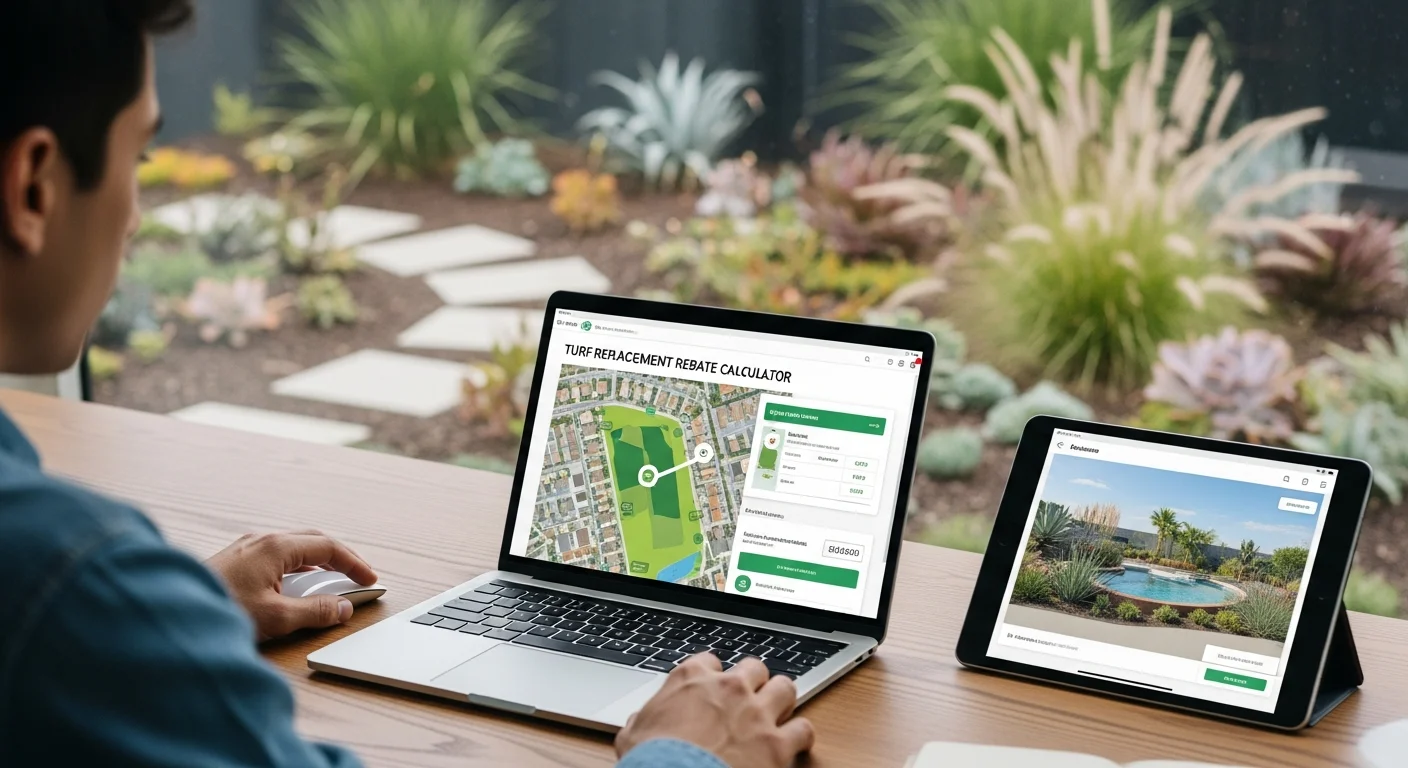
Turf Replacement Rebate Calculator
Buy NowBreakdown of Material and Labor Costs
The average price for a water-saving landscape conversion typically ranges from $10 to $25 per square foot, depending on the complexity of the design. This includes the physical removal of existing sod, soil preparation, and the installation of drought-tolerant elements. In 2026, labor costs have stabilized, making it an opportune time for large-scale renovations.
Influencing Factors in 2026 Pricing
Proximity to suppliers and the choice of hardscaping materials play a significant role in your total expenditure. Utilizing locally sourced gravel, boulders, and mulch can reduce transportation fees while enhancing the ecological harmony of your yard. According to the California Department of Water Resources, selecting regionally appropriate materials is the most effective way to manage the total cost to replace lawn zones.
Maximizing California Turf Removal Rebates for Homeowners
Understanding the 2026 Rebate Landscape
The California turf removal rebates remain some of the most generous in the nation. Many municipal water districts now offer between $2 and $4 per square foot of grass removed. These programs are designed to incentivize permanent changes in residential water usage patterns during the Winter 2026 season and beyond.
Eligibility Requirements for OC Residents
To qualify for Orange County landscaping rebates, projects must usually include specific elements like permeable surfaces and a certain density of plants. It is vital to apply for pre-approval before removing any existing grass. As noted by BeWaterWise, failing to secure a reservation before starting work can disqualify you from thousands of dollars in potential savings.
Native Plant Garden Costs vs. Traditional Turf Maintenance
Initial Planting Costs
While native plant garden costs may seem higher upfront due to specialized nursery stock, they are a one-time investment. These plants are evolved to thrive in local soil conditions without the need for expensive synthetic fertilizers or chemical pesticides. This resiliency is a cornerstone of sustainable garden design 2026 standards.
Maintenance Savings Over Time
A traditional lawn requires weekly mowing, edging, and heavy irrigation. In contrast, a native garden requires minimal pruning and significantly less water. Over a five-year period, the landscaping ROI for homeowners switching to native species often exceeds 200% when accounting for labor and resource savings.
Calculate your specific rebate potential in seconds.
Try the 2026 Calculator →Professional vs DIY Lawn Removal: Which Saves More?
The Risks of DIY Conversions
When examining the professional vs DIY lawn removal debate, many homeowners overlook the cost of equipment rental and waste disposal fees. Improper removal can also damage irrigation lines or fail to fully eradicate aggressive grass species, leading to future expenses. A professional crew ensures the job is done to rebate-specific standards the first time.
Value of Professional Design
Experts in water-saving landscape conversion understand how to layer textures and colors for year-round appeal. They also navigate the complex paperwork required for the turf replacement rebate calculator tool parameters, ensuring you receive the maximum payout possible for your specific zip code.
Sustainable Garden Design 2026: Trends and ROI
| 2026 Trend | Financial Benefit |
|---|---|
| Permeable Pavers | Prevents runoff and increases usable patio space |
| Smart Drip Irrigation | Reduces water waste by 40-60% compared to spray |
| Pollinator Pockets | Supports biodiversity and reduces pest control costs |
Reducing Water Bills with Xeriscaping and Smart Irrigation
The Impact of Xeriscaping vs Traditional Lawn Cost
The difference in xeriscaping vs traditional lawn cost is most apparent in monthly utility statements. While a lawn can account for up to 70% of a home's total water usage, a xeriscaped yard requires only fraction of that. In 2026, as tiered pricing becomes more aggressive, the savings only grow. According to Wikipedia's data on Xeriscaping, these systems are essential for arid climates.
Integrating Smart Weather Sensors
Modern reducing water bills with xeriscaping strategies often involve AI-driven irrigation controllers. These devices monitor local weather patterns in real-time to skip watering cycles when rain is forecast, further optimizing your investment and ensuring plant health without waste.
Don't miss out on Winter 2026 funding opportunities.
Calculate Your Savings Now →Frequently Asked Questions
How much does it typically cost to replace lawn areas with drought-tolerant plants?
In 2026, most homeowners spend between $5,000 and $15,000 for a professional conversion of a standard front yard. This cost includes design, turf removal, irrigation updates, and new plant material. However, rebates can often cover 40% to 60% of this total expense.
Do I need to get approval before I start my lawn removal project?
Yes, almost all rebate programs in Orange County require a pre-inspection or photo documentation of the existing grass. Starting work before receiving a "Notice to Proceed" will typically disqualify you from receiving any rebate funds.
What are the best plants for a water-saving landscape conversion in California?
Native species such as California Lilac, Manzanita, and various Sage varieties are excellent choices for 2026 gardens. They offer vibrant colors, support local wildlife, and require very little supplemental water once established.
How does the turf replacement rebate calculator tool help homeowners?
The tool estimates your potential rebate based on your square footage and location. This allows you to set an accurate budget for your project and understand how much of your cost to replace lawn areas will be reimbursed by the state or local agencies.
Does xeriscaping look like a desert landscape with only rocks and cactus?
Not at all. Modern xeriscaping can include lush, colorful flowering shrubs, ornamental grasses, and beautiful shade trees. The 2026 trend focuses on "California Friendly" designs that are green and inviting while remaining water-efficient.
In conclusion, evaluating the cost to replace lawn surfaces is the first step toward a more sustainable and financially sound home. By leveraging the tools available at OC Home Savings, you can navigate the complex rebate process with confidence and clarity.
Investing in a water-wise yard today protects your property value and reduces your ecological footprint for years to come. Whether you choose a DIY approach or professional installation, the available 2026 incentives make this the perfect time to upgrade your outdoor living space and embrace the future of California gardening.
About the Author

Written by William Corcoran, Orange County Home Savings Expert
William Corcoran has helped Orange County families save money on their homes for over 15 years. Specializing in property tax reduction and smart refinancing, he offers expert guidance you can trust. www.energybot.com www.energystar.gov
Related Articles
Ready to Find Your Savings?
Get a free personalized report showing all rebates and incentives your home qualifies for.
Get My Free Report