Accessory Dwelling Unit Costs in 2026: A Complete Guide to Building and Financing Your Granny Flat
Key Takeaways
- Construction costs for ADUs in 2026 range significantly based on size and finish levels.
- New California zoning laws in 2026 have streamlined the permit process for homeowners.
- Attached ADUs generally cost less per square foot than detached standalone structures.
- Strategic financing can offset initial costs through long-term rental income potential.
The housing market in early 2026 continues to evolve, making the addition of an accessory dwelling unit one of the smartest financial moves a homeowner can make. Whether you are looking to provide space for aging parents or seeking a reliable stream of passive income, understanding the costs associated with adu housing is the first step toward a successful project. With material prices stabilizing and new labor efficiencies, 2026 offers a unique window for construction.
According to the California Department of Housing and Community Development, ADUs have become a critical component of urban planning. In Orange County specifically, the demand for high-quality secondary units is at an all-time high. This guide will walk you through the financial complexities of building your own unit this year.
Understanding the 2026 Landscape for ADU Housing
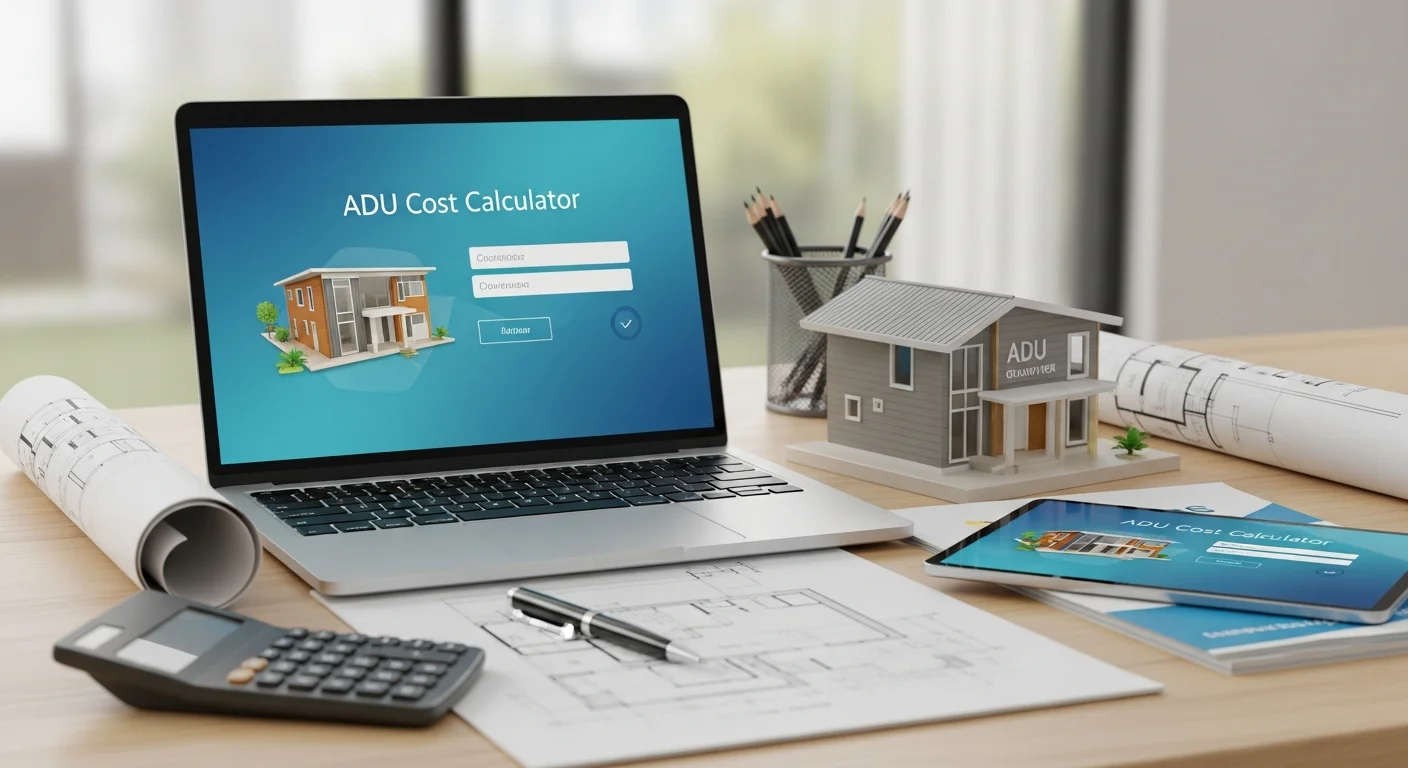
ADU / Granny Flat Cost Calculator
Buy NowMarket Trends and Demand
As we enter the winter of 2026, the demand for flexible living spaces has never been higher. Homeowners are increasingly viewing adu housing as a multi-generational solution that provides privacy while maintaining proximity to family. This shift has led to more competitive pricing among local contractors who specialize in these niche builds.
Technological Advancements in Construction
The adoption of 3D printing and modular components has significantly reduced the time it takes to go from foundation to finish. In 2026, many homeowners are choosing hybrid models that combine traditional stick-built methods with prefabricated interior modules to save on labor costs without sacrificing quality.
Calculating Your Granny Flat Construction Costs 2026
Direct Material and Labor Expenses
Direct costs typically account for 60-70% of your total budget. In early 2026, lumber prices have leveled off, but specialized electrical components for smart home integration have seen a slight increase. It is essential to get quotes that include detailed line items for every phase of construction.
Site Preparation and Utility Hookups
Often overlooked, site preparation can vary wildly depending on your backyard's topography. Connecting to existing sewer, water, and power lines requires professional assessment. If your main panel needs an upgrade to support the extra unit, expect to add several thousand dollars to your initial estimate.
Want to know exactly what your project will cost?
Try Our Free ADU Cost Calculator →Detached ADU vs Attached ADU: Budget Differences
Choosing between an attached or detached structure is one of the biggest factors influencing your final bill. While a detached unit offers more privacy, an attached unit can often leverage existing walls and utilities, reducing the overall footprint and cost.
| ADU Type | Average Cost (2026) | Primary Benefit |
|---|---|---|
| Detached ADU | $180,000 - $350,000 | Maximum privacy and rental value |
| Attached ADU | $120,000 - $250,000 | Lower construction & utility costs |
| Garage Conversion | $90,000 - $160,000 | Fastest permit & build time |
Navigating Accessory Dwelling Unit Permits 2026
New California Legislation
According to Wikipedia's overview of housing policy, state-level mandates have significantly reduced the ability of local cities to block ADU projects. In 2026, California has further streamlined the environmental review process, making it easier than ever to get your plans approved in under 60 days.
Impact and School Fees
It is important to remember that while permit processing is faster, impact fees still apply for units over 750 square feet. These fees fund local infrastructure and schools. Always check with your local planning department or use a professional consultant to ensure your adu housing budget accounts for these soft costs.
Not sure if your lot is eligible for an ADU?
Get a Property Evaluation →Maximizing Your ADU Investment ROI
Rental Income Potential
In many Orange County neighborhoods, a one-bedroom ADU can command significant monthly rent. By calculating your monthly mortgage payment against expected rental income, most homeowners find that their unit becomes cash-flow positive within the first year of completion.
Equity and Property Valuation
Beyond monthly income, an ADU adds immediate equity to your property. Appraisers in 2026 are increasingly giving full value to these secondary units, often resulting in a property value increase that exceeds the total cost of construction. This makes it a powerful tool for long-term wealth building.
Exploring ADU Financing Options 2026
Home Equity Lines of Credit (HELOC)
A HELOC remains a popular choice for financing adu housing because it allows you to borrow against the existing equity in your primary residence. With interest rates stabilizing in early 2026, these lines of credit offer flexibility for phased construction payments.
Construction Loans and Renovation Mortgages
For those with less equity, specialized construction loans are available that consider the "as-completed" value of the property. This means the bank lends based on what the home will be worth once the ADU is finished, which can provide significantly more capital upfront.
Ready to start your project?
Connect With Our ADU Experts →Frequently Asked Questions
How long does it take to build an ADU in 2026?
While permitting has sped up to about 60 days, the actual construction typically takes between 4 to 9 months depending on complexity. Prefabricated units can be installed much faster, sometimes in as little as 4-6 weeks once the foundation is ready.
What is the maximum size for an ADU in California?
Generally, the state allows for detached ADUs up to 1,200 square feet, though local jurisdictions may have specific caps. Attached ADUs are often limited to 50% of the primary dwelling's size or 1,200 square feet, whichever is smaller.
Does an ADU increase my property taxes?
Yes, adding an ADU will trigger a blended reassessment. Your primary home will retain its existing tax basis, but the new structure will be assessed at its current market value, resulting in a modest increase in your annual property tax bill.
Can I build an ADU if I have an HOA?
In California, state law prevents Homeowners Associations from prohibiting ADUs on single-family lots. However, they can still enforce reasonable architectural guidelines regarding materials and aesthetics to ensure the unit matches the neighborhood.
Is a permit required for a small ADU?
Yes, all accessory dwelling units require a building permit regardless of size. This ensures that the structure meets all safety, fire, and utility standards required by the local building code.
Conclusion
Building an accessory dwelling unit is a significant undertaking, but with the right planning and expert guidance, it is a highly rewarding investment. The 2026 market offers stabilized costs and improved regulatory support, making it an ideal time to expand your property's potential. By focusing on quality construction and smart design, your adu housing project will provide value for decades to come.
As we look forward to the rest of 2026, the integration of ADUs into residential neighborhoods will only continue to grow. Whether your goal is family support or financial freedom, taking the first step by calculating your potential costs is essential. Use our resources at Orange County Home Savings to ensure your project stays on track and within budget.
About the Author

Written by William Corcoran, Orange County Home Savings Expert
William Corcoran has helped Orange County families save money on their homes for over 15 years. Specializing in property tax reduction and smart refinancing, he offers expert guidance you can trust. www.energybot.com www.energystar.gov
Related Articles
Ready to Find Your Savings?
Get a free personalized report showing all rebates and incentives your home qualifies for.
Get My Free Report