Accessory Dwelling Unit ROI: A 2026 Guide to Granny Flat Costs and Construction
Key Takeaways
- Average construction costs for secondary units in 2026 range from 150 to 350 per square foot depending on finishes
- Detached units typically offer the highest long term rental yields compared to internal conversions
- New legislation in 2026 has further streamlined the permitting process for homeowners in metropolitan areas
- Utilizing an online cost estimator is the first essential step in establishing an accurate project budget
As we move through Winter 2026, the demand for flexible housing solutions continues to surge across Orange County and beyond. Homeowners are increasingly looking at their property's footprint as a source of potential income and multi-generational living space. Choosing to build an adu is no longer just a trend; it is a strategic financial move in today's real estate market.
The complexity of these projects often stems from the initial budgeting phase. Without a clear understanding of site preparation, utility connections, and current labor rates, a project can quickly exceed its intended scope. Professional planning is required to ensure that your addition remains both functional and profitable over the next decade.
Want to know your exact project budget?
Try Our Cost Calculator Now →Understanding ADU Construction Costs 2026
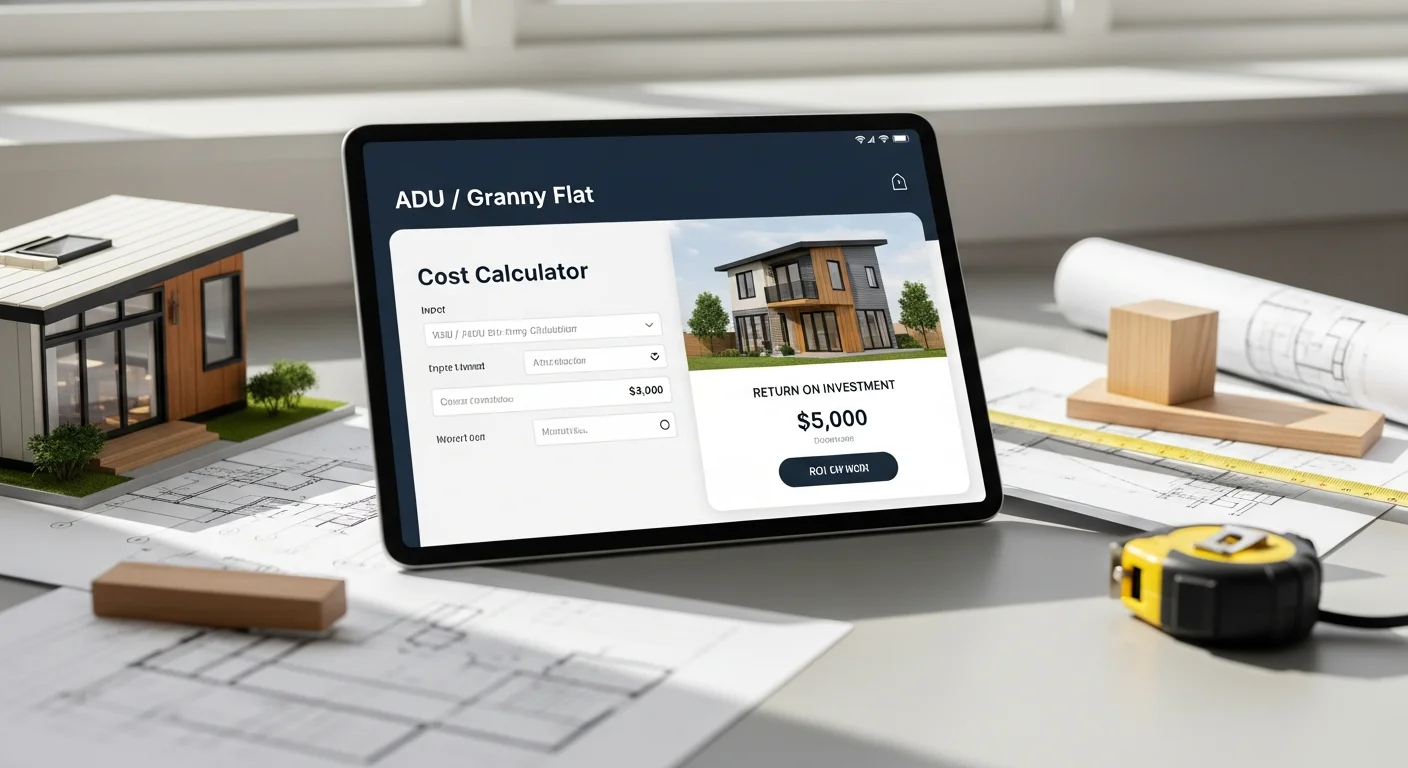
ADU / Granny Flat Cost Calculator
Buy NowHard Costs vs. Soft Costs
Hard costs include the physical materials and labor required to erect the structure. Soft costs cover architectural renderings, structural engineering, and environmental impact fees. In the current Winter 2026 market, homeowners should allocate approximately 25% of their total budget to soft costs alone.
Material Inflation in 2026
While supply chain issues have stabilized since the early 20s, specialized materials like high-efficiency HVAC units and sustainable lumber continue to command a premium. According to the U.S. Census Bureau Construction Reports, material costs for residential additions have adjusted to a new baseline of 4% annual growth.
How Much Does a Granny Flat Cost to Build?
Average Cost Per Square Foot
For a standard 600-square-foot unit, price points generally start at $180,000 for basic finishes. Luxury configurations with custom cabinetry and premium flooring can easily reach $300,000 or more. Research from the National Association of Realtors indicates that these units can recoup up to 70% of their cost in immediate home equity.
Impact of Site Conditions
Sloped lots, poor soil quality, or the need for a new sewer lateral can add $15,000 to $40,000 to your bottom line. It is vital to perform a site survey before finalizing your architectural plans to avoid expensive mid-construction change orders. Building an adu efficiently requires early detection of these site-specific challenges.
Garage Conversion vs Detached Backyard Cottages
Comparing Conversion Feasibility
Converting an existing garage is often the most cost-effective way to add living space. However, older garages may require significant structural reinforcement or floor slab moisture barriers to meet 2026 building codes. If the existing foundation is failing, a detached new build may actually be more affordable in the long run.
Privacy and Rental Appeal
Detached units provide superior sound insulation and privacy for both the main house and the tenant. In the high-density markets of 2026, detached units command roughly 15-20% higher monthly rent than attached conversions. This makes them the preferred choice for investors focusing on long-term rental income potential.
| Project Type | Est. Build Time | Pros |
|---|---|---|
| Garage Conversion | 3-5 Months | Lower initial cost; uses existing structure |
| Detached Build | 6-10 Months | Maximum privacy; higher rental rates |
| Prefab/Modular | 2-4 Months | Faster onsite assembly; fixed pricing |
Explore local savings and rebates for your build.
Check Your Eligibility →Navigating Accessory Dwelling Unit Permit Fees and Taxes
Understanding Senate Bill Impact
Many states, particularly California, have passed legislation that limits the impact fees local cities can charge for units under 750 square feet. According to the California Department of Housing and Community Development, these laws have saved homeowners an average of $12,000 in upfront costs.
Property Tax Reassessment
A common concern is whether building will trigger a full property tax reassessment. Typically, the addition only triggers a "blended assessment," where the new square footage is valued and added to the existing tax basis, rather than resetting the entire property value. This makes adding an adu a relatively safe investment for long-term homeowners.
Best Designs for High-Efficiency Small Lots
Maximizing Vertical Space
In 2026, two-story designs are becoming more popular for lots with limited footprints. By placing the living area above a garage or office, you preserve yard space while doubling the usable square footage. High ceilings and clerestory windows are standard features in the latest 2026 collections to make small spaces feel expansive.
Energy Efficient Smart Units
Modern designs now integrate solar readiness and smart home controls as standard. These technologies not only reduce utility bills but also appeal to the tech-forward tenant market. High-performance insulation and heat pump water heaters are now required by most 2026 energy codes to ensure environmental sustainability.
Financing Options for Your Secondary Suite
HELOCs vs. Construction Loans
Home Equity Lines of Credit (HELOCs) remain a popular choice due to their flexibility. However, dedicated construction loans allow for financing based on the "after-repair value" (ARV) of the property. For a detailed breakdown of lending standards, consult the Fannie Mae ADU Financing Guide.
Cash-Out Refinancing and Renovation Loans
With interest rates stabilizing in the first quarter of 2026, many owners are looking at cash-out refinances to fund their projects. Renovation loans like the FHA 203(k) can also be used, though they often come with more stringent inspection requirements throughout the build process.
Ready to start your home expansion project?
Estimate Your Costs Today →Frequently Asked Questions
How long does it take to build a secondary unit in 2026?
Most projects take between 6 to 12 months from design to final inspection. This includes 2-4 months for the permitting phase and 4-8 months for actual construction, depending on weather and contractor availability.
Will adding a backyard unit increase my property taxes?
Yes, but only for the value of the new addition. Your original home's tax assessment remains unchanged in most jurisdictions, meaning your tax bill only increases proportionally to the value added by the new unit.
What is the maximum size allowed for a granny flat?
In many regions, the maximum size for a detached unit is 1,200 square feet. However, local ordinances may limit this further based on your primary dwelling's size or total lot coverage requirements.
Can I build an accessory unit if I have an HOA?
In many states like California, HOAs are legally prohibited from banning these units entirely. However, they can still enforce aesthetic guidelines regarding materials, colors, and landscaping to ensure the unit matches the neighborhood.
Is a permit required for a garage conversion?
Yes, converting any non-habitable space into a living area requires building permits. This ensures the unit meets safety standards for fire egress, ventilation, plumbing, and electrical wiring.
Conclusion
Investing in a secondary residence is one of the most effective ways to increase property value and generate passive income. By understanding the nuances of construction costs and modern design trends in 2026, you can navigate the building process with confidence. Success begins with accurate budgeting and a clear vision for how the space will serve your family or tenants.
Whether you are planning a garage conversion or a full detached adu, the initial preparation phase is critical. Use professional tools and expert guidance to ensure your project stays on track and delivers the expected return on investment for years to come.
About the Author

Written by William Corcoran, Orange County Home Savings Expert
William Corcoran has helped Orange County families save money on their homes for over 15 years. Specializing in property tax reduction and smart refinancing, he offers expert guidance you can trust. www.energybot.com www.energystar.gov
Related Articles


Ready to Find Your Savings?
Get a free personalized report showing all rebates and incentives your home qualifies for.
Get My Free Report