Backyard Home Construction: A Guide to Granny Flat Expenses and Building Costs
Key Takeaways
- Construction costs vary significantly based on whether you choose a garage conversion or a new detached unit.
- Local permits and impact fees can account for a substantial portion of the initial pre-construction budget.
- Adding a secondary unit typically increases property value and provides a reliable stream of rental income.
- Prefabricated units offer a faster timeline while stick-built units allow for complete architectural customization.
Homeowners across California are increasingly looking for ways to maximize their property potential. Whether you are looking to house an aging relative or generate monthly rental income, the decision to build an adu on your property is a significant financial commitment that requires precise planning and execution.
According to the California Department of Housing and Community Development, recent legislative changes have made it easier than ever to approve these secondary structures. However, understanding the intricate layers of building a backyard home in California remains the biggest hurdle for most property owners.
The Financial Breakdown of Backyard Housing
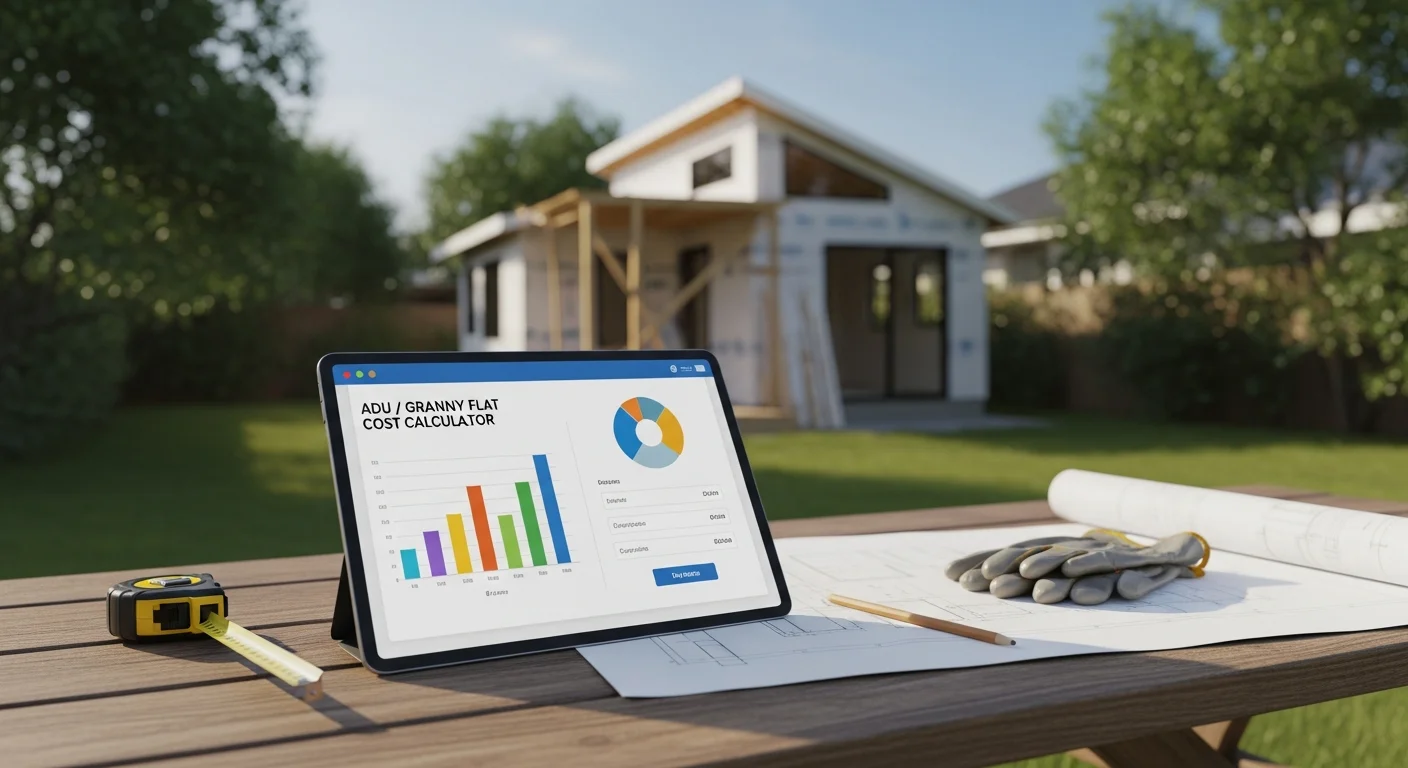
ADU / Granny Flat Cost Calculator
Buy NowHard Costs vs Soft Costs
Hard costs include the actual labor and materials used during the construction process. Soft costs encompass architectural drawings, engineering reports, and local municipality fees that occur before the first shovel hits the ground.
Site Preparation Requirements
Before construction begins, you must evaluate the condition of your land. Grading, utility trenching, and clearing existing landscaping can add thousands to your initial budget if your backyard has complex topography.
Understanding the Average Cost to Build an ADU
National Trends and Local Realities
While national averages may suggest lower figures, the average cost to build an ADU in high-demand areas like Orange County often reflects higher labor rates. When planning an adu project, homeowners should expect local market conditions to dictate the final price per square foot.
Material Quality Impacts
The choice between standard finishes and luxury upgrades will drastically shift your final bill. According to Wikipedia, these units are fully independent living spaces, meaning they require the same high-quality plumbing and electrical systems as a primary home.
Ready to see how much your project will cost? Use our calculator today.
Get Your Free Estimate →The Utility Connection Factor
Connecting a new unit to existing sewer, water, and power lines is a significant part of granny flat construction expenses. If your existing main panel cannot handle the additional load, an electrical service upgrade will be necessary.
Interior Finishing Costs
Kitchens and bathrooms are the most expensive rooms to build. Selecting energy-efficient appliances and durable flooring can help manage long-term maintenance costs while staying within your initial budget.
Permits and Fees for Secondary Dwelling Units
Navigating Local Zoning Laws
Each city has specific requirements for ADU square footage limitations and setbacks. Researching Orange County Government zoning codes is essential to ensure your plans are legally compliant before submission.
Impact and School Fees
Units over 750 square feet often trigger development impact fees. These fees fund local infrastructure and schools, and they can vary wildly between neighboring jurisdictions, potentially adding thousands to your total cost.
Download our guide to local permits and zoning requirements for secondary units.
Access the Guide →Prefabricated vs Stick-Built Backyard Guest Houses
Speed and Efficiency of Prefab
Prefabricated units are constructed off-site in a controlled environment, which reduces waste and weather delays. This method is often the fastest way to get your backyard cottage design ideas from paper to reality.
The Customization of Stick-Built
Traditional construction allows for seamless architectural integration with your existing home. Most adu designs that prioritize matching the primary residence's aesthetic choose this route despite the longer construction timeline.
| Construction Type | Primary Benefit |
|---|---|
| Garage Conversion | Lowest cost using existing foundation and walls. |
| Prefabricated Unit | Minimal on-site disruption and predictable pricing. |
| Custom Stick-Built | Unlimited design flexibility and property matching. |
Maximizing Return on Investment for Your Property
Property Value Increase
According to research from UCLA CityLAB, a well-designed secondary unit can increase property value by up to 30%. This makes the ROI of backyard housing one of the highest among residential renovation projects.
Rental Income Potential
In many California markets, the monthly rent from a secondary unit exceeds the monthly cost of financing the construction. This creates immediate positive cash flow for the homeowner while providing much-needed community housing.
Frequently Asked Questions
How much does a granny flat cost on average?
In California, most homeowners spend between $150,000 and $350,000 depending on size and location. Garage conversions are typically the most affordable option, while detached custom units represent the higher end of the spectrum.
Are there ADU financing options available?
Yes, common methods include Home Equity Lines of Credit (HELOC), renovation loans, and cash-out refinances. Some specialized lenders now offer products specifically designed for secondary unit construction.
Do I need a separate address for the new unit?
Most jurisdictions will assign a secondary address (such as Unit B or 1/2) during the permitting process. This is essential for mail delivery and emergency services to locate the unit correctly.
Can I build a guest house if I have an HOA?
California state law limits the ability of HOAs to prohibit secondary units, though they can still enforce certain aesthetic guidelines. Always check your specific CC&Rs before finalizing your architectural plans.
What is the maximum size allowed?
Under state law, cities must allow at least 800 square feet, and many allow up to 1,200 square feet for detached units. Specific limits often depend on your lot size and the primary residence's total area.
Uncertain about your budget? Use our cost estimator tool to get clarity.
Calculate Your Costs Now →Embarking on your own adu journey is a powerful way to secure your financial future and provide versatile living space for your family. By understanding the nuances of construction expenses and the permitting landscape, you can avoid common pitfalls and ensure a successful build.
As highlighted by the U.S. Department of Housing and Urban Development, these units play a vital role in addressing housing shortages while offering homeowners unprecedented flexibility. With the right tools and expert guidance, your backyard transformation can become a reality that pays dividends for years to come.
About the Author

Written by William Corcoran, Orange County Home Savings Expert
William Corcoran has helped Orange County families save money on their homes for over 15 years. Specializing in property tax reduction and smart refinancing, he offers expert guidance you can trust. www.energybot.com www.energystar.gov
Related Articles

Ready to Find Your Savings?
Get a free personalized report showing all rebates and incentives your home qualifies for.
Get My Free Report