2026 California Granny Flat Regulations and Construction Cost Guide
Key Takeaways
- Construction costs for secondary units have stabilized in early 2026 due to improved supply chains
- New California state laws continue to streamline the approval process for backyard cottages
- Homeowners can expect a significant increase in property resale value and potential rental income
- The choice between prefab and stick-built structures remains the biggest factor in project timelines
As we move through the Winter 2026 season, California homeowners are increasingly looking toward their own backyards to solve housing needs. Whether you are looking to house an aging parent, create a private home office, or generate passive rental income, building an adu has never been more accessible or strategically sound. The housing landscape has shifted toward high-density solutions on existing residential lots.
Navigating the financial and regulatory hurdles of secondary housing can be daunting without the right tools. With labor costs and material availability fluctuating, having a precise estimation of your total investment is critical for a successful build. This guide explores the modern landscape of backyard construction to ensure your project stays on budget and on schedule.
Calculate Your Construction Costs Instantly
Access the 2026 Cost Estimator →Understanding Accessory Dwelling Unit Cost 2026
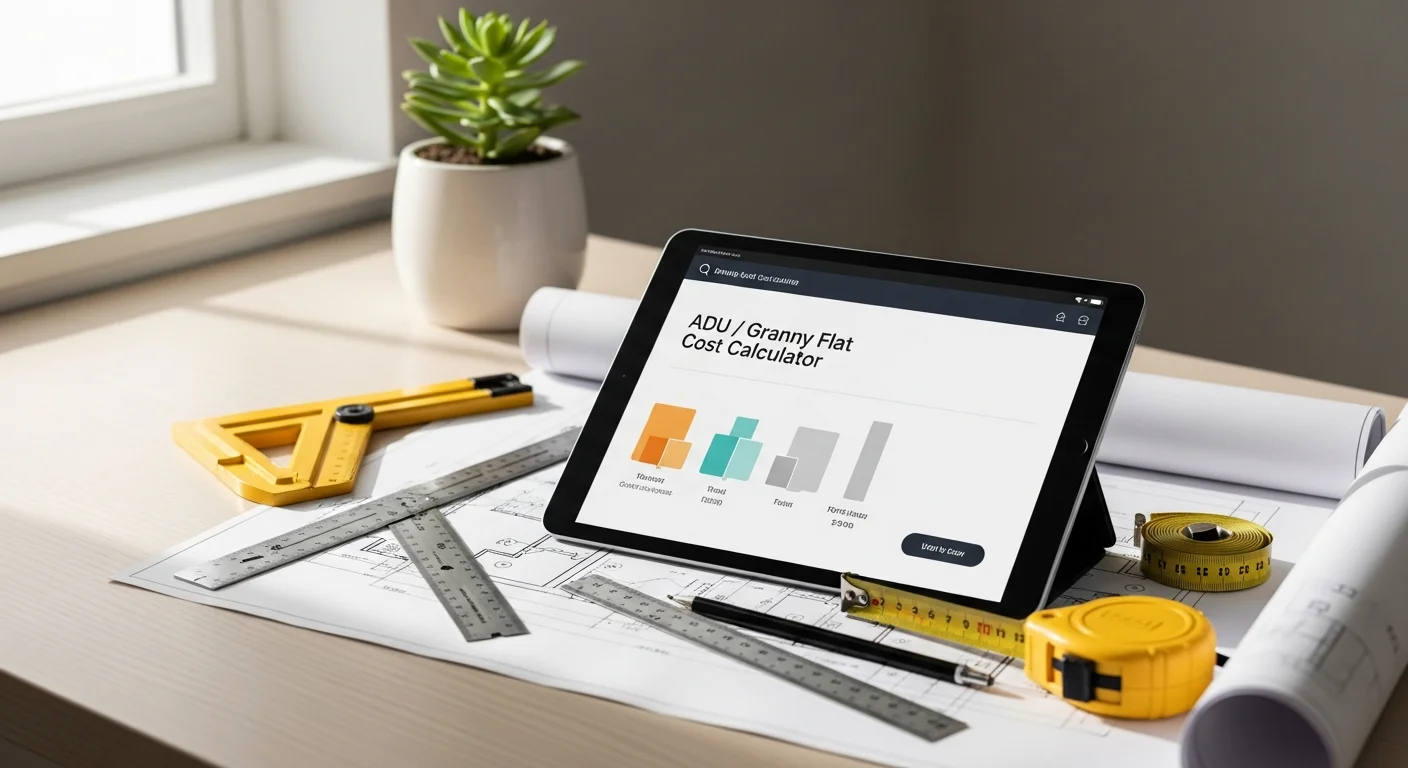
ADU / Granny Flat Cost Calculator
Buy NowConstruction Material Pricing
In the current 2026 market, material costs for secondary suites have reached a new equilibrium. According to US Census Bureau construction data, the price of lumber and steel has remained consistent, allowing for more predictable bidding processes. Smart builders are opting for sustainable materials that offer long-term energy savings.
Labor Market Trends
Specialized labor remains the highest expenditure for any backyard cottage project. Skilled tradespeople in plumbing and electrical work are in high demand across Southern California. It is essential to factor in competitive wages when budgeting for your adu to ensure quality craftsmanship and code compliance.
California Granny Flat Regulations and Permits
Recent Legislative Changes
The 2026 legislative cycle has introduced further protections for homeowners looking to densify their lots. As noted by the California Department of Housing and Community Development, local jurisdictions are now required to provide ministerial approval within 60 days. This reduction in red tape significantly lowers the soft costs associated with architectural drafting and city review.
Zoning and Setback Rules
Most residential zones now allow for at least one detached secondary unit and one junior suite. Setback requirements have been minimized to just four feet from side and rear property lines in many areas. These changes maximize the usable square footage of your backyard cottage while maintaining neighborly privacy.
Wondering about Orange County permit fees?
Get Your Free Estimate Now →Prefab vs Stick-Built Granny Flats Comparison
Speed of Installation
Prefabricated units offer the fastest route to completion, often being craned into place in a matter of days. This minimizes the disruption to your daily life and reduces on-site labor time. For homeowners needing a quick solution for an office or rental unit, modular options are the gold standard in 2026.
Customization Options
Stick-built construction remains popular for those with unique lot shapes or specific architectural visions. A custom-designed secondary dwelling unit allows for seamless integration with the primary home's aesthetic. According to research from UCLA CityLab, custom designs often yield higher satisfaction for long-term multi-generational living arrangements.
| Build Method | Average Timeline | Cost Per Sq Ft |
|---|---|---|
| Prefab / Modular | 3-5 Months | $250 - $400 |
| Stick-Built | 8-12 Months | $350 - $600 |
Home Value Increase with Secondary Suites
Rental Income Potential
The rental market for high-quality, detached living spaces is thriving in 2026. Homeowners are seeing internal rates of return that outpace traditional stock market investments. A well-placed secondary unit can often cover the entire mortgage payment of the primary residence.
Resale Value Impacts
Properties featuring modern backyard cottages command a premium on the open market. Appraisers are increasingly recognizing the square footage of these units as a direct addition to the home's total value. This makes the construction of a guest suite one of the most effective ways to build equity quickly.
Ready to maximize your property value?
Start Your Free Savings Analysis →Financing for Secondary Dwelling Units
HELOC and Refinancing
Home Equity Lines of Credit (HELOC) remain the most popular choice for funding backyard construction. By leveraging the existing value in your primary home, you can access lower interest rates than traditional personal loans. This flexible funding allows for incremental payments as construction milestones are reached.
Specialized Construction Loans
In 2026, many lenders have introduced specific loan products for backyard suites. These loans often consider the future rental income when qualifying the borrower, making it easier to secure funding for larger projects. Ensure you review the terms carefully to find the most cost-effective path forward.
Frequently Asked Questions
What is the average cost of a backyard cottage in 2026?
Costs typically range from $180,000 for a small studio to over $450,000 for a luxury two-bedroom detached unit. These figures include permits, architecture, and construction labor. Precise estimates depend on your specific site conditions and utility connection requirements.
Do I need a separate address for my secondary unit?
Yes, most California jurisdictions will assign a separate address or a unit letter (e.g., 123 Main St, Unit B) to the new structure. This is necessary for mail delivery, utility billing, and emergency services. Your local planning department handles this during the permitting phase.
How does building a guest house affect my property taxes?
Under current California law, adding a secondary unit does not trigger a full reassessment of your primary home. Instead, your property tax will increase based on the value added by the new construction only. This allows you to maintain your base tax rate on the original residence.
Can I build an accessory unit if I have an HOA?
California state law limits the ability of Homeowners Associations to ban the construction of secondary units. While they can impose reasonable aesthetic requirements, they cannot effectively prohibit you from building one. Always consult your HOA guidelines early in the design process to ensure compliance.
What is the maximum size allowed for a California granny flat?
State law generally allows for detached units up to 1,200 square feet, regardless of the size of the primary home. Some local ordinances may allow more, but the 1,200-square-foot limit is the statewide minimum protection. Attached units are often limited to 50% of the primary dwelling's floor area.
Building Your Future in 2026
Deciding to build an adu is a significant commitment that offers substantial long-term rewards. From providing housing security for family members to creating a robust new stream of income, the benefits far outweigh the initial hurdles of construction. As market conditions in 2026 remain favorable, now is the ideal time to move from the planning phase into active development.
By staying informed on the latest regulations and utilizing accurate cost-estimating tools, you can navigate the process with confidence. Orange County Home Savings Expert William Corcoran and our team are here to help you unlock the full potential of your property. Let 2026 be the year you transform your backyard into a valuable asset for generations to come.
About the Author

Written by William Corcoran, Orange County Home Savings Expert
William Corcoran has helped Orange County families save money on their homes for over 15 years. Specializing in property tax reduction and smart refinancing, he offers expert guidance you can trust. www.energybot.com www.energystar.gov
Related Articles
Ready to Find Your Savings?
Get a free personalized report showing all rebates and incentives your home qualifies for.
Get My Free Report