AC & Heating Cost Calculator: How Much Can I Save with a Heat Pump Upgrade?
Key Takeaways
- Use an HVAC calculator to estimate long term financial gains from equipment upgrades
- Modern heat pumps provide both cooling and heating with significantly higher efficiency than traditional units
- Federal tax credits and local Orange County rebates can drastically reduce initial installation costs
- Switching to energy efficient solutions reduces household carbon footprints while improving indoor comfort
Are you tired of opening your utility bills each month only to see skyrocketing costs? In Orange County, maintaining a comfortable home temperature can be expensive, especially with aging equipment. Many homeowners are now turning to an AC & heating cost calculator to understand exactly where their money is going and how much they could save by making a change.
Upgrading your home’s climate control isn't just about comfort; it's a strategic financial decision. With advancements in HVAC technology, specifically heat pumps, the potential for monthly savings has never been higher. By analyzing your current energy consumption, you can identify if your old furnace or air conditioner is a "money pit" that needs replacement.
Why Use an AC & Heating Cost Calculator?
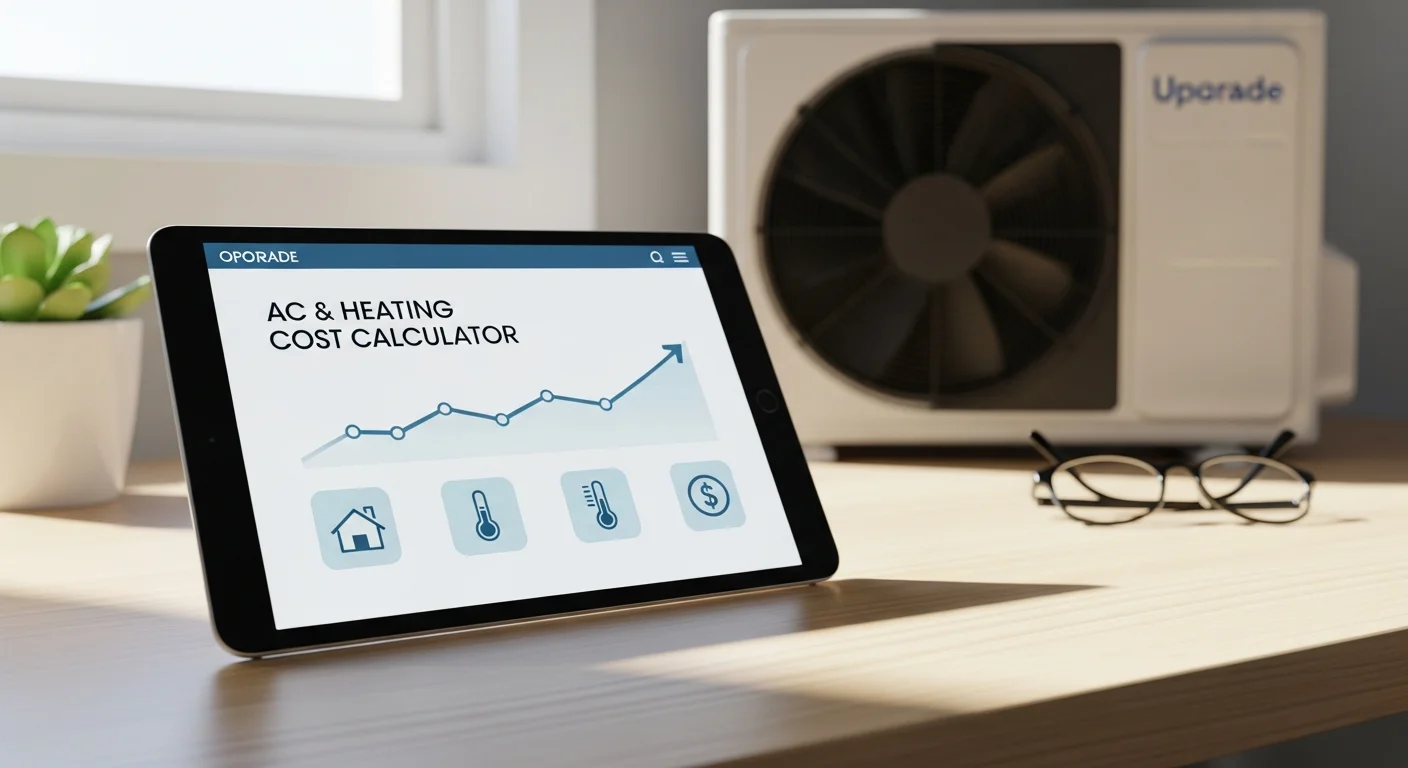
AC & Heating Cost Calculator
Buy NowAccurate Financial Forecasting
An AC & heating cost calculator uses specific data points like your local utility rates and current unit age. This allows you to see a side-by-side comparison of your current costs versus a high-efficiency system. According to Energy.gov, upgrading an old furnace to a modern system can reduce energy use by up to 30%.
Informed Decision Making
Buying a new HVAC system is a significant investment. Using a heat pump savings calculator helps remove the guesswork from the process. You can determine the "payback period," which is the time it takes for the energy savings to cover the initial cost of the upgrade.
Want to see your potential savings in seconds?
Try Our HVAC Savings Calculator →High Efficiency Heat Pump vs Traditional AC
Understanding the Efficiency Gap
When comparing a high efficiency heat pump vs traditional AC, the main difference lies in how they handle energy. Heat pumps move heat rather than generating it from fuel. This makes them significantly more efficient for both heating and cooling cycles.
Year-Round Performance
Traditional systems often require a separate furnace and air conditioner. A heat pump acts as a dual-purpose system. According to the Wikipedia Heat Pump guide, these systems can provide 3 to 4 times more thermal energy than the electrical energy they consume.
| Feature | Traditional HVAC | High-Efficiency Heat Pump |
|---|---|---|
| Energy Source | Gas/Electricity Mix | 100% Electricity |
| Cooling Efficiency | Moderate (14-16 SEER) | High (18-24+ SEER2) |
| Operational Cost | Higher (Due to fuel) | Lower (Optimized transfer) |
Energy Efficient Heating and Cooling Solutions
The Power of Inverter Technology
Modern energy efficient heating and cooling solutions often utilize inverter-driven compressors. Unlike traditional units that are either "on" or "off," inverters scale their power usage up or down. This prevents energy spikes and maintains a more consistent temperature.
Smart Thermostat Integration
Pairing an upgraded HVAC system with a smart thermostat is a major part of the benefits of upgrading HVAC system. These devices learn your habits and adjust cooling when you are away. According to data from Energy Star, homeowners can save about $50 annually on energy bills with a smart thermostat.
Ready to lower your monthly utility costs?
Calculate Your Potential Savings Now →Heat Pump Installation Costs and Savings Explained
Upfront Investment vs. Long-Term Gain
While the heat pump installation costs and savings might seem daunting initially, the math often favors the upgrade. Heat pumps eliminate the need for gas lines in some cases, simplifying the mechanical footprint of your home.
Local Market Factors in Orange County
The cost of HVAC replacement in Orange County varies based on ductwork condition and home size. However, the mild climate here is perfectly suited for heat pumps. Because temperatures rarely drop below freezing, these units operate at peak efficiency nearly 365 days a year.
Maximizing Heat Pump Tax Credits and Local Rebates
The Inflation Reduction Act (IRA)
The heat pump tax credits 2024 are more generous than ever. Under the Inflation Reduction Act, homeowners can claim a tax credit of up to 30% of the project cost, capped at $2,000 annually for heat pumps. Detailed guidance can be found via the Internal Revenue Service (IRS).
Southern California Utility Rebates
Beyond federal help, local utilities often offer cash-back incentives. According to the California Energy Commission, state-wide programs aim to electrify homes to meet climate goals. These rebates can sometimes shave an additional $1,000 to $3,000 off the total bill.
See which rebates you qualify for today!
Get Your Custom Quote →How to Lower HVAC Energy Bills This Year
System Sizing and Duct Sealing
Knowing how to lower HVAC energy bills starts with a professional load calculation. If your system is too big, it will short-cycle; if it's too small, it will run constantly. Additionally, sealing leaky ducts can improve efficiency by up to 20%.
Regular Maintenance and Filter Changes
Simple air conditioning energy efficiency tips include changing filters every 90 days. A clogged filter forces the motor to work harder, consuming more electricity. Regular professional tune-ups ensure that the refrigerant levels are optimal and the coils are clean.
Frequently Asked Questions
How does an AC & heating cost calculator work?
The calculator takes your home’s square footage, current system efficiency (SEER/HSPF), and local utility rates to estimate monthly costs. It then compares this to modern high-efficiency equipment to show you potential savings over 10 to 15 years.
Is a heat pump worth it in a warm climate like Orange County?
Absolutely. Heat pumps are exceptionally efficient at cooling and are often more cost-effective than running a gas furnace for the mild winters we experience. They are widely considered the ideal choice for Southern California homeowners.
What are the main benefits of upgrading my HVAC system?
The primary benefits include significantly lower monthly energy bills, improved indoor air quality, and more consistent temperature control. Additionally, new systems come with manufacturer warranties that protect you from expensive repair costs for years.
Can I get a tax credit for a new heat pump in 2024?
Yes, homeowners can currently access the Energy Efficient Home Improvement Credit. This allows for a federal tax credit of up to $2,000 per year specifically for heat pump installations through the year 2032.
How much can I save with a heat pump compared to a gas furnace?
Savings vary, but many homeowners see a 20% to 50% reduction in heating costs when switching from a traditional gas furnace to an electric heat pump. The exact amount depends on current gas prices versus your electrical rate.
In conclusion, using an AC & heating cost calculator is the first step toward a more affordable and comfortable home. By understanding the data, you can move away from inefficient, outdated technology and embrace modern, eco-friendly climate control. The combination of federal tax credits and immediate energy savings makes now an ideal time for an upgrade.
Take control of your home’s energy future today. Visit Orange County Home Savings to explore your options and find the perfect system for your budget. Your wallet—and the planet—will thank you.
About the Author

Written by William Corcoran, Orange County Home Savings Expert
William Corcoran has helped Orange County families save money on their homes for over 15 years. Specializing in property tax reduction and smart refinancing, he offers expert guidance you can trust. www.energybot.com www.energystar.gov
Related Articles


Ready to Find Your Savings?
Get a free personalized report showing all rebates and incentives your home qualifies for.
Get My Free Report